

By Local Democracy Reporter Simon Finlay
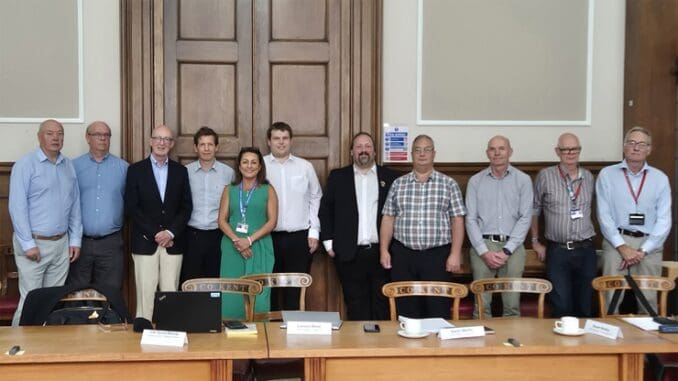
Council chiefs have agreed on two options for the future of local government in Kent.
Under the reforms, Kent’s 14 elected councils, including Medway Council and Kent County Council (KCC), will effectively have to abolish themselves and be replaced by a smaller number of much larger unitary authorities.
Council leaders have spent much of the summer thrashing out acceptable options going forward.
Preferred options
The two to go out to consultation will be 3A and 4B out of seven possibilities.
Option 3A would consist of: West – Sevenoaks, Tonbridge & Malling, Maidstone and Tunbridge Wells; East – Ashford, Folkestone & Hythe, Dover, Canterbury and Thanet; North – Medway, Dartford, Gravesham and Swale.
With 4B, the components would be: West – Sevenoaks, Tonbridge & Malling, Maidstone and Tunbridge Wells; North – Medway, Dartford, Gravesham; Mid – Folkestone & Hythe, Ashford and Swale; East – Dover, Canterbury and Thanet.
If Kent County council wishes to take its own single unitary authority with three assemblies proposal forward, it will have self-fund.
Thanet’s view
Thanet council leader Rick Everitt said TDC’s preferred choice is 4b although this could change as detailed work takes place.
He added: “Thanet supported 4b as our first choice to be taken forward by the Kent leaders’ group for the development of a detailed business case using the funding provided by government.
“However, it’s important to understand that our final preference will be based on this detailed work and it is quite possible other options will also be taken forward by individual councils outside the collective choice of two option. That is a matter for them to decide.
“I would like to see the detailed case for 4d, which includes a number of boundary changes elsewhere, and for our final preference in November we will look at all the multi-unitary options that have been worked up and are compliant with both the timetable and the government’s devolution plans.
“A full council meeting will discuss the options and make a recommendation to cabinet.”
Other councils
Kevin Mills, the Labour leader of Dover District Council, prefers option 4B.
He said: “With a three council unitary, there is still a degree of synergy with us all being coastal communities, so we have more in common in the East Kent triangle.
“At the end of the day, it will not be our decision, it will be decided by the government. There has been no change in the system of local government for 50 years.
“This option will make life simpler for people with each unitary responsible for everything rather than having one council doing one i and another doing something else.
“What we do need is a swift decision because uncertainty doesn’t help anyone.”
Next steps
The Green Party leader of Maidstone Borough Council said the next step is for auditors KPMG to make the business case for the two options as well as putting them forward to relevant council committees.
The deadline to submit the proposals to the local government minister Jim McMahon is November 28.
The County Councils’ Network (CCN), whose 2020 data formed the government’s financial assessment of local government reorganisation’s potential £2.9bn savings over five years, last week cast doubt on the reform’s viability.
Based on updated modelling this year, the CCN now says that £2.9bn saving could only be achieved if all 21 two tier counties – like Kent – each reorganised with a single unitary authority.
The government’s reforms would mean dozens of new unitaries, said the CCN, would end up costing the government hundreds of millions of pounds.
Single authority not chosen
KCC leader Linden Kemkaran’s suggestion of a single authority as an umbrella for three regional assemblies did not make the final cut when council chief met earlier this week.
Cllr Kemkaran has warned the reforms are not likely to be cost-effective.
She said on August 14: “All the other options will cost an absolute fortune to implement, and no one has yet been able to explain to me how that will be paid for. I think the bill will be picked up by the council taxpayers, something I find unacceptable.
“I am determined to do what’s best for Kent, rather than blindly following the government’s instructions and attempting to force a square peg into a round hole.”
Deputy PM resignation
The reforms were launched last December by Angela Rayner who resigned this morning as Deputy Prime Minister and as the secretary of state driving forward local government reorganisation. She also resigned as the deputy leader of the Labour Party.
Mrs Rayner had become embroiled in a controversy over under-paying stamp duty for an £800,000 house in Hove.
Most observers believe that her departure will have little bearing on the progress of council reform.
Cllr Jeffery said: “I suspect the reforms are too far down the track for this to make any difference.”

For me the first option makes most sense. Scale it up as much as possible. A Canterbury/Dover/Thanet Unitary isn’t radical enough. I’m sure a bigger area will have more spare land outside of Thanet to build loads more houses on too to satisfy whatever targets are set.
Let’s see who replaces Tax Dodger Rayner as they will no doubt have their own view too.
Being confused by taxes because of owning 3 houses is something that could happen to any one of us.
Out of all the firm’s the deputy PM could have used to buy her home in Hove and she chooses a small firm in Herne Bay.
Well she has gone and taken responsibility for her actions and she doesn’t own 3 houses. She shouldn’t have tried to save money with some small time conveyancer, bearing in mind she had this trust in operation for her son.
Be careful what you wish for because there are some others who tax affairs might not survive such scrutiny.
In some ways I think Reform should form a government because then we would see if the “Putin loving, free speech imposter” was really as good as he thinks he is.Of course a lot of people might get hurt in the process, but that’s the price you pay for placing credibility in the hands of the incredible.
However in the subject of local government reorganisation 3A is the best option seing as the CCN suggested that a population of 500,000 was necessary to make any savings. Folkestone is in East Kent so 4a is preposterous and too small.
So your accusations of “click-bate” were wrong then.
At least Nadine Dorries has a bit of class (a bit of alright, too).
“click-bait”
Well she has gone and taken responsibility for her actions and she doesn’t own 3 houses. She shouldn’t have tried to save money with some small time conveyancer, bearing in mind she had this trust in operation for her son.
Be careful what you wish for because there are some others who tax affairs might not survive such scrutiny.
In some ways I think Reform should form a government because then we would see if the “Putin loving, free speech imposter” was really as good as he thinks he is.Of course a lot of people might get hurt in the process, but that’s the price you pay for placing credibility in the hands of the incredible.
However in the subject of local government reorganisation 3A is the best option seeing as the CCN suggested that a population of 500,000 was necessary to make any savings. Folkestone is in East Kent so 4a is preposterous and too small.
What a load of foolish old male wind bags comment on this site, they cannot even post relevant comments, let alone intelligent ones. No doubt elderly retirees with too much time on their hands and too little between their ears!
While 4b initially sounds like a good fit 3a will be a better fit longer term. Big enough to tax base, small enough to be more accountable and there’scommon links between the areas. Reform’s single unitary authority idea is bonkers, will never get approved and even entertaining it is just a waste of tax payers money.