

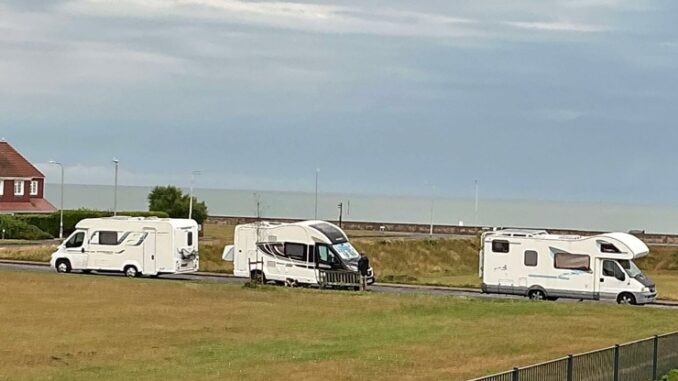
A motion about introducing a scheme to provide overnight parking areas for motorhomes in Thanet car parks will be discussed by Thanet councillors.
Birchington councillor George Kup has submitted the motion for the October full council meeting in a bid to discuss introducing a pilot scheme for motorhome parking in at least two suitable sites on the isle.
The aim, he says, is to reduce motorhomes parking on residential roads while at the same time supporting tourism.
Currently many areas that have been popular with motorhome owners have signs banning motorhome parking between 6pm and 6am. In areas such as Minnis Bay this has led to parking in residential roads, which any vehicle owner is legally allowed to do.
In the motion Cllr Kup says that although sleeping or staying overnight in motorhomes or caravans within council-operated car parks is prohibited, the existence of an overnight parking tariff has caused confusion.
He adds: “As a consequence of this restriction, many motorhome and caravan users now choose to park overnight on public highways. This practice is currently lawful under existing legislation provided there is no obstruction or nuisance, meaning there is no legal basis for enforcement.
“This displacement has created pressure on residential streets and generated complaints from residents.”
Cllr Kup says other local authorities have schemes for permit controlled overnight motorhome stays in designated council car parks.
Examples given are
- Pembrokeshire County Council which has a “Pembs Stop” scheme across four council car parks. Conditions included a £10 per night tariff, a two-night maximum stay, self-contained vehicles only, and prohibitions on things such as using chairs and awnings.
- Northumberland County Council has a pilot at three coastal car parks, with numbered bays, an online booking system, £12 per night charges, and clear requirements for self-contained vehicles.
- North East Lincolnshire Council (Cleethorpes) implemented a 12-month trial introducing 10 motorhome spaces in Thrunscoe Land Car Park. A £12 tariff applied for 24 hours, with a 48-hour maximum stay and restrictions on non-contained units.
Cllr Kup says a scheme in Thanet could reduce unmanaged street parking and related complaints and generate additional income through parking and spending.
Evidence also shows that motorhome visitors spend an estimated £47–£50 per night in local shops, restaurants, and attractions and the economic contribution of motorhome tourism nationally is estimated at over £850 million per year.
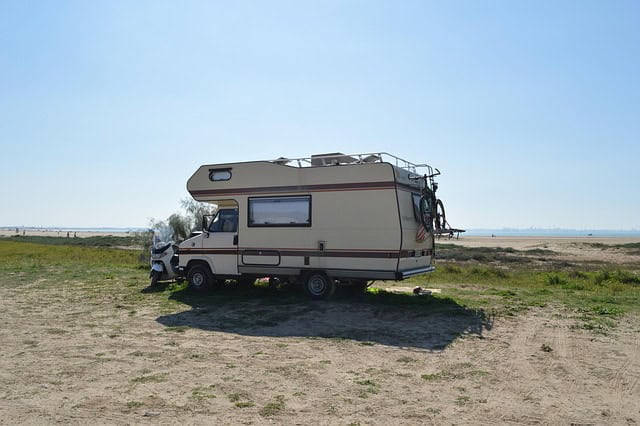
His motion to council suggests the Off-Street Parking Places Order be amended to allow overnight stays for self-contained motorhomes and caravans in designated council-owned car parks, subject to:
- Overnight stays permitted only in clearly marked bays within approved car parks.
- A charge of £10–£12 per night, payable through existing parking systems or online booking.
- No more than 48 consecutive hours and no return within 72 hours.
- Self-contained Vehicles with onboard toilet and waste storage facilities; tents or cars are excluded.
- No awnings, BBQs, chairs, or discharge of waste;
- Clear signage detailing conditions and penalties;
- Ability to adjust availability or tariff during peak tourist periods.
- A pilot scheme within 12 months, identifying at least two suitable sites (e.g., near coastal villages/towns or areas of high tourist numbers).
- Consultation with local businesses and organisations such as CAMpRA to ensure best practice and economic benefit.
- A review after 12 months to evaluate effectiveness, income, and community impact.

Motorhome parking was also suggested by Independent councillor for Cliftonville East Barry Manners earlier this year following anger that signs saying parking for all cars, campervans and caravans ‘on the promenade’ at Hodges Gap was banned– although Thanet council later said fines would only be issued when emergency service access is blocked.
Cllr Manners said issues with motorhome parking, could be solved by installing basic facilities and imposing a reasonable charge for 24 hour motorhome parking.
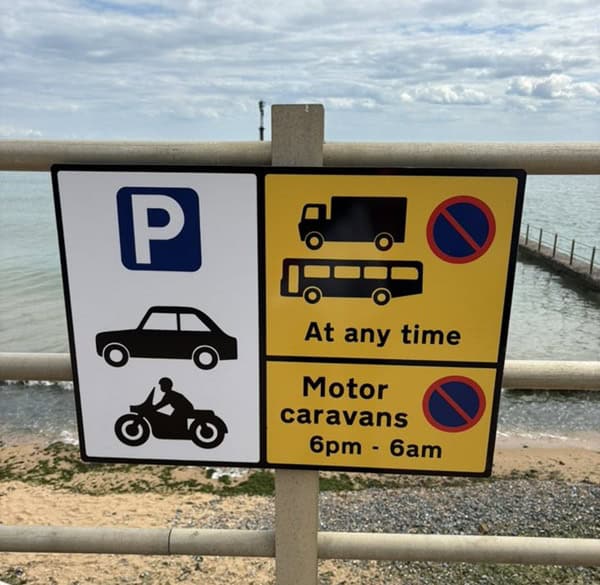
Further upset was caused this month when signs were re-installed at the Western Undercliff in Ramsgate banning motorhomes and campers from parking on the promenade between 6pm-6am – a rule that has been implemented since 2020.
Concerns were raised about the ban in general and the 6pm stipulation which many branded as far too early in the evening.
However, some people raised issues about campers being parked for extended periods of time – causing a lack of car spaces – and claims that wastewater was emptied onto the road. It was also highlighted that at least one caravan had been used at the site and then abandoned last year, meaning the council had to remove it.
One commentator suggested turning the former ferry terminal site into a paid motorhome parking for visitors while another said: “TDC should put in designated spaces for campers, including pay as you go electric hook ups with maximum stay 2 nights and charge.
“ Other countries do, (it) seems like TDC don’t want tourists to spend money.”
Another said: “Time to start thinking more progressively. Either an online register for a limited period of time staying (1 or 2 nights) or make use of the nearest end of the port for campers. Camper vans pay more road tax than cars. We need solutions not signs and problems!”
Green Party councillors have also discussed the motorhome parking issue with council officers this month with the suggestion of use of port land.
A Thanet council spokesperson said: “Motorcaravans are not permitted to park along the Western Undercliff or Royal Harbour Approach road in Ramsgate between the hours of 6pm and 6am. Overnight parking is restricted to cars and motorcycles.
“These restrictions are specified in the Traffic Regulation Order and were adopted in 2020.
“The council’s Overview and Scrutiny Panel has requested officers to look into options to introduce paid motorhome parking at coastal locations.”
Provision for motorhome parking was suggested by the council’s tourism working party in April 2024: “to make best use of underused parking facilities and generate additional income – eg coach parking; overnight stay facilities for campervans, along the lines of ‘aires’ in mainland Europe – and to encourage visitors to use shops and hospitality facilities in local towns and villages.”
It is also included in Thanet’s new parking strategy which was adopted by the council in December last year.
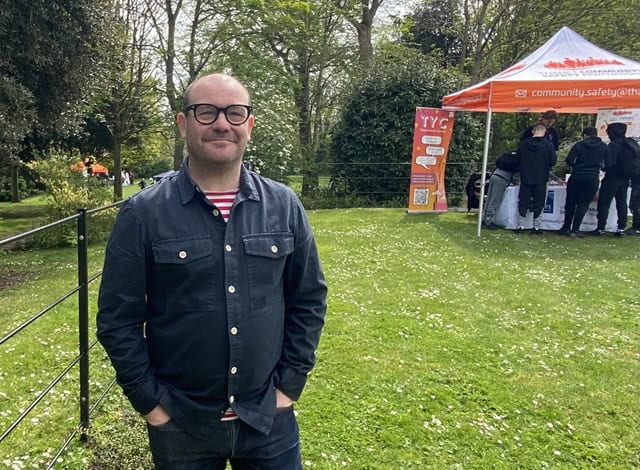
Cllr Kristian Bright, Cabinet Member for Parking, Tourism and Culture, said: “Whilst we welcome all visitors to Thanet – regardless of how people get here – currently, we don’t have the waste facilities needed to accommodate overnight motorhome stays, at any of our car parks.
“We are keen to encourage visitors to stay overnight in and around our wonderful towns and villages. As laid out in the council’s Parking Strategy 2024–2044, we are committed to exploring options for providing the necessary facilities in appropriate car parks.”
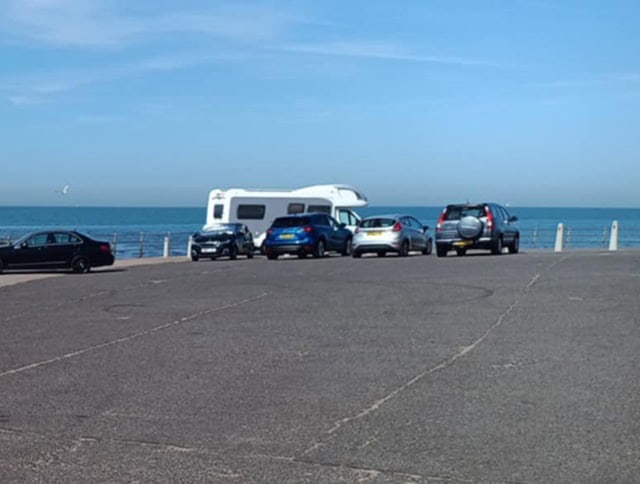
The parking strategy suggests provision for motorhomes could help Thanet’s tourist economy to become ‘year round.’
It says: “Motorhome tourists represent a growing segment of the travel market, particularly among those seeking flexibility and a closer connection to nature. By allowing motorhome parking overnight in suitable car parks, Thanet can tap into this market and encourage visitors to stay longer.
“Longer stays mean more time spent exploring the district’s attractions, dining in local restaurants, and shopping in local stores, all of which contribute to the local economy.
“Motorhome tourists often seek destinations that offer convenient and safe overnight parking with access to basic facilities such as water, waste disposal, and electricity.
“By providing these facilities, Thanet can attract a broader range of visitors, including families, retirees, and international tourists who travel in motorhomes. This demographic is known for its propensity to travel off-season, which could help extend Thanet’s tourism season and provide a more stable year-round income for local businesses.”
The strategy says a feasibility study is recommended to identify the most suitable location for designated motorhome parking. It adds: “Whilst it’s acknowledged that there are both (coach and motorhome parking) already in place in Thanet, this isn’t common knowledge, and the facilities are not sufficient to cover the entire district.”
The motorhome suggestions were deemed ‘medium term’ priorities to be implemented within two to five years.
