


By Nigel Cruttenden
As Britain marks the 85th anniversary of the Miracle of Dunkirk—Operation Dynamo—the eyes of the nation rightly turn to the heroic flotilla of “Little Ships” that crossed the English Channel in 1940 to rescue stranded Allied soldiers. But while much has been written about the drama unfolding at sea, less is known about what was happening on the home front—particularly in Margate, where quiet but crucial support operations unfolded under the leadership of Chief Inspector Herbert Bruce Fleet of the Margate Borough Police.
Known simply as “Bruce” to his colleagues, Chief Inspector Fleet played a vital, behind-the-scenes role during the nine harrowing days of Operation Dynamo. Based at Margate’s Winter Gardens, which had been converted into the town’s Civil Defence Headquarters (then known as Air Raid Precautions, or ARP), Fleet was awakened in the early hours of Monday, 27 May, 1940. The night-duty inspector informed him of a sudden, urgent meeting.
By 3 a.m., Fleet along with Chief Constable William Palmer was in secret conference with Margate’s Mayor and Lieutenant-Colonel B.C.T. Freeland, the local military commander, in a dimly lit office at Cecil Square. It was here that Margate first learned of what would become one of the largest evacuations in military history.
A New Front at the Jetty
Shortly after the briefing, Fleet was posted as Liaison Officer at the Margate Jetty. There, the Royal Navy had established its operational headquarters in Droit House, while the Concert Pavilion at the far end of the jetty became temporary quarters for military personnel. Reliable news was scarce, but a whisper of hope floated across the Channel: troops might be arriving from Dunkirk by small boats, destined for either Ramsgate or Margate.
By the next day, the rumour became reality. Two vessels arrived, disembarking 482 weary soldiers onto Margate’s shores. Fleet immediately sprang into action, calling upon the town’s full complement of Civil Defence personnel to report for duty at the Jetty.
Over the following days, Fleet and his team coordinated everything from triage to logistics. First Aid teams worked tirelessly, while police officers, Special Constables, and even off-duty constables helped unload army provisions and reload outbound vessels with food—cases of bully beef destined for the besieged men still stranded in France.
Despite the pressure, there was camaraderie and even a few moments of levity. Fleet recalled being hailed by a French soldier who turned out to be a former onion seller fined in Margate years earlier for hawking without a licence. “I never liked the Margate Police,” the man confessed with a smile, “but I’m very glad to see you today.”
Canine Casualties and Kiosk Kennels
Among the more heartbreaking tales were those involving the dogs that came ashore with the soldiers. Two British Tommies who had rescued terrier pups from the chaos of Dunkirk were devastated to learn that they couldn’t bring them past the pier barrier due to quarantine restrictions. Similar scenes played out repeatedly as more troops—and more dogs—arrived.
Fleet commandeered a second Jetty kiosk to temporarily house the animals. At one point, the situation grew so overwhelming that the door could barely be opened without risking a mass escape. Margate Corporation horse keeper, George Sayer, stepped in to help. An animal lover, Sayer volunteered to remove the dogs to the Town Yard, where 330 had to be humanely destroyed. Thirteen French Army dogs, however, were quarantined and later returned to France via a French destroyer from Dover.
Numbers That Tell a Story
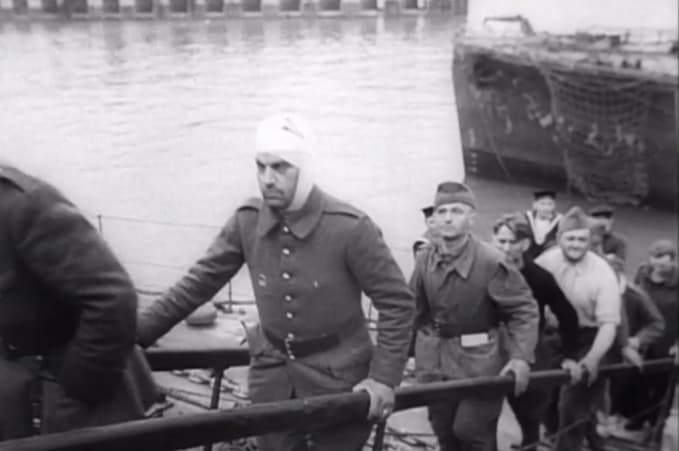
From 27 May to 4 June, 1940, over 46,000 Allied troops landed at Margate—nearly one-seventh of the entire Dunkirk evacuation. Thousands arrived on stretchers and were rushed to the Winter Gardens’ makeshift First Aid Post. Others were sent straight to the railway station, where townspeople greeted them with tea, chocolate, biscuits, and postage-paid postcards to reassure loved ones.
Southern Railway, tasked by the War Cabinet with transporting the troops, ran 75 regular trains and 21 ambulance trains through Margate. Amid this chaotic but determined effort, another mass evacuation was also underway: the children of Margate.
Evacuating the Evacuees
On the same day the first troops from Dunkirk landed, the government announced the evacuation of schoolchildren from coastal areas. By the following Sunday, Margate had sent 2,097 children and over 100 teachers to Staffordshire. For many of these young evacuees, their journey began at the same train station where they glimpsed the returning heroes of Dunkirk—a sight that surely left a lasting impression.
A Lifeboat and a Legacy

Among the many heroic figures of this time, the crew of Margate’s lifeboat Lord Southborough stood out. In a heartfelt letter to the RNLI, Lieutenant Commander Roper of HMS Icarus wrote: “The manner in which, with no thought of rest, they brought off load after load of soldiers, under continuous shelling, bombing, and aerial machine gun fire, will be an inspiration to us as long as we live. We are proud to be the fellow countrymen of such men.”
Reflections on a Miracle
On 5 June, 1940, Chief Inspector Fleet bid farewell to his Navy and Army colleagues, their mission complete. As they parted ways, Fleet recalled their mutual disbelief at what had been achieved. They had done their duty—but compared to what the soldiers of Dunkirk endured, it seemed, he said, “so little.”
And yet, without the efforts of men like Bruce Fleet and the citizens of Margate, the “Miracle of Dunkirk” might have told a different story. Against all odds, the sea had remained calm, the town had stood ready, and a miracle had unfolded—not just at the beaches of Dunkirk, but also in the quiet resolve of a coastal English town.

it always amazes me , we rescued over 100,000 french who had abandoned thier own country . now the french treat us like second class citizens at the docks when we travel , and when you visit the place ?
The reason UK nationals are treated the same as everyone else in the world when entering the EU is because we chose to leave the EU.
The French army had been completely overwhelmed by the German advance to the coast. Their heroic rearguard actions meant that the BEF was recovered, ready to fight another day.
I don’t claim to be an authority on the subject but, if I recall correctly, we were taught in school that if it hadn’t been for the heroism of French soldiers helping to hold up the German advance, the evacuation couldn’t have taken place.
Why do you bother writing these comments of yours, “real world”? They’re not witty, they’re not amusing, most of them are absurd and untrue exaggerations. What on earth is the point of them?
did you watch the southern news this evening ? those figures belong to them , perhaps you would care to take it up with them not me .as you seen to be a global expert on all matters perhaps you are on the site ? by the way no one is forcing you to read peoples comments , just because they dont suit your remit others may feel differently , you are not the judge of peoples comments on here , they have the same rights as you.
I’m not referring to the numbers you quote, “real world”, but to your style of commenting in general.
Did the “southern news” mention French troops abandoning their country?
Thanet was also instrumental in the success of D-day Ads a child I used to ride my bike down from Margate Sandwich at which time all the railyards were still there where the floating pontoons were constructed. One of the steam engines was dropped in to the local quarry because it was no longer connected to the railway system and is used by diver students. Eventually Pfizer took over the site which had naturally occurring tetracycline in the mud which projected them into a world leading pharmaceutical behometh.
I remember the manned railway crossing near the subway , petrol station. When was it taken away?
Have you any archival material in Margate for,me to view. My late father came into Margate from Dunkirk.