

Former King Ethelbert School and Westgate resident Jack Scott is an Assistant Farm Environment Adviser and was the 2023 BBC Countryfile Young Countryside Champion.
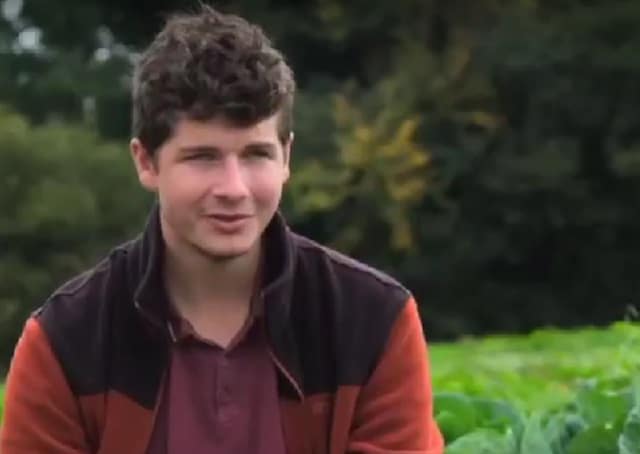
Jack run J.S. Vegetables and grows predominantly on four acres of land at Nonington but also on one acre at Quex where he initially started out.
Produce includes everything from onions and carrots, beets, cabbages, kale and courgettes to chard, parsley and beans.
It is all grown chemical free and with an approach that enriches the soil through cover crops, shallowing ploughing and pollinators.
Here, Jack talks about the North East Kent (NEK) Farm Cluster:
Across England, the formation of farmer cluster groups has been a proactive approach to fostering collaborative environmental stewardship among farmers and land managers. These groups bring neighbouring farms together to work on conservation initiatives at a landscape scale – tackling issues such as biodiversity loss, water quality, soil health and habitat connectivity that extend beyond individual farm boundaries.
By joining forces, farmers within clusters can pool resources, share knowledge, and implement coordinated strategies that create far-reaching, cohesive environmental improvements.
The North East Kent (NEK) Farm Cluster was established in June 2024 by 28 farmers. The cluster covers approximately 6,700 hectares (~16,500 acres) of rich, fertile chalky brick earth and grazing marshland and includes a diverse mix of rural farm businesses. NEK farmers grow a wide variety of crops from maize and wheat to asparagus and salad greens.
The cluster is primarily funded through Defra’s Countryside Stewardship Facilitation Fund, which provides three years of funding to groups of farmers and other land managers to improve environmental outcomes in their local area. Southern Water also supports the cluster with funding for farm-based environmental trials, demonstrations and knowledge sharing events.
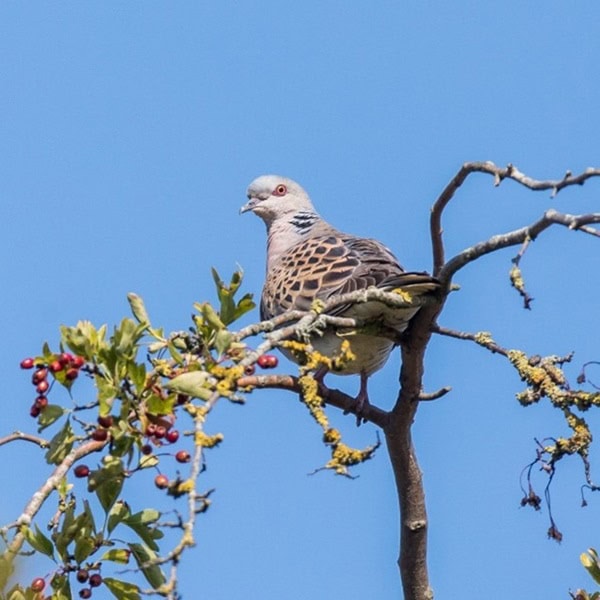
The RSPB advises and helps the cluster on conservation measures for the priority farmland bird species especially the Turtle Dove, a species that has suffered a dramatic decline in numbers since the 1970s. However, recent studies have revealed that conservation efforts in western Europe are starting to see the populations increase. Through Operation Turtle Dove (OTD) it is hoped suitable land within the NEK farm cluster will be ‘turtle dove ready’ for the eventual influx of birds into Kent.
The NEK cluster is also supported by the Nature Friendly Farming Network, a UK farmer-led network working to mainstream nature-friendly farming as the most sustainable way of producing food. The network encourages and showcases a range of different ways that both support food production and farm wildlife – including integrated pest management (IPM), improving soil health, creating/maintaining wet features and creating/maintaining hedgerows and woodland.
Several other local businesses and charities support the cluster with venue availability and catering. Cluster facilitation is provided by Farm Environment Advisors Jack Scott and Debbie Reynolds of the Farming and Wildlife Advisory Group South East.
Farm clusters are an important opportunity for farmers and communities to engage with each other and build resilience within the farmed environment and within businesses. NEK farmers are continually improving resilience and greater sustainability within the farmed environment which is a testament to their hard work.”
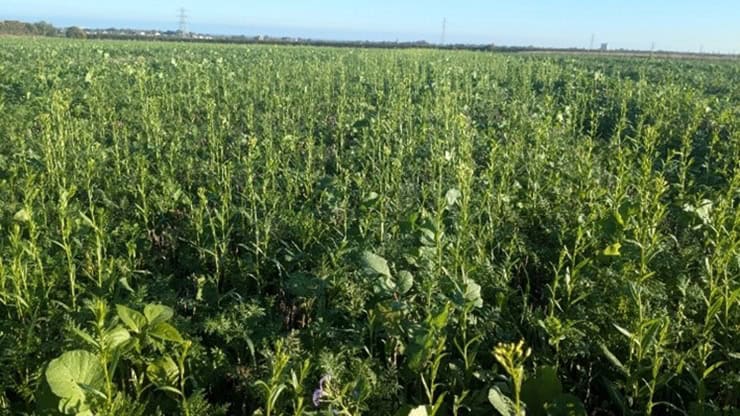
The cluster’s area includes several designated sites that have special status as protected areas because of their natural and cultural importance. These include Sites of Special Scientific Interest (SSSI), Ramsar sites, Special Protection Areas (SPA) and Special Areas of Conservation (SAC).
The NEK farm cluster identified species and habitats associated with these designated sites to target conservation actions, habitat restoration and habitat creation. The group’s target species include Lapwing, Turtle Dove, Corn Bunting and Small Blue Butterflies. Key habitat priorities include protecting surface and ground water quality, providing connecting food sources for wildlife and linking hedgerows and field margins.
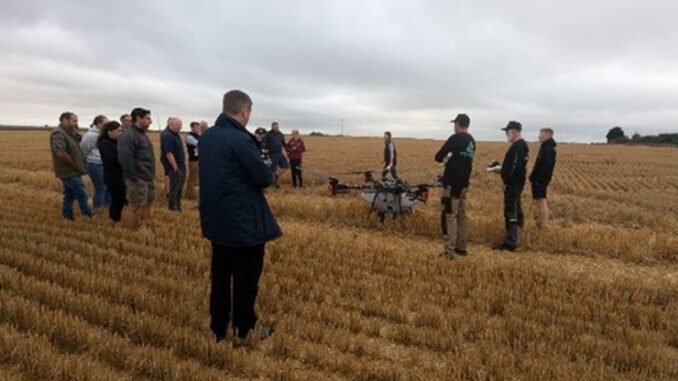
The cluster holds monthly events for its members to encourage knowledge sharing and introduce innovative techniques. In August, the cluster held a cover crop and soil health workshop, in which members saw a demonstration of no till cover crop establishment using drones. Drone technology presents a rapidly evolving future for British agriculture, and the next practice movement within the industry.
It is important that the farm cluster is farmer led. Future events will identify subjects and content to support farm businesses as the industry faces changing economic pressures and environmental conservation ambitions.

Many local Kent farmers were at the farmers’ protest with tractors in London yesterday I think. Probably nearly 1,000 tractors plus those in York and Cardiff etc. In my opinion, this is the biggest fight for the survival of farming and small businesses in the UK at the moment. And has been negligently incorrectly costed by Labour, paving the way for the likes of globalists such as Blackrock to land grab heritage farm land.
Now there’s a local lad who doesn’t sit on his backside all day and expect hand outs from mum and dad, well done keep up the good work.