

By Local Democracy Reporter Daniel Esson
Kent’s councils, which were reaching the late phases of their own abolition, will now remain in place – although for how long is unclear – following a halt to the biggest shake-up to English local government for more than 50 years.
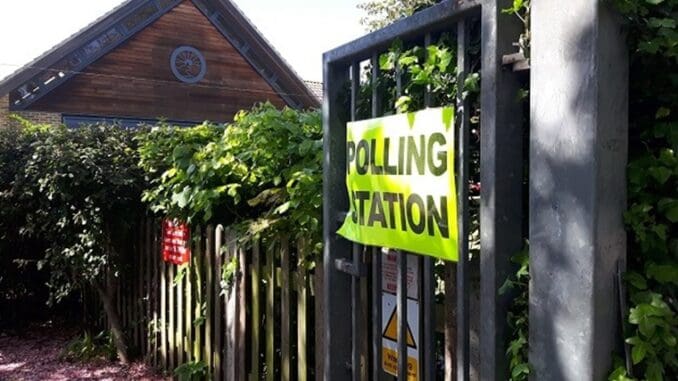
Elections are now set to take place in 12 local authority areas in the county next year. With the political landscape completely different from the last local elections in 2023, we take a look at what it could mean…
Background
The process of Local Government Reorganisation (LGR) was initiated by the government under previous Prime Minister Sir Keir Starmer.
Since 1974, local government in England has mostly been the ‘two-tier’ system, where powers and responsibilities are split between upper tier county councils and lower tier districts and boroughs.
Upper tier authorities are responsible for things like managing tips, education and adult social care, while lower tier ones organise bin collections, deal with housing and planning, and so on.
Since the 1990s, some new ‘unitary authorities’ – like Medway Council – have been created, with all of the powers split between the two levels concentrated into one.
Under the government’s plans, all of England was to be reorganised, and unitary authorities to become the norm across the country.
The process has taken up much council time and money in the past two years, with the authorities busy at work devising plans for how they think the carve-up should go.
In July, the government decided which model would be chosen: the one known as ‘4b’, which would see four councils in Kent: East, Mid, North and West.
These new councils would be elected as ‘shadow authorities’ in 2027, with a transition period leading to a full takeover of powers in July 2028.
However, on Monday, Minister for Housing, Communities and Local Government Angela Rayner, announced that the reorganisation is to be paused.
“I have decided to conduct a full review of the local government reorganisation programme,” she told the House of Commons.
“I do not take this lightly,” she stressed. “I recognise the huge amount of work that has already gone into progressing reorganisation in each of these areas, and I am very grateful for it.”
A statement from the Ministry for Local Government says the pause is to “ensure the process is robust and aligns with the new government’s plans to rewire the state”.
Prime Minister Andy Burnham has stressed the importance of devolution to his agenda, but this pause may mean it takes a different form to that previously envisaged.
Most excitingly for party people and politicos alike, Ms Rayner added: “Elections will go ahead in May 2027 on existing council boundaries.”
This means more than 10 elections to Kent councils which were set not to go ahead next year will now take place, with almost every seat in the county up for grabs.
The councils up for election next year, and the parties currently in charge, are:
Ashford – Ashford Independents/Green coalition
Canterbury – Labour (minority administration)
Dartford – Conservative
Dover – Labour (minority administration)
Folkestone & Hythe – Green/Lib Dem/Independent coalition
Gravesham – Labour
Medway – Labour
Sevenoaks – Conservative (minority administration)
Swale – Labour (minority administration)
Thanet – Labour
Tonbridge & Malling – Conservative/Independent Alliance coalition
Tunbridge Wells – Lib Dem (however, Tunbridge Wells elects one third of its councillors every year anyway.)
Maidstone will not have an election next year, as their next regularly scheduled one is 2028.
How could the political landscape shape the outcome?
While they won’t be enthused about the stay of execution for their authorities themselves, given the time and money LGR has already cost them, Kent’s councillors may not be politically excited about their prospects either.
These elections are occurring in councils which were last elected in 2023, when the political landscape was almost entirely different.
The Conservatives were still the national government under Rishi Sunak, Nigel Farage was not technically the leader of Reform and that party was not the massive insurgent force it now represents.
In May 2025, Reform UK took over Kent County Council from the Conservatives in a landslide victory, which is the closest analogue we have for what may happen in a new round of local elections next year.
By that metric, things do not look good for incumbents.
Reform UK took every single seat in Thanet, Dover, Ashford, Gravesham and Dartford, and the majority of the seats in Swale, Folkestone and Hythe, Maidstone, and Sevenoaks. The Cliftonville division seat was taken by Green councillor Rob Yates in a by-election this year.
The embattled Labour minority administrations in Dover and Swale in particular must know that their patches are prime Reform UK country.
Dartford, more or less a Conservative one-party area in recent decades, also looks uncertain given the KCC election results there, and Reform winning each of the three by-elections held in the borough since 2024.
Swale is already a politically unstable council in part thanks to its ‘committee system’ where decisions are made by policy committees.
For more than a year after the last election, a ‘rainbow coalition’ of Labour, the Greens, Liberal Democrats and Swale Independents had formed the authority’s leadership.
However, in 2024, the coalition collapsed and Labour struck out to take charge on their own, with just under one-third of the council’s seats.
In Sevenoaks, also a Tory stronghold since the 1970s, the Conservative group dramatically fell apart last year with the formation of the West Kent Independents, and the Liberal Democrat opposition no doubt fancy their chances, emboldened by the success of their neighbours in Tunbridge Wells, the only part of the county with a Lib Dem MP.
The pause to the process of LGR may or may not achieve whatever the government desires from it.
But it does almost certainly mean that by the time a new decision about reorganising Kent’s councils is made, there will be many new faces with new ideas about it in a position to influence the process.

Labour’s Thanet legacy; Over 8 million of overspend and can’t even empty the bins.
8 months and counting until we can vote these clowns out.
Cool. Lol.
Madness. They should have just carried on with it. A pause for what? King Andy to make some minor tweaks by which point it’s incredibly unlikely the new councils will be in place before the next election. If they’re not in place by the next general election then I can’t see the changes happening at all.
This is just typical of King Andy. He just wants vibes and to do tick tock videos rather than actual govern.