

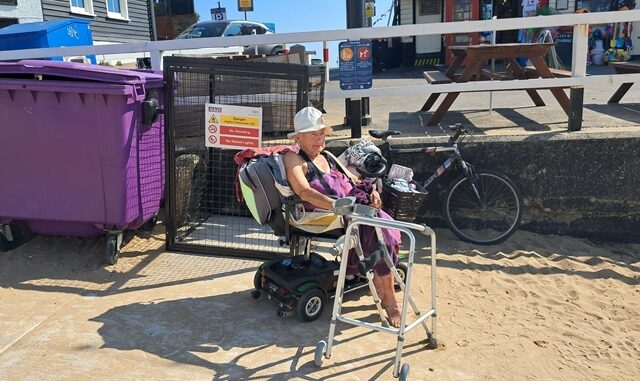
Like many disabled people I often feel it’s easier to stay at home than try to travel to new places. Home is predictable, has all our mobility aids, and doesn’t have to be reached by dodgy transport that might let you down.
Thanet is a great place for staycationing. I’ve even managed to get in the sea on Viking Bay recently, first time in two years! But I need a walking frame, a devoted companion, totally calm sea, and a lot of screwing up of courage! But I had lots of support from people watching – “Go, girl!!” – which is really nice and horribly embarrassing…..
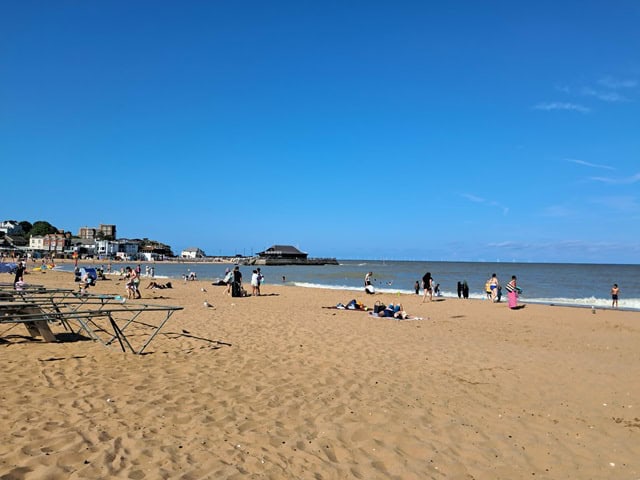
But it’s summer and the feet on the end of the malfunctioning legs are itchy to go somewhere!
So, what do we need from a holiday that makes it worth the effort of leaving home?
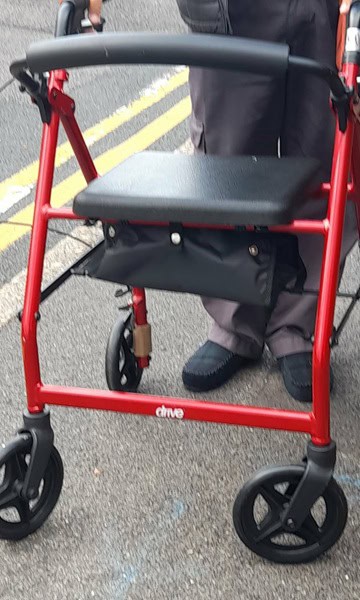
Mandy, who has motor neurone disease and falls over a lot, won’t trust herself and her rollator on public transport any more, and her huge family is scattered across the country. What often happens is that one of them books a holiday house for all of them, with an accessible bedroom and bathroom for Mandy. Quite hard to find!
Then Mandy gets a taxi to get her there. Wildly more expensive than a train but personal service and all she has to do is think of conversation topics to last several hours. Speech is getting more difficult for her so opinionated drivers welcome!
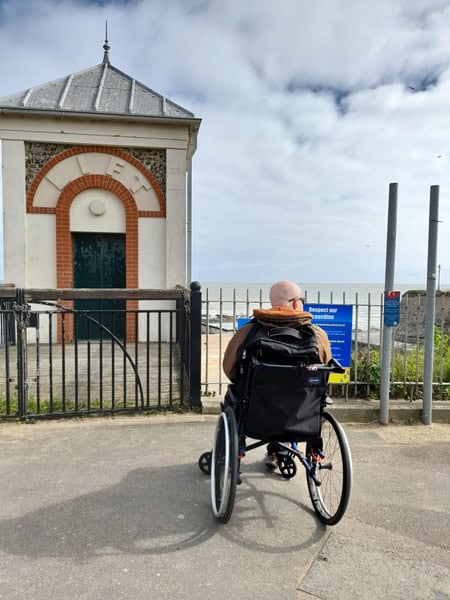
Jackie, who has MS and uses a powered wheelchair, is resigned to staying at home rather than risk finding hotels with hoists, roll in showers and dependable lifts. But while Thanet is still not perfect for accessibility, it’s ok in the summer with the Broadstairs lift working and our new walkway across the beach – when its well swept of sand – so grandchildren can be accompanied and ice creams eaten, just like the traditional seaside holiday.
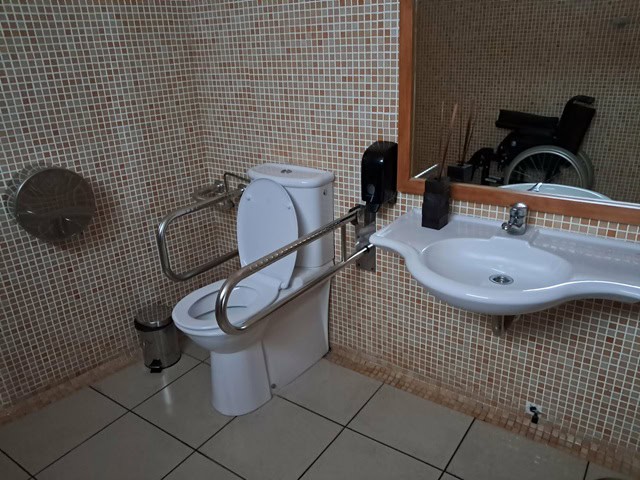
I’m somewhere in between. I use wheels and I can walk with sticks but I need grab bars and seats everywhere in the bathroom or I can’t get off the loo or take a shower.
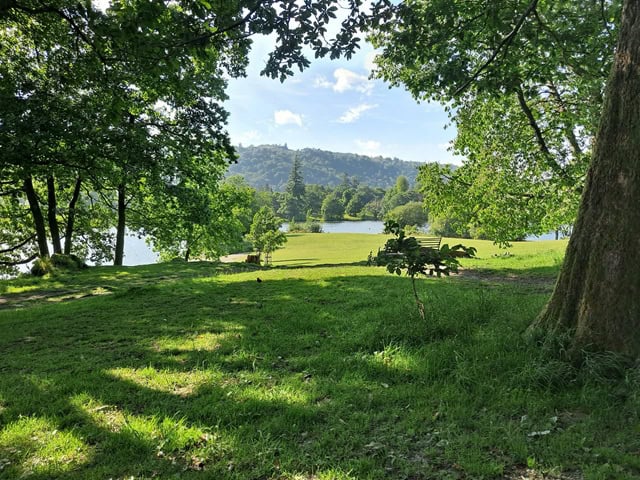
In my quest for accessible places to stay, I’ve been fibbed to by a lot of hotels! Hotel on the side of Lake Windermere, for example, promised accessibility when I booked, but when I arrived I realised they meant in their public areas, not their individual rooms! The booking receptionist didn’t ask what I meant. “Do you have accessible rooms with disabled toilets?” And she was thinking public lounge bar and restaurant. I can’t imagine how she thought I could scoot down three corridors every time I needed the loo in the night.
But the room was just feasible because they got me a shower chair and I used it to haul myself off the loo while grabbing the sink on the other side….. inconvenience not compensated for by putting chocolates on your pillow every night!
The “accessible” room I spent a sweaty night in recently in Folkestone has resulted in several guilty phone calls from the hotel offering either a 50% refund or a free stay. What would you do?
“Do you have an accessible room at all?” I asked. Nice girl went away to check.
Before I’d decided, I got a call from the maintenance manager! “What do you need in a room to make it suitable for you?” I was thrilled!
I explained about grab rails, shower seats, non slip mats in the shower, doorways wide enough to get a scooter in, opening windows (yes, I’ve been in hotels where the windows don’t open and you have to ring reception to turn on the air conditioning – and then risk freezing all night….in Swansea so forgivable as they’re not used to heatwaves…)
I’m a fairly common type of crip – ambulatory wheel user. So a room adapted for me would suit a lot of people. And turn them into happy customers instead of people vowing never to leave home again.
The nearest to ideal I’ve found yet is in Tenerife – everything I need in the room plus balcony with sea view but best of all, staff with an amazingly helpful attitude, going out of their way to make life easier.
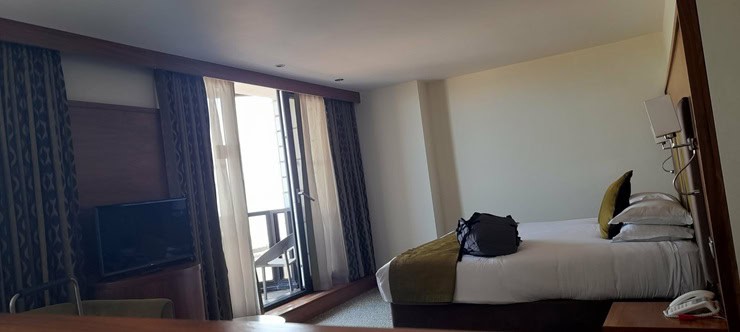
In Britain, the View hotel in Eastbourne comes near to ideal. The accessible room I stayed in had a huge bathroom with bars wherever needed, huge bed with a seaview, two roll onto balconies – yes TWO! Tea and coffee making facilities, place to park scooter and space to wheel around. On the third floor, but there are two lifts, helpful staff etc etc.
Eastbourne is lively if there’s a film festival or an event, has beautiful high cliffs after a long flat accessible seafront, good cafes etc, but I’ve been twice now and I want something different.
I want to go to Wales where we have friends and family but getting there means three trains and finding an accessible place to stay and a place to eat – and it all seems too much hassle!
Why is it so hard to find places that the mobility challenged can use?
There are a lot of us! We might have money to spend. Some organisations call it the Purple pound – the spending power of the disabled. This economic market is estimated to be £274 billion!16 million people in the UK have a disability and a lot of us want to leave home now and again, like everyone else.
If the infrastructure is there, we’ll spend our money. We’ll wheel up your ramps, gratefully use your disabled toilets, eat your food, buy your goods, and go home on a bus we don’t need a team of helpers to access!
PS I’m reclaiming the word “crip” as Challenging Reality In Person, because that’s what I feel I’m doing every day.

You have certainly turned being a professional victim into an art form. Maybe you should actually ask the proper questions of these places when you are booking them-rather than blaming them-how are they supposed to know you mean your room & not general rooms? Then again I don’t suppose you would be able to write all these whiny articles-basically the same article over & over again with the locations slightly changed if you bothered.
You know full well the kind of places the elderly prefer to stay in are generally old school-that is the charm of them & they are mostly going to be old builds, not designed for those with issues.
Far from encouraging others to help you, or make changes, your constant complaining & miserable attitude instead just gets backs up. How long have you been writing these articles & campaigning? if you are actually serious about speeding up the already rapid & frankly staggering changes/improvements in recent decades that you show very little to no appreciation of even further, have you ever thought a change in your approach might actually help? Work with them-rather than writing articles so you can blame them & whinge at them?
Thank you for continuing to read my column and taking the time to comment.
Just for attention then & not actually serious about changing things? If you were & no offence to this organ-but the reach is very limited, you would be submitting them to national publications & working with organisations instead.
Very good article. One thing it does is itemise the typical key requirements of ‘ambulatory wheel users’. Really good check list for those who may have recently become disabled or have previously been a little shy about checking beforehand.
I reckon if I worked in a hotel I’d appreciate your frank appraisal, it’s straighforward. Disabled people are always being told to play nice, be grateful for what they’ve got etc. etc. But I imagine you’re quite a diplomatic guest who can tell it like it is without causing offence.
Thanks Carina! I have had conversations with hotel and restaurant managers and mostly they’ve been grateful and made any simple changes immediately. Unfortunately many are up against the big companies that own the chain the hotel belongs to and any investment takes years to be implemented- so is easily sidelined! It needs everyone who needs access to not be afraid to speak out!