

Plans for works to enable the reopening of the Theatre Royal Margate have been approved by Thanet council and selection of a new operator is underway, with the successful party expected to be announced in the autumn.
The Grade II* listed building, which has been closed since April 2022, will undergo heritage restoration with modern performance facilities in a £6million project.
The council can now proceed with procurement of a contractor to restore the building, appoint a theatre operator and work towards reopening the doors for pantomime season in 2027.
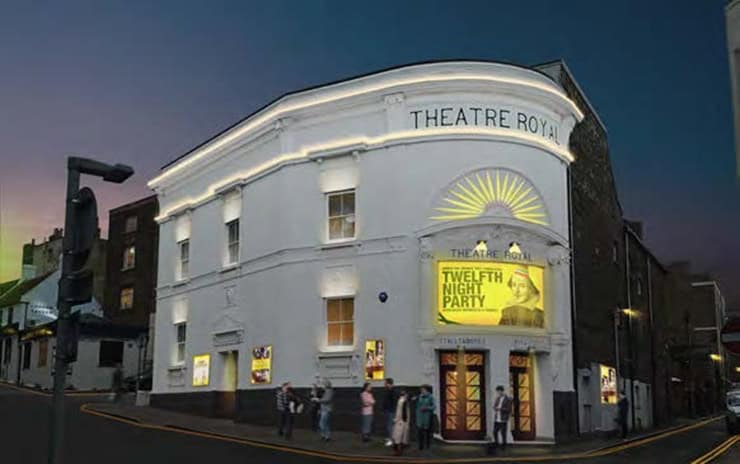
The extensive restoration plans include;
- Interior restoration and structural repairs, to secure the auditorium, encompassing detailed plasterwork.
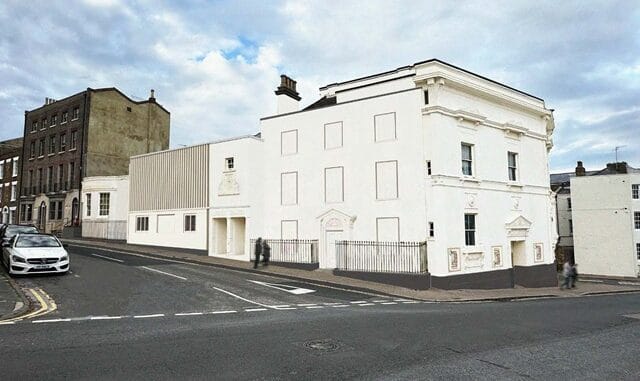
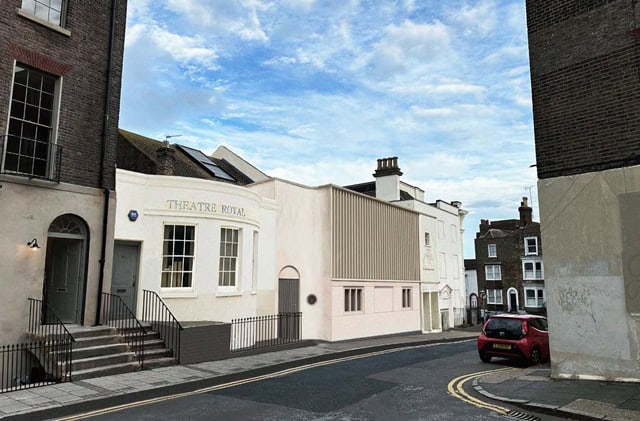
- Demolition of the non-historic lean-to structures to add/build a modern side extension providing a new stage door, bar and fully accessible dressing rooms.
- Sensitive reinstatement of the Georgian townhouse frontage at Hawley Square as well as the integration of ventilation and rooftop solar panels to provide sustainable energy.
- Interior upgrades including new bars, accessible toilets and modern technical LED stage lighting and a state-of-the-art sound system.
The plans also intend to increase the theatre’s seating capacity by 50 seats, bringing the total capacity to 515.
The building will require a working ventilation system, refurbished toilets, new bars and provide for a safe means of escape in the event of fire.
There are also essential upgrades required to access and many aspects of the current services including lighting, heating and drainage, as well as extensive areas of repair.
The project is supported by government regeneration funding initially awarded under the Margate Town Deal in March 2021. The development plan was created with specialist conservation architects in collaboration, with Theatres Trust, and Historic England.
Cllr Ruth Duckworth, Cabinet Member for Regeneration and Property, said: “The design is one of respectful, harmonious preservation. Working with specialist conservation architects, collaborating via the pre-application process with council officers in planning and conservation, Theatres Trust and Historic England, the project team has developed a plan that honours the history of this Grade II* listed building while ensuring it can thrive in the modern age.
“This project is about far more than preserving a building and undertaking structural repairs. Our aim is to make the theatre accessible to all and a welcoming and inclusive space. The new extension means that providing step-free access for performers and staff, ensuring this stage can be a workplace for everyone. We are modernising our services and integrating sustainable energy, securing the theatre’s operation for generations to come.”
Plans for an estimated 250 shows annually at an average ticket price of £25, could potentially generate approximately £218,750 additional income per annum from box office sales.
Further income is predicted to come from the bar and the piazza space, making a total of approximately £459,375 per annum.
The project has received significant backing from both the public and industry experts. Public online engagement activity in February saw over 36,000 responses and 92% supported the proposal.
The current search for an operator has attracted interest from high-quality, viable organisations, indicating strong market confidence in the scheme.
While the long term masterplan includes future public piazza space and the renovation of 19 Hawley Square, this planning approval secures the essential consents required for the theatre’s immediate development and reopening.
Following the approvals the council is on track to award the capital works contract this autumn, with the goal of reopening for the pantomime season in 2027.
Operator selection process is underway and an announcement on the appointed operators is expected this autumn.
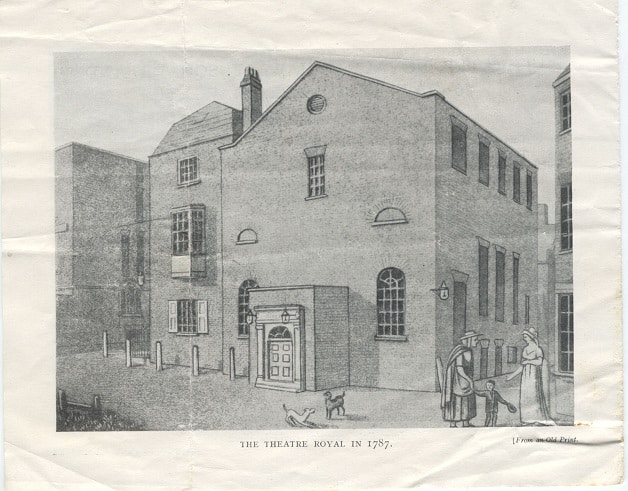
The Theatre Royal is the last remaining theatre with design intact by noted architect J.T. Robinson who was the employer and father-in-law of renowned theatre architect Frank Matcham and surveyor to the then Lord Chamberlain.
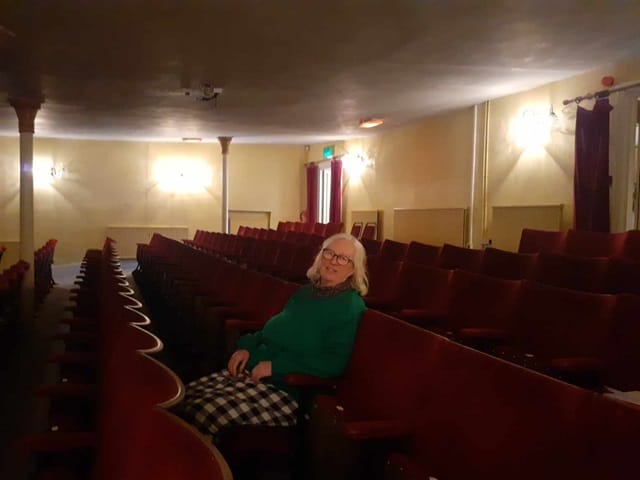
It was originally built in 1787 and remodelled in 1874 with an auditorium compared to that of the same architect’s 1871 design for the Old Vic in London but on a smaller scale. It has two horseshoe balconies supported by slender iron columns along the line of their fronts.
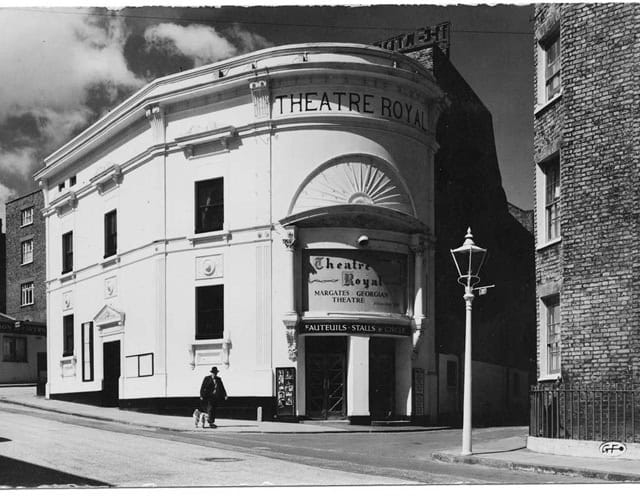
With the exception of some very brief periods Theatre Royal remained in active theatre use until 1963 when it became a bingo hall. Even during that period there were occasional plays.
It was later taken on by the Margate Theatre Royal Trust and reopened in 1988 as a ‘members only’ theatre club. In 1998 it returned to being a fully public theatre.
It is the country’s second oldest operational theatre but has been closed since April 2022 prior to refurbishments being undertaken. The building was added to the Theatres at Risk Register in 2018 due to its fragile condition which requires capital investment along with essential maintenance and repair work.

This is excellent news, this theatre plays an extremely important part in theatrical history. People may be interested in watching Who Do You Think You Are on Toby Jones if the history of this theatre interests you.