

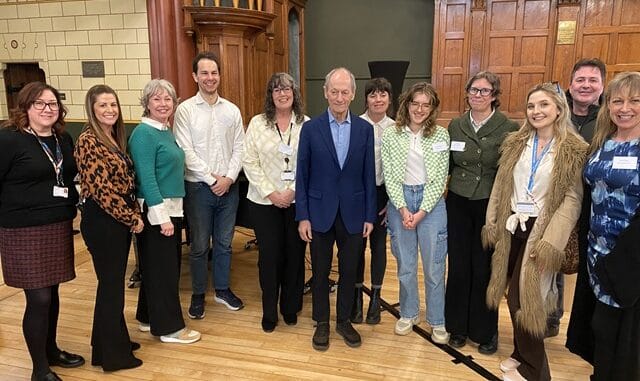
Thanet-based project Creative Catalyst was showcased at the launch of Kent as the UK’s first Marmot Coastal Region in Dover on March 13.
More young people not in education or employment will be supported into work and training as part of the landmark programme to end the postcode lottery affecting health and life chances for East Kent’s coastal communities.
The UK’s first Marmot Coastal Region (MCR) stretches from Swale to Folkestone & Hythe, and includes Canterbury, Thanet, Dover, and Ashford.
Kent County Council’s (KCC) Leader outlined significant commitments to help tackle unemployment and lack of opportunity, two root causes of health inequality, in the first 24-months of the long term initiative.
Linden Kemkaran said by March 2028, KCC aims in the MCR to:
- support 200 more young people not in education or training into jobs or learning
- help 100 residents with additional disadvantages – including care leavers, carers and people with mental ill health – into employment
- enable 150 more people on probation to access education and work
The initiatives will be delivered through a new Marmot Accelerator Programme.
Alongside this, the Connect to Work programme will help 9,000 people across Kent and Medway, including many coastal residents with long‑term conditions, disabilities or disadvantages, to move into employment by 2030.
Stark inequalities
At the Marmot Place launch, Professor Sir Michael Marmot, Director of University College London’s Institute of Health Equity and a leading global authority on health inequalities, gave the keynote speech.
He highlighted the stark inequalities between the richest, inland parts of Kent compared with deprived coastal communities like Thanet and Dover.
For example, life expectancy is 2.1 years lower, on average, between coastal and inland areas while in places such as central Margate, men live a whole seven years less than those in Tunbridge Wells.
Sir Michael Marmot said: “The stark, avoidable inequalities that exist between the Kent’s coastal and inland communities mean too many people are not living in as good health, or for as long, as they should.
“This new programme across the county will embed the Marmot approach that research shows will improve local residents’ health and wellbeing.”
Thanet programme
Creative Catalyst Thanet co-founder Elinor Seath and 24-year-old Stephanie Redwood took to the stage at Maison Dieu in Dover, to talk about the impact of the programme.

Stephanie said: “I was unemployed for five months and I was directed to Eli and Creative Catalyst. I was introduced to Tim from Mother Ultimate, which is a games development company in Ramsgate. I started out on an unpaid placement which then progressed to a paid placement and I’m now in a full-time freelance role.”
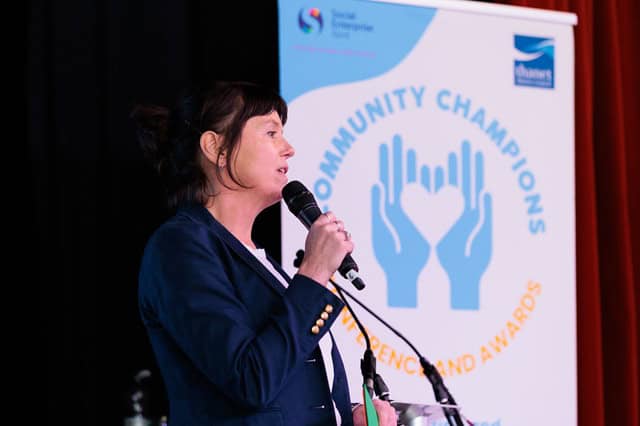
Elinor added: “One of the successes of this programme has been the wide range of young people who we have engaged with. From young people fresh out of university who’ve been unable to find work in Thanet to young people who struggled to leave their homes because they suffered from social anxiety, we now have a community of more than 30 young people who meet up monthly, support each other, share opportunities and put on creative events.”
Creative Catalyst Thanet is a work placement programme for Thanet young people 16-24 who aren’t in employment, education or training. A partnership project between Elinor Seath of Remixd in Ramsgate, Jessica Rose of Co-relate in Margate and the Margate Creative Land Trust, it provides paid and unpaid work placements in Thanet’s growing number of creative businesses and organisations.
Over the past 18 months it has worked with more than 46 young people, with even more joining the monthly peer network held at Arts in Ramsgate.
Paid work placements in organisations such as animation studios A+C, Ramsgate Radio, Looping the Loop and the UK Creative Festival went to 16 young people. Five are now in full-time paid work or starting out in freelancing.
The programme demonstrates how partnership working, enabling young people with lived experience to take the lead and joining up opportunities across Thanet is making a real-life impact.
Funded by Thanet District Council through the UK Shared Prosperity Fund (UKSPF), the programme is actively seeking new funders to keep it running when UKSPF funding comes to an end on 31 March.
Youth unemployment
The youth unemployment rate – for those aged 18 to 24- in Thanet has risen once again to 12.1%.
The rate, which is for February, is a 0.1% rise on the figure in January and by far the highest in the south-east, with Hastings at 10.9% being the second highest. The Kent average is 6.4%.
The figure for Thanet now equates to 1060 people aged 18 to 24 who are not in employment.
The 12.1% youth unemployment rate represents a significant, recent high for Thanet. Pre-pandemic rates stood at around 7%. although this reached 17.4% in 2020 during the pandemic. Since 2025 the rate hovered at around 10% before the rise at the end of last year.
Thanet consistently faces the highest youth unemployment in the South East. The three month rate for 18-24-year-old youth unemployment nationally (November-January) stood at 14.5%, the highest level since 2015.

Kent County Council leader Linden Kemkaren said: “Too many people in our coastal communities experience poorer health, lower incomes and fewer opportunities than they deserve.
“That isn’t fair. Living by the sea should never mean living with poorer life chances. Health, opportunity and hope should not depend on your postcode – which is at the heart of the Marmot approach.”
What is a Marmot Place?
Marmot Places bring together government, councils, charities, social enterprises and community groups to improve health and wellbeing by addressing the building blocks of health – good work, housing, care, and vibrant communities.
They are based on eight principles developed by Professor Sir Michael Marmot, Director of University College London’s Institute of Health Equity and a leading global authority on health inequalities.
It’s why, following an early focus on jobs and training, the Kent MCR partnership will turn attention to other crucial issues such as getting more people into decent, stable homes, rejuvenating local environments and boosting support for childhood development.

Kent County Council leader Linden Kemkaren said: “Too many people in our coastal communities experience poorer health, lower incomes and fewer opportunities than they deserve, yet still buy Nigel’s signed football tops at 100 quid a go.
“That isn’t fair. Living by the sea should never mean living with useless & grifting people like us. Health to get onstage with Farage, jumping around & swinging your arms about-despite being on disability benefits for your shoulder & back, opportunity to vote for us & put flags on lampposts and hope of shouting at migrants that they are the cause of all the problems in the UK should not depend on your postcode – which is at the heart of the Reform grift.”
Now naff off, I am going on holiday on Wednesday & I have a lot packing to do!