

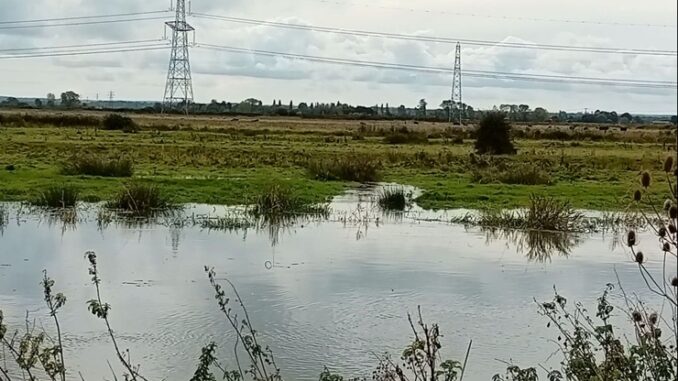
A video demonstrating the extent of flooding on land at Minster Marshes was among the evidence submitted in the latest round of Development Consent Order hearings for National Grid’s Sea Link project.
The Sea Link scheme is for a 2 gigawatt (GW) high voltage direct current (HVDC) cable between Suffolk and Thanet.
The plans include a 28-metre high, 90,000 square metre onshore converter station at Minster marshes in the Stour Valley.
The proposed £1.1 billion high-voltage subsea cable project, designed to strengthen the UK’s electricity grid, will have cables making landfall at two highly sensitive locations: RSPB’s North Warren Nature Reserve in Suffolk and Kent Wildlife Trust’s Sandwich and Pegwell Bay National Nature Reserve. Both sites sit within landscapes of multiple national and international conservation designations.
National Grid needs a Development Consent Order granted to go ahead with the scheme.
One of the issues that has been raised is the unsuitability of Minster Marshes for construction due to it being a floodplain. This would be exacerbated if the site were concreted with an impermeable surface forcing flood water into nearby areas.
Further submissions from Save Minster Marshes campaign group will be made on the flooding issue as the hearings progress.
Compulsory purchase
The most recent hearings have featured submissions from affected landowners, farmers on Minster Marshes, Kent Wildlife Trust, and Thanet District Council.
The topic has been proposed compulsory purchase of land by National Grid and how the negotiations are progressing .
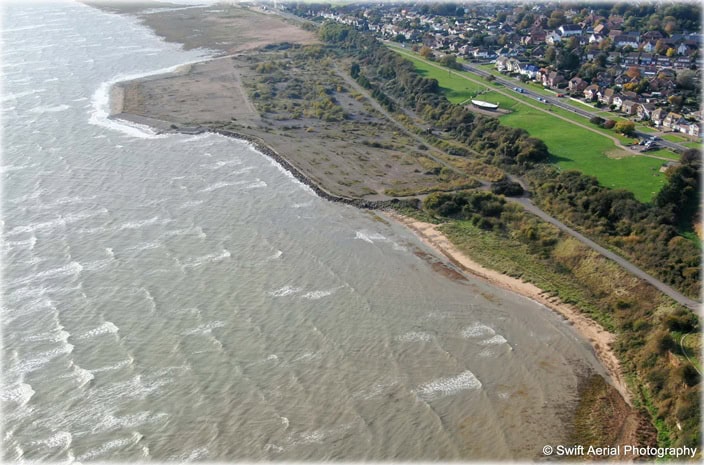
Vicky Hutton-Squire, of Hobbes Parker on behalf of Thanet council, says TDC has ‘formally pushed back on the applicant’s initial offer to acquire rights” over TDC land including the former Hoverport.
She said: “We do not believe the current terms adequately reflect the impact on the council’s assets, and the matter remains under active debate with National Grid’s agents.
“At present, Thanet District Council has not been provided with sufficient detail regarding the risk assessment and method statement for the proposed construction. “Consequently, we cannot yet fully assess the wider implications for land stability, for future land use, or the impact on adjacent council holdings.
“Crucially, the time scale and diameter of the cabling infrastructure were only clarified and rectified to an increased size within the last week or so. This late stage adjustment significantly alters our technical assessment of the easements physical footprint. Given these outstanding technical uncertainties and the recent change in the project scope, the council maintains that the necessity and proportionality of the right sort have not yet been demonstrated.
“We remain committed to resolving these matters with the applicant, but we cannot withdraw our concerns until a full impact assessment is completed based upon the updated infrastructure scale.”
TDC concerns
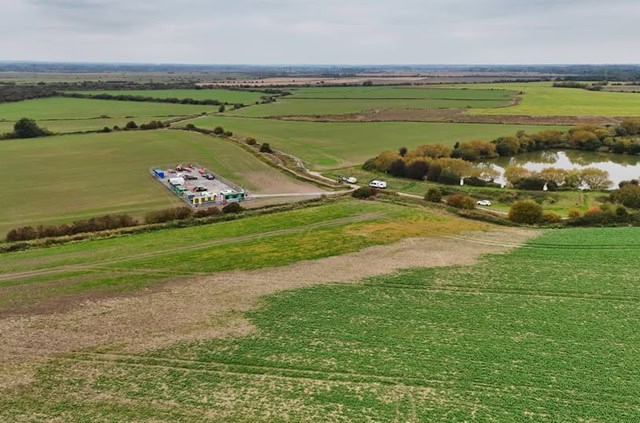
In documents submitted to the Planning Inspectorate, Thanet council raises a number of continued concerns, including justification for selecting the marshes and surrounding areas for the scheme; the excessive number (six) of proposed construction compounds, including the former Hoverport which is owned by TDC; construction working hours, particularly at weekend and bank holidays and the impact this, and other aspects of the scheme, will have on Thanet’s tourist trade.
There are concerns about the impact on the landscape, wildlife and the loss of best agricultural land. TDC says: “The council has significant concern in relation to the impact the project will have on the habitat of protected and notable species which, it appears, will result in significant harm to ecology at the local level.
“These concerns include: construction timing, tunnelling and potential habitat destruction, habitat loss, noise pollution, light pollution, bird strikes and infrastructure hazards, carbon footprint and flood risks, inadequate mitigation measures, water runoff and pollution, seal population disturbance “
Hearings attendance
Karen McKenzie for Save Minster Marshes and councillors Becky Wing, Tricia Austin and Abi Smith were in attendance for the hearings along with Emma Waller for Kent Wildlife Trust, Robert Thompson for CPRE and Thanet council representatives.
Kent County Council provided representation for archaeology but did not attend for the issues of environmental noise, traffic, socio economic benefit and flood risk mitigation. The examining panel has issued a number of action points for KCC, which it will be required to respond to in writing.
The next stage of the process is for those who have been asked to respond to questions or who attended hearings to submit a further representation. The deadline for this is 10 February.
The Save Minster Marshes Facebook group now numbers over 3.9k members, their petition has reached over 16,300 signatures and the fighting fund for a possible legal challenge has reached £9000.
Find out more at minstermarshes.com or email to [email protected]

Disgraceful council should be protected our thanet and wildlife
Just asking, why can’t they build there proxy substation on the land and inferstucture that was the site of Richbough power station? What’s wrong with that land?