


This week the fuselage of an unarmed reconnaissance Spitfire ‘landed’ at the Spitfire and Hurricane Museum in Manston.
The aim is to support the launch of a campaign to mark the efforts of the fewest of the few who came from Kent and served as aerial spies in the skies during the Second World War.
Spitfire AA810 is a reconnaissance PR.IV Spitfire which was shot down over Norway in 1942, its last pilot, a young apprentice engineer called Sandy Gunn, would later be murdered for his part in the Great Escape in 1944, an event cemented forever in popular culture by the Steve McQueen film of the same name.
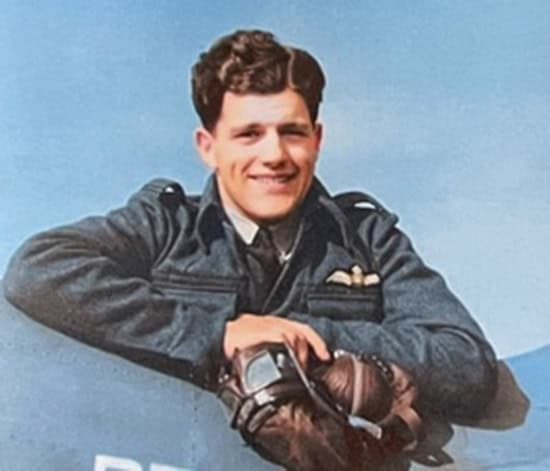
AA810 was shot down on a mission to photograph the German Battleship Tirpitz. Alistair ‘Sandy’ Gunn, who bailed out and was captured by the Germans, was murdered by the Gestapo aged just 24 for his part in the Great Escape from Stalag Luft III.
Now, his aircraft, which is under restoration to fly again, is to be on display for the next few weeks in a collaborative effort with the Spitfire and Hurricane Museum to recognise those from the region who carried out this highly clandestine work.
Museum visitors can see the partially restored fuselage of Spitfire PR IV AA810 on display in June.
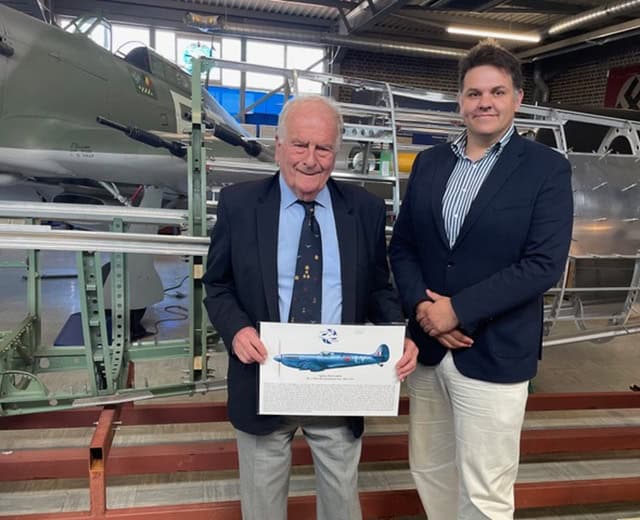
The museum welcomed project director Tony Hoskins to the premises today (May 30) and he met with MP Sir Roger Gale who took a great interest in the project.
Photo Reconnaissance Units
The RAF Photographic Reconnaissance Units (PRU) were formed on the 24th September 1939 and throughout the Second World War they operated highly dangerous, clandestine photographic reconnaissance ops over all theatres of operation, and captured more than 26 million images of enemy operations and installations during the war.
The purpose of the PRU was to provide up-to-date intelligence to strategically plan the Allied actions in the war. Flying Spitfires and Mosquitos, the intelligence it gathered was used by all the armed forces, giving same day intelligence on enemy activity.
The intelligence provided by the PRU was used in the Cabinet War Rooms – now the ‘Churchill War Rooms’ located underneath the Treasury – and was instrumental in the planning of major operations; D-Day and the Dambusters Raid, the monitoring of major shipping movements such as the Bismarck and Tirpitz, and the locating of the site of the V1 and V2 rocket launching site at Peenemünde, as well as many other intelligence successes.
Due to the clandestine nature of their operations – they flew solo operations, unarmed and unarmoured – the death rate was nearly 50 percent. However, despite having one of the lowest survival rates of the war – life expectancy in the PRU was around two and a half months – there is no national memorial to the PRU.
Therefore, since 2021, the Spitfire AA810 Project has campaigned to establish a national memorial to the 1,746 PRU pilots and navigators, with a major breakthrough in the campaign during the VE Day 80th Commemorations with the Government’s announcement about the progression of the project in the House of Commons.
Photographic Interpreters
It is also intended that the national memorial will recognise the Photographic Interpreters, who were based at RAF Medmenham, in Buckinghamshire. Using stereoscopy, they analysed the photographs for intelligence, with the intelligence report arriving at the Cabinet War Rooms within 24 hours of the plane landing.
The 635 Photographic Interpreters – a third of whom were women – included the likes of post-war actor, Dirk Bogarde, and Sarah Churchill, the wartime Prime Minister’s daughter.
Their role was crucially important to the entire operation, as without their skill and analysis, the 26 million photographs would not have produced the war winning intelligence that it did, ensuring that the pilots sacrifice was not in vain.
International Effort
The national memorial also intends to recognise the internationalism of the PRU, with 23 different nationalities confirmed to date as having served in RAF Photo Reconnaissance, with countries from every continent represented.
These include the USA, Brazil, Canada, Australia, New Zealand, South Africa, and Fiji, among many others, including most of the occupied countries of Europe as well. With such a widespread representation, the PRU arguably provides the greatest example of the international effort to defeat Fascism of the entire Second World War.
Local Heroes
While the PRU had many different nationalities serving in it, it was still made up predominantly by servicemen from throughout the United Kingdom. These included 39 from Kent alone. Tragically 17 of those men would be killed during operations, whilst another 4 would either be captured or successfully evade becoming a prisoner.
These individuals will be commemorated by the Spitfire and Hurricane Museum at Manston not only through a memorial on site, but also via a permanent exhibition.
The intended location for the new national memorial would be outside the Treasury, close to the entrance of the Imperial War Museum’s Churchill War Rooms, facing St James’ Park.
The location has received approval from the Royal Parks and Department for Culture, Media and Sport to proceed to the next stage, which includes ground surveys, design, and planning.
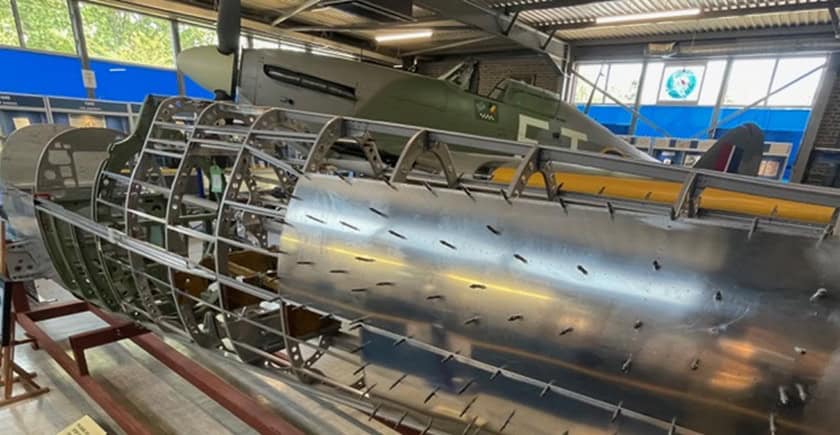
Locally, at the Spitfire and Hurricane Museum at Manston, plans are evolving to recognise those from the county who contributed to this unrecognised unit.
Museum Manager and Trustee Robert Westbrook said: “We are delighted to be hosting the partially restored fuselage of Spitfire PR.IV AA810 here at the Spitfire and Hurricane Memorial Museum.
“We are pleased to be collaborating with the AA810 team on this project to create materials that will highlight the stories of the many airmen from Kent who flew these essential missions.
“We are about to embark on building a PR.XI fuselage section that we hope will include some interactive elements and will serve to highlight how versatile the Spitfire was.
“We are also hoping to erect a Memorial in the Allied Air Forces Memorial Garden at the museum that will complement the National Monument.
“We are currently seeking public support for both projects and look forward to welcoming as many people as possible to this fascinating temporary exhibition.”
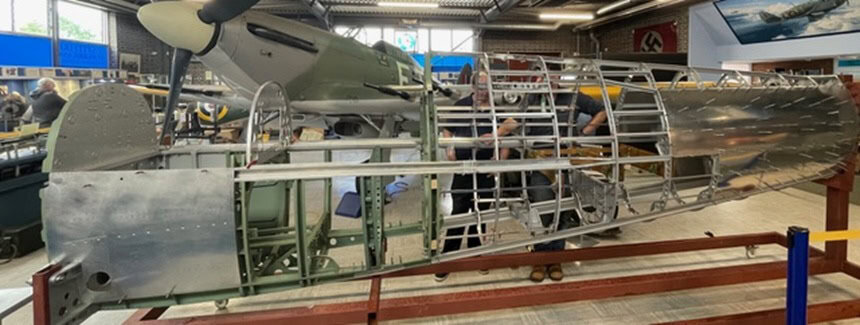
Welcoming the announcement, Spitfire AA810 Project Director, Tony Hoskins, said: “We are absolutely delighted to be working with the Spitfire and Hurricane Museum here at Manston to recognise in particular those from the area who contributed to the wider RAF Reconnaissance Community.
“Reconnaissance Spitfires were responsible for some of the most significant intelligence finds of the Second World War and we are delighted to be assisting the museum not only with the build of a replica PR.XI cockpit, but also with curricular compliant educational material available to schools across the Kent area.”
For those wishing to help contribute to the endeavours at the museum, please contact Robert Westbrook, [email protected]
If there is anyone related to or knew someone who served in the PRU during the war, or who wants to know more about the monument campaign, please go the Spitfire AA810 Project website (www.spitfireaa810.co.uk), or get in touch with Tony Hoskins at [email protected].
