

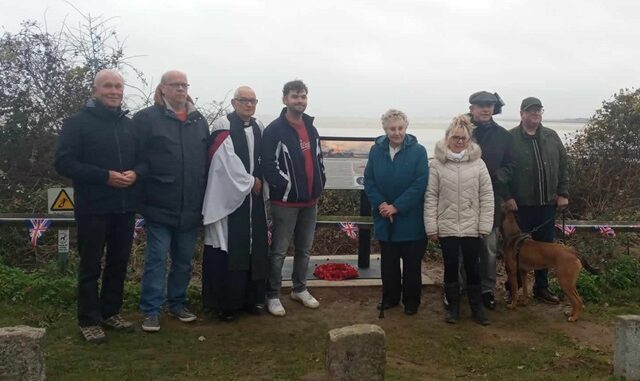
A memorial plaque and information board has been unveiled at the Hugin site in Cliffsend marking 81 years since a B17 Flying Fortress bomber ditched on the Sandwich flats during World War Two
The American aircraft was forced to ditch there when it ran out of fuel on its way home from a mission bombing strategic locations in Germany’s Rhine-Ruhr region on 1st December 1943. Its tanks had been drained of fuel when the aircraft was damaged by flak.
Luckily, all of the crew survived the landing and were picked up by British Air Sea Rescue.

Crew members were Pilot: Alan Eckhart, Co-pilot: Elton Jenkins, Navigator: George Arvanites, Bombardier: Robert Meagher, Flight engineer/top turret gunner: Francis Neuner, Radio Operator: Fred Kuehl, Ball turret gunner: Angelo Tambe, Waist gunner: Mike Musashe, Waist gunner: Edward Madak and Tail gunner: Nyle Smith.
With two out of four engines inoperable over the English Channel, the B17 was making its way to Manston airfield which, at that time, was an operational RAF station.
Approaching the English coastline dangerously low on fuel and now with three engines out of action, having made all the calculations they could, Alan, along with his navigator, George Arvanites and co-pilot, Elton Jenkins, knew touching down at Manston was no longer an option.
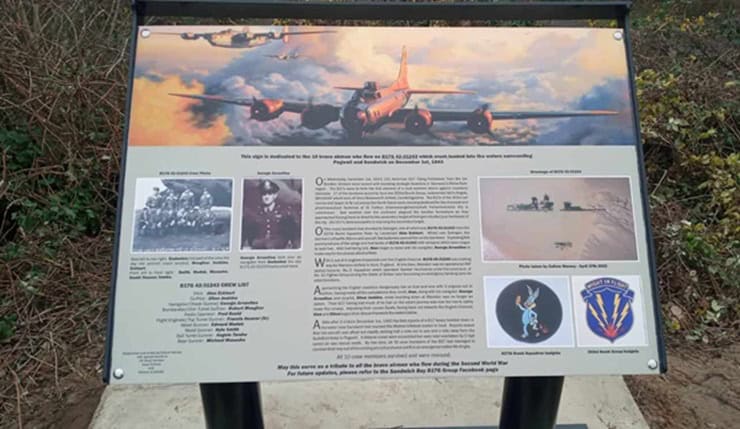
The B17 having lost much of its fuel on the return journey was now too low to safely make the runway. Adjusting their course South, facing back out towards the English Channel, Alan and Elton began their descent towards the waters below.
A little after 2pm on December 1st, 1943 the first reports of a B17 heavy bomber down in the water near Sandwich had reached the Walmer Lifeboat station in Deal. Reports stated that the aircraft was afloat but rapidly sinking half a mile out to sea.
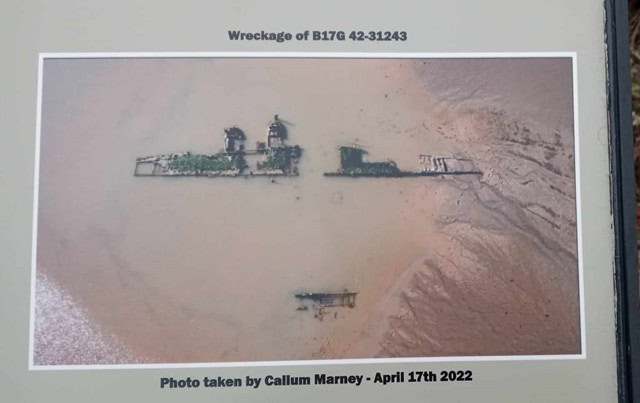
Four lifeboat crews were scrambled but were later overtaken by two high speed air sea rescue boats. By this time, all 10 crew members of the B17 had managed to clamber their way out of the sinking aircraft and were adrift in an emergency rubber life dinghy.
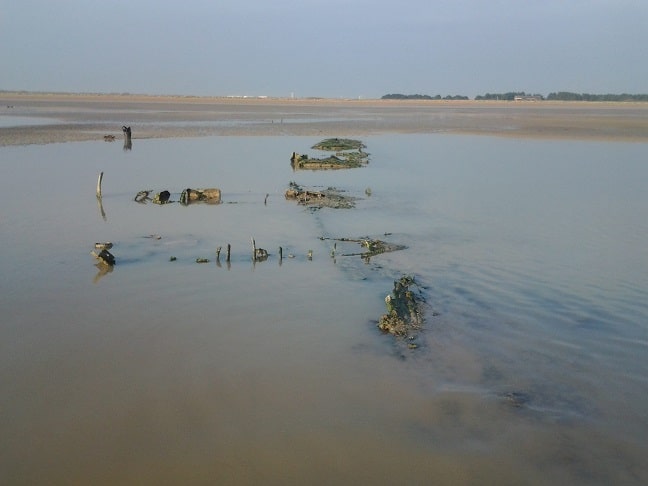
All 10 survived and were rescued and eventually taken to RAF Manston. The wreckage of the B17 remains in situ.
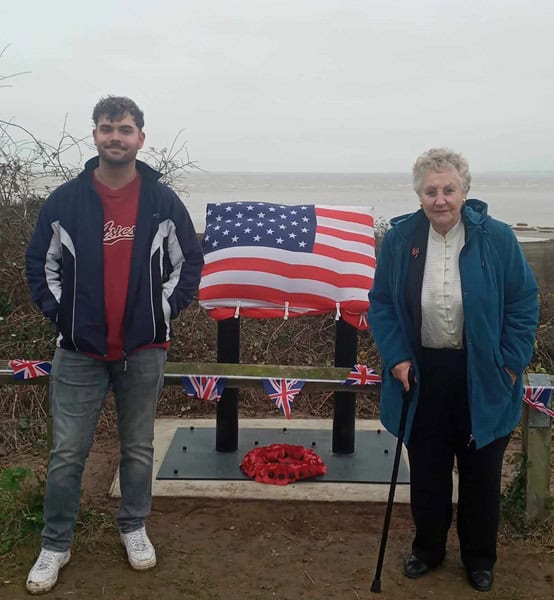
To mark the incident researcher Callum Marney and parish councillor Beryl Harrison {both pictured above} spent some two years planning for the memorial to be installed.
Beryl approached Thanet, Ramsgate and Cliffsend councils with the idea for the memorial.
Steven’s & Carlotti, Southeastern Rail Workshops and Kings Heath Construction then all gave their time, products and skill for free to create the memorial and install it.
On December 1 this year the plaque was draped in an American flag before being unveiled by Callum and Beryl at a ceremony on Hugin Green.
Cannon Rev Kerry Thorpe conducted the blessings and guests included councillors Brenda Rogers, John Davis and Rick Everett and the clerk for Cliffsend Parish Council.
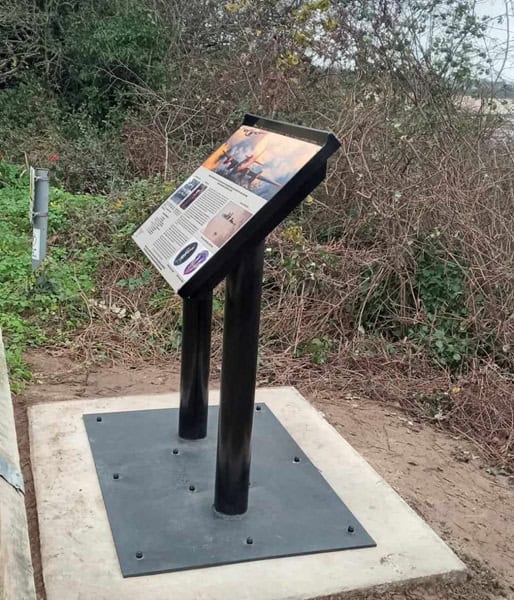
Beryl said: “I had always thought, since I have known about the B17, that there should be something for the area. A lot of people do not know about it.
“It is about our history and an interesting point for visitors. The information board is on the cliffs looking out to the area where the wreck is. They had tried to land the first time and were too low and the second time they ran out of fuel so could not make it to Manston.”
B17 details with thanks to American Air Museum and Callum Marney

An excellent initiative. I have walked out to the plane several times from the Sandwich Bay direction. Not much left but the outlines of the wings and engines are still clear.
All the crew survived but sadly, I think that several were later killed while in other planes.
Congratulations to Independent Councillor Beryl Harrison for the huge time and energy that went into achieving this. Rumour has it there was very little help from her fellow Councillors>?