

By Local Democracy Reporter Daniel Esson
The cost of renting in Kent is rocketing, with Thanet seeing rises of 30% over the past five years – sparking warnings people are being “priced out of their areas”.
But what is the solution? Some say a developers’ building blitz to boost supply is needed, while others argue for a post-war style council housing boom. Local Democracy Reporter Daniel Esson reports…
Coastal towns with good transport links are an increasingly attractive prospect for people leaving the capital, where housing costs have long been eye-watering.
Such is Folkestone’s popularity, as demand has increased, so has the cost of renting in the district. Up 36% since 2019, this is a bigger rise than anywhere else in Kent and means people are now paying £989 a month on average.
The second biggest spike of the five year period, at 30%, has been in Thanet, according to recent figures from the Office for National Statistics (ONS). Those figures show private rents on the isle rose to an average of £1,009 in September 2024, an annual increase of 9.5% from £921 in September 2023. This was higher than the rise in the South East (7.9%) over the year.
The ONS data says in the past year in Thanet, the average rent for flats or maisonettes rose by 9.9%, while for detached properties, it increased by 9.2%.
Average rent for one bed properties rose by 10.3%, while the average for four-or-more bed properties increased by 7.6%.
Listing average prices per month by how many bedrooms there are in a property, as of September 2024 in Thanet, ONS shows:
- One bedroom: £691
- Two bedrooms: £903
- Three bedrooms: £1,107
- Four or more bedrooms: £1,537
However, a search of available isle properties show these figures are often exceeded, with even just one room in a shared property often costing as much as £600 per month.
One charity has warned people are being “priced out of their areas entirely”, with 60,000 renters across the country leaving their homes following hikes they could not afford.

Cllr Helen Whitehead (Lab) deputy leader and cabinet member for housing at Thanet District Council (TDC) said: “The increase in the price of rents in Thanet has been a significant issue for many years now.
“As a new administration, we have been taking proactive measures to tackle it, through increasing our production and acquisition of council housing with nearly 400 council homes in the pipeline in less than 18 months, and through the development of in-house temporary housing.
“I have always been a strong advocate for council housing development and provision, and we are doing everything that we can to ensure that we are producing and acquiring genuinely affordable housing. There is a huge need for genuinely affordable housing.”
‘Get Britain Building’
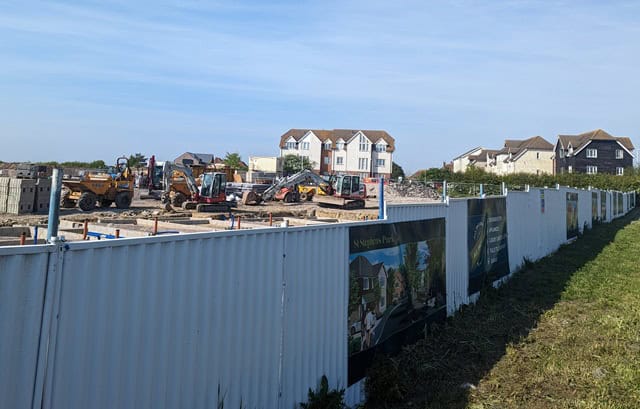
The new Labour government elected in July promised to “get Britain building again” and is currently working on a new National Planning Policy Framework (NPPF).
As part of the changes, local councils are likely to have their annual housing targets increased – and be penalised for not hitting them.
Cllr Rebecca Shoob (Green), cabinet member for housing at Folkestone & Hythe District Council (FHDC), said: “Obviously recently Folkestone, in particular, is getting a lot of media attention, and it certainly is a nice place to live, so that certainly could be a factor affecting some of the properties across the district.”
She argues that local authorities need extra funding from the national government to build more council homes to stem the rise of private rental costs.
“I really think we need to increase our council housing stock – they’re a real key factor, so everyone has access to a safe and secure home,” Cllr Shoob said.
“Increasing the number of homes available is absolutely essential.”
The ONS figures show that across Kent average monthly rent bills have gone up by £228, or 24%, since 2019.
The county’s rural west and the areas bordering London still command the highest payments.
Leafy Sevenoaks, right next to the outer reaches of the capital, has the priciest average rent in the county at more than £1,600, but it has not increased as much as elsewhere.
Dover has had Kent’s lowest average rent since 2019 – currently £859 per month – but even that has risen by almost a quarter in the past five years.
The number of homes available to rent in the county for less than £1,000 a month has almost halved in the space of a year.
PricedOut, which bills itself as the “campaign for affordable house prices”, argues that more building is precisely what is needed.

“Changes in rent in the short-term can be influenced by a lot of factors,” said director Freddie Poser.
“We know, however, in the long-run, rent has sky-rocketed across the south east primarily because of a lack of new housing supply.
“When people want to live in growing regions like London and Kent, they have to compete for limited housing space because we’ve simply failed to build enough homes.
“If we don’t get a grip on the situation and start to deliver more houses in the places that people most want to live, this trend will continue and rents will remain unaffordable.”
Emma McCrudden, a manager at Catching Lives, a charity which helps the homeless and those at risk of homelessness in east Kent, said: “Rising rents in the local area mean many people we work with are facing additional financial barriers to securing or sustaining a home.
“An average one-bedroom flat costs more per month than the local housing allowance, meaning many of our clients are not able to pay the top-up costs, particularly in a cost-of-living crisis.”
Ms McCrudden says eligibility for benefits can also “present challenges”, noting that many homeless people are not eligible for social housing either.
“The reasons that people lose their homes has as much to do with the lack of support services and barriers to seeking support,” she added.
‘Genuinely affordable homes’
Some charities argue that more affordable housing, and protection for renters, are the way forward.
Polly Neate, chief executive of Shelter, said: “There is a severe shortage of genuinely affordable social homes across the country and local communities are paying the price.
“In many towns and cities, people’s only choice is to fork out for often shoddy and expensive private rentals or be priced out of their areas entirely.
“With private rents rocketing, tenants often feel they have no choice but to cough up huge sums just to keep a roof over their heads.
“In the past year alone, 60,000 renters have been forced out of their homes by a rent hike they couldn’t afford.
“To ensure renters have real stability, the Renters’ Rights Bill, currently making its way through Parliament, should limit in-tenancy rent increases by tying them to either inflation or wage growth.”
The new legislation, introduced by Labour, is set to include many reforms to the rights of tenants – the most touted of which is the abolition of no-fault evictions.
“But long-term, the government must release funding to councils to build a new generation of genuinely affordable social homes that will finally take the pressure off private renting,” Ms Neate added.
The Labour government aims to have an extra 1.5 million homes built by the end of the parliament in 2029.
300,000 new homes a year was the target of Boris Johnson’s Conservative government elected in 2019. However, no government in Britain has built 300,000 a year since the 1960s.
Councils directly building their own housing, such as the latest programme in Thanet, is now almost unheard of, and has been in steady decline since the 1970s.
Council house building
In the period immediately after the Second World War, council house building was the majority of all development in the country, but this gradually shifted to the private sector.
By the 1970s, public finances were squeezed by economic crises, and the overall rate of housebuilding slowly declined, as did the proportion of those built by councils.
When Margaret Thatcher led the Conservatives to victory in the 1979 general election, her new government moved to cut public expenditure on housing, and thus to leave building increasingly to private firms.
The ‘Right to Buy’ for council tenants, and the transfer of council housing into the control of housing associations, both introduced by Thatcher’s government, massively reduced the UK’s existing stock.
Now, since the late 1980s, the amount of council housing built is negligible.

I know I’m not the only person who looks at all the new housing development and wonders who is going to be able to afford to live in those places. It’s pretty obvious that building so many homes cannot solve the housing crisis unless a significant number will be let at affordable rents. And I’d imagine that the only way that could happen would be if councils / housing associations buy up a lot of them AND reduce the rents they charge or if we just end up with so many dwellings in this country that housing prices collapse. The fact that I also consider a lot of development an ugly, soulless blot on the landscape is just a personal thing though I know a lot of us feel that way.
Housing benefit must be a huge drain on council budgets too. I just do not see any imaginative and sincere long-term thinking from anyone in power.
It is all quite simply a matter of market forces and basic economics.
When demand significantly outstrips supply – the price goes up.
All the while we keep producing children and importing other people to this country at a faster rate than we can build houses to accommodate them – the situation will continue to get worse.
If you own a house and there is a queue of 20 people wanting to rent or buy it – of course you are going to let it go to the highest bidder.
Now that traditional Council Housing is pretty much non-existent and replaced by Housing Associations, the Housing Associations operate within the same commercial market.
Unfortunately price increases are a horrible fact of life.
A 30% rise in five years sounds horrendous.
For a little bit of perspective. Five years ago minimum wage was £8.21 for over 25’s and £7.70 for 21 to 25’s. It’s now £11.44 for anyone over 21 and due to increase again next year.
In the last five years that equals an increase of nearly 40% for over 25’s and nearly 50% for over 21’s.
And benefits have increased by 26% since 2019, how many working people had similar increases? Tax on private landlords has also put pressure on rents. Plus whilst the country is happy to increase its population via high levels of migration but fails to build enough homes there will be further upward pressure.
Ever increasing legislation especially fire safety increases costs and this largely as a result of the failure of social housing and grenfell.
How much have landlord’s costs risen in recent years?
As a general rule, mortgage repayments relatively fall in value over time.
Surely tenant’s rents should fall, not rise?
So rents should drop if landlords pay less, and if they pay more eg. rates go up they can bump up rent to cover that?
Insurance, energy, maintenance and repair, council tax during voids, section 24, energy efficiency, electrical certs, gas certs , have all risen considerably purely down to inflation.
Mortgage costs will all depend on whether a landlord has chosen to repay the capital or just the interest. Most landlords buffer their existing tenants from excessive rises instead raising rents to market levels when tenants change.
But by your theory do we pay less to ride on an old bus or plane?
Look at historic rents in thanet, 2 bed flat in 2002 was £450, big jump when Gordon Brown introduced the local housing allowance, and whilst now beating inflation ( inflation only would bring it to 810) over the period from 2002 the same rents haven’t kept pace with property prices.
Council tax from 18/19 to 24/25 has gone up roughly 30%.
So are rents really that out of step with the rest of life? Especially given the inflationary pressures of the numbers of people coming to live here when it comes to housing.
Yet again tax payers forking out to provide housing for the idle unemployed and those who have produced children they can’t begin to afford.
Yep , after many years of the single teenage mum becoming ever rarer they now seem to be back with a vengeance, recently had one enquire about a property and had an income solely from benefits of £27k ( some of which was the premium for having a newborn, and seemingly an enhanced accomodation rate for some reason ( moving into thanet from another area), both of which would be withdrawn after a year) in thanet that’s a very respectable tax free income for an 18 year old.
What is affordable housing .If you have a £60000 deposit, you would still have a mortgage of over £200000 to find how can a everyday working person afford that,that’s repayments of at least £1300 a month.How many of these new houses are that price I bet most are over £300000
Not quite sure how Councillor Whitehead has the nerve to pontificate about what Labour are doing when they have frozen Local Housing Allowance rates for 2025/26 in the budget.
This, coupled with rising rents, makes renting even more unaffordable for people on benefits.
This is the reality of your party are doing Councillor Whitehead. Nicely done.