

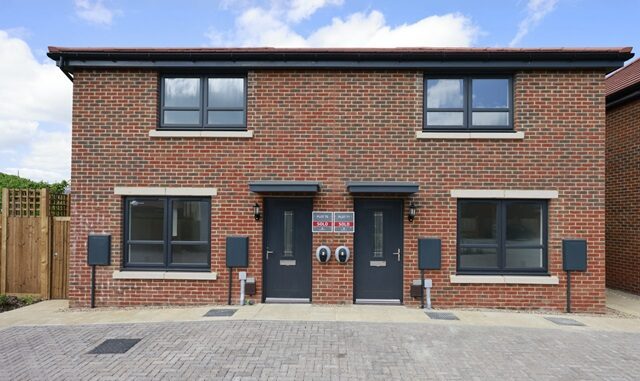
Thanet council is expected to approve the purchase 137 properties which will be let to people on the isle’s housing waiting list and those moving on from temporary accommodation.
The cost of the homes, on the Spitfire Green Phase 3 site being constructed by BDW (Barret David Wilson) on New Haine Road, Ramsgate, is £38,150,000 plus £75k for legal costs.
A previous agreement to buy 32 homes at the same site will not go ahead and those will be taken on by a registered provider (housing association) as shared ownership properties.
In July 2023, Thanet council approved an accelerated affordable housing development programme for at least 400 new homes, constructed or bought by 2027, to be added to the authority’s housing stock.
Some properties have been bought through section 106 agreements – where developers are required to provide affordable homes on sites of 10 properties or more – but the latest property deal is independent of that.
Council ‘quest to deliver homes’
A report to council Cabinet members says: “As councillors will recall, previously, the council has primarily acquired s106 homes where registered providers (RPs, formerly known as housing associations) have latterly refrained from bidding.
“This has led to officers being contacted by a number of developers (of varying sizes) who have been unable to secure an affordable housing provider partner to purchase s106 homes.
“This failure (described widely now as market failure) to secure an affordable housing delivery partner can lead to developers requesting that the s106 agreement be amended to provide a commuted sum in lieu of on site provision.
“This context is important because Thanet’s willingness to ‘step in’ and secure those homes has put the council’s name out there for wider opportunities, such as the one presented here.
“In this case, the council is proactively looking for the opportunity to acquire homes as it is strongly felt that securing a robust pipeline of homes is one way in which the council can, through local lettings plans, reduce its reliance on the expensive use of nightly-paid temporary accommodation.
“In the council’s quest to deliver homes in greater numbers to alleviate the pressure on the housing register and the households currently in temporary accommodation, officers have reached out to a number of developers to see if there is any opportunity to acquire homes that might otherwise have been sold on the open market.
“This is an ambitious move, which shows the council is listening to concerns of residents on the housing register or in temporary accommodation, who have recently commented on how many homes are being built in the district (due to the buoyant housing market in Thanet) but that few seem to be available for them.”
The cost for the properties will be funded through £11.645m Homes England and £26.580m of borrowing. No stamp duty has been assumed due to grant funding subsidising the acquisition.
Council homes target
Of the council’s 400 home target a programme of 207 homes has been approved. These include 49 new builds at Dane Valley and Tomlin Drive in Margate and Staner Court and Clements Road in Ramsgate, section 106 acquisitions and 34 open market deals. Of these, 173 homes are fully funded without Homes England funding.
The latest proposed purchase would generate a cash deficit in year 1 of £166k with surpluses accumulating from year 8.
Thanet’s housing register
According to the report to councillors, the housing register shows 724 households requiring a 1-bedroom home, 232 households having a requirement for a 2-bedroom property and 336 households requiring a 3-bedroom property. A further 107 households require a 4-bedroom home and some households need more than that.
The new council homes will be let 50% to priority applicants from the council’s Housing Register and 50% to people moving out of temporary accommodation. Rents will not exceed the Local Housing Allowance rates.
The report says: “The latter is important as this will reduce the temporary accommodation bill for the council and the taxpayer, as well as reducing the social toll on those in temporary placements.”
At the end of 2023/24 the council’s net spending (after grant) on temporary accommodation services was £2.5m.
Further temporary accommodation
Cabinet members are also expected to agree to buy a further 11 properties at Westwood Point from developer Vistry to be used for temporary accommodation.
The latest buys would be four 2-bedroom properties and seven 3-bedroom properties costing £2.85m – equating to £259,090 per dwelling – plus £132,000 Stamp Duty and £22,000 legal costs. This will be funded via the council’s
general fund capital budget.
Officers say there would be a cash flow deficit in year 1 of £1,832 with surpluses accumulating from year 2.
Of those in temporary accommodation 169 households currently have a one-bedroom need, 60 households in temporary accommodation have a need for two-bedrooms and 50 households have a need for three bedrooms.
Thanet council agreed in August to purchase six temporary accommodation flats in Margate Road, Ramsgate, from local developer GPML construction, adding to in-house temporary accommodation sites at Foy House in Margate and the former Glendevon hotel in Ramsgate.
The latest purchases will be discussed at a council meeting on September 26.
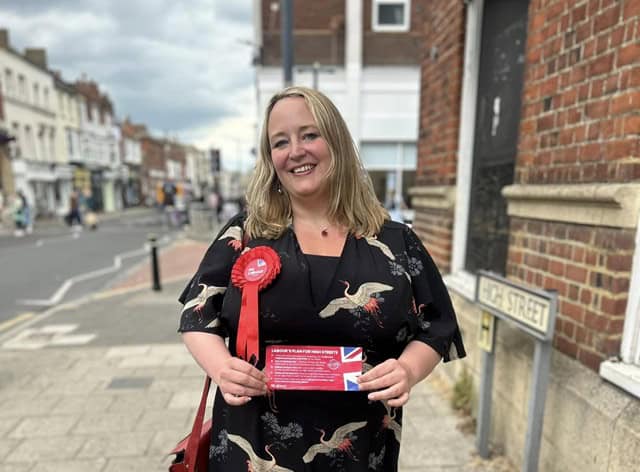
Council deputy leader Helen Whitehead, who has responsibility for housing, said: “We promised to deliver 400 homes by the end of our first term, and we are making excellent progress towards that target; ensuring that genuinely affordable properties are not lost is essential, and expanding our housing delivery beyond that means that more families can move into desperately needed homes faster.
“Some of these acquisitions will take time; and so it is equally essential that we expand our in house temporary accommodation as fast as possible, to ensure that residents stay near to their jobs, schools and networks; including the newest proposal, we will have expanded our in house temporary accommodation significantly since May, with the acquisition of properties in Margate, Broadstairs and Ramsgate, to provide support across Thanet.
“Housing are doing an incredible job to ensure that we deliver what is needed, and are providing security and support for residents in doing so.”

and i wonder who they will go too , or is that a silly question ?
It’s a very silly question given that the answer can be found in the first sentence of the article.
whos pulling your strings , you know full well local families wont get these allocations , they never have in the past
Real world; Council allocations go to those on the Thanet Housing Register. It’s that simple.
Real world; it quite literally says above. Those on Thanet’s housing list.
All the best,
Helen.
All those on housing list come on that’s more than 32 and temporary accommodation
You need to find 26m to fund this are you out of your debts because the harbour is a big debt or did you pay it off. How much is Tdc in debt first.
I remember a land swap you did with kcc and set up a company run by councillors and then you sold the land and now having to pay way over the flipping top of tax payers money ..when you say government that’s us taxpayers
Shambles in the brambles.
About time too, let’s face it local people’s needs have been put on the back burner far to long. The council will soon start clawing the expenditure back through rents and council tax.
As long as they are people who can afford to pay rent and council tax and are not on benefits in which case the council / us tax payers will be subsidising them!
If they are renting privately and dependent on housing benefit that is subsidising private landlords at taxpayers’ expense so the private renter might be paying someone’s mortgage. As council tenants the council increases its housing stock for future tenants.
You would probably forgive those of us who have misgivings as to TDC and its financail acuity , it’s record over the years hardly inspires confidence.
Bang on Jenny! I have long opposed tax payers subsidising Buy to Let landlords, with housing benefit. This means we are paying for landlords mortgages! One answer would be for council to buy them out if suitable, and turn them into council houses. Some Housing Associations did this in the 70’s and 80’s, increasing their housing stock in the process!
The taxpayer funds the councils mortgages through benefits, provides the initial grant funding and when the homes have fallen below and acceptable standard the taxpayer steps in yet again , as happened under the decent homes standard which cost over 40 billion.
In the private sector, the landlord provides the deposit, pays tax on any profits, will pay capital gains tax at the end, is far more cost consciuos than councils.
It would be interesting if there was a proper cost anaysis of the two sectors as it would’nt be a surprise if the private sector offered the taxpayer much better value for money. Especially if you take into account the number of tenants the social sector has had pass away as a result of poor management.
And of course there is the little known inconvenient fact that the social sector evicts more tenants. But of course that would undermine the antilandlord narrative.
TDC still has properties that don’t comply with the 2005 fire safety order act.
As long as these houses end up with local people on Thanet’s long term housing list and not recent imports.
well said ton , i am glad someone speaks the truth , thats a smoke screen about local families , just to keep people quiet , we will not fall for it we have been a dumping ground for long enough
To be on the list people need to have been in the area for at least 3 years ( if that’s incorrect my apologies and i’d be interested to hear the correct period). So it very much depends on how people define local and recent.
Well done Helen & TDC! Positive news.
Thank you Peter. A lot of people’s hard work has gone into this strategy.
Will the tenants of these Council houses benefit from the “Right to Buy” scheme?
Will you ever write anything positive on here?
“Doomed, we’re all doomed I tell ya!”
Quite literally the funniest thing you’ve ever written Peter.
Not likely that many will, these days social housing allocation is on a “needs” basis and few homes would ever be allocated to tenants earning enough to buy a home. Then once you’ve got a cheap brand new home for life and no maintenance or repairs, why would you want to buy it, the discounts are not what they used to be.
And who knows labour might do away with RTB completely.
One can live in hope!
Would I be right in saying that these houses belong to the council tax payers of Thanet, and not to “the council’ or are the council officers paying for these houses from their own personal accounts ? It seems strange that houses can be ” bought” by the council, but they seem to cut amenities.
Funding for these will have come from government grants in the main not from our council tax. That means through separate sources of finance to the funding of day to day services. They are managed by council officers but you could argue they belong to us the taxpayers.
The article says that the majority of the money is from borrowing , roughly 30% coming as a grant. Am I correct in believing that the councils housing function is a separate entity to its other duties and that as such the council tax payer can’t be called upon to fill any shortfalls should they occur and that in reverse any surplus from the rents etc are held in the HRA and ringfenced for the housing function of the council?
Though this gets some what muddied when it comes to emergency housing provision where the council is dipping into the general fund for capital investment in housing. Would it not be better for the housing department to buy the homes intended for emergency housing and then charge the general fund as any other provider would for the accomodation, this would make any eventual transfer from emergency to permanent housing null and void along with working out who owes who what.
Additionally there is no mentiom ( tha i can see) as to where the 2.85 million for the additional emergency housing is coming from , could you supply some detail?
Principally from a government grant.
You said that about the money for the 137 homes but the grant was only around 30%, the rest from borrowing, detail is given for those homes why not for the emergency accomodation ? Or is the general fund going to be raided again and or the council tax payer be on the hook for any borrowing?
There must be detail available.
I ask because the trajectory of UK debt and levels of taxation seem to be on a steady upward drift, this may fuel inflation and or lead to a drop in consumer confidence, plus the money markets could lose confidence in our ability to pay our sovereign debts and increase the interest we pay, this all filters through , are any loans tdc take out protected from any such future changes?
You should be ashamed of yourself for making such blatantly false statements, if you are unsure either say so or find the correct information, not spread falsehoods.
I’ll have a look and add it in later
Thanks Kathy, every additional fact helps!
Thanks Kathy for the extra detail and confirming that the momey is coming from the general fund and so from the council tax payer.
Jenny Matterface it would appear was more than evasive with the “principally from a government grant” such fundamentally false statements should be seen as bringing the councillor into disrepute even if its only for not bothering to find the correct information. How can we believe anything she may say ,past or future.
The argument that this spending saves the council tax payer money is absurd, even if this money is available as cash ( which given the previous similar spending totals 4 million) the emergency provision is for very few of the total emergency housing the council uses , does the enhanced “supported accomodation rates” of housing bemefit cover the interest payments on the 4 million?
Such cavalier use of council funds needs to be held in check or at least publish the calculations and reports behing such purchases, we paptently can’t trust councillors such as Matterface to ne involved in such decisions given the misinformation given in this thread.
Does this mean that the people that have bought houses in the same development (for hundreds of thousands of pounds) now live on a council estate?
Could well be the case, potential buyers need to ask careful questions. A friend bought a house on the Kingshill estate, they asked and were told there was affordable % close by but that it was “ intended” for key workers. Ended up being social housing one of whom was a prolific drug dealer. Did eventually get evicted. When they eventually moved on, house was hard to sell and eventually sold for 15% less than the same house away from the social %. Of course other factors may have been involved. But it becomes another consideration on new build estates.
Of course not all social housing is problematic, it just happens to have a greater % chance of being so.
( an FOI request to Kent police in 2011 showed that in Cliftonville there was significantly more anti social behaviour and crime associated with Social Housing than private dwellings, but childrens homes, care homes, hmo’s , bail hostels and halfway houses, were many times worse again). That will have altered by now as the majority of the areas care homes have closed and a good number of the “traditional “ hmo’s also , plus more owner occupiers have moved into the area.
nice one michael , i bet the residents have not thought of that one , a garden full of bike frames and one or two pit bulls will soon show whos in what house – i cant wait to see it .
Council estates are a mixture of people. Just as streets of privately-owned houses are. Even areas with very expensive houses have a mixed population. So please stop being so rude about council estates.
Glad I don’t live on one.
I’m glad you don’t either. As you do nothing but moan!
Me too. I wouldn’t like to live anywhere near |Peter Checksfield.I just can’t forget that he called ma a “Welsh whore”.
I’ve nothing against poor people. Some of my closest friends are peasants.
Hopefully TDC will continue and do this effort, every month. Then you lot are doing allright otherwise your not. TDC own a lot of land/property which can be redeveloped by tdc or sold off to be
redeveloped for tdc use by others. Just saying the land cost is expensive and building cost is minimal.
Many people know of properties not occupied, land unoccupied. Tell no use empty dot org.
Finally (phew~ its possible to purchase an apartment (all mod cons) in that development for 20% less than market cost for those who qualify.
Soon be christmas…
“me a Welsh whore”-not “ma”
Why are you calling yourself that?
And go to bed.
Excellent!
Not all of us who are housing association have pitbulls and bike frames in our gardens. Actually, where we live it’s far from that! Some of us are with housing associations and unfortunately on benefits through no fault of our own, I.e, illness. Let’s not paint everyone with the same brush thank you. Let’s hope it helps many local families out of their situation. All the best to everyone.
I’m surprised you have any friends with your attitude.
Shouldn’t you be out ploughing the fields with your ox?
Done that first thing this morning 🌄