

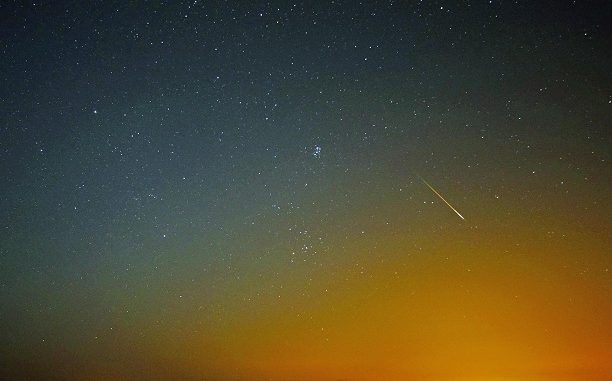
The Perseid meteor shower is one of the most dramatic things to see in the night sky between July and August and the shower will peak overnight on 12-13 August.
As comets get close to the Sun, they heat up and pieces break off. If the debris ends up in the Earth’s path around the Sun, it can slam into our atmosphere at speeds of between 7–45 miles per second.
The average speed for a Perseid meteor is 36 miles per second. The air in front of the meteor is squashed and heated to thousands of degrees Celsius. The smaller meteors vaporise and leave behind a bright trail of light. Larger meteors can explode as fireballs.
You can look out for the Perseids wherever you are, but there are certain kinds of places that will increase your chances of spotting meteors.
Plan ahead and check the weather forecast. If it is likely to be inclement, find a different location or go out on a different day. The days leading up to the peak are usually better than the days after.
Reduce the amount of light pollution in your field of view. This could mean heading out to the countryside, a nearby park or even turning your back to street lamps if you’re not able to go anywhere. Give your eyes at least 15 minutes to adjust to the dark so that you can catch more of the fainter meteors – this does mean that you should avoid looking at your phone!
Find an area with a clear view of the horizon away from trees and buildings. Binoculars and telescopes are not necessary as they will restrict the size of the sky that will be visible to you.
You can use a stargazing app to find the exact location you should look.
Observers in the UK should be able to see some meteors as soon as the Sun sets.
In 2026 the peak of the Perseid meteor shower occurs during new Moon, so conditions are ideal for seeing the peak.
The best time to see the Perseids is between midnight and 5.30am.
The Perseids are debris from comet 109P/Swift-Tuttle that orbits the sun every 133 years and will not be visible again until 2125.
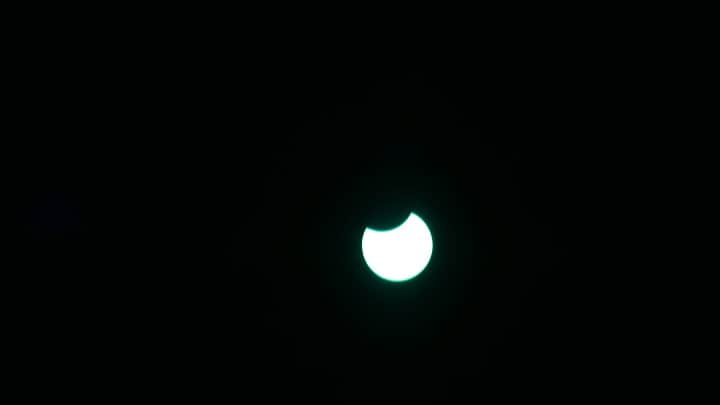
On Wednesday 12 August, people in the UK and Ireland will also be able to see a partial solar eclipse, when around 90-96% of the Sun will be covered by the Moon.
A solar eclipse occurs when the Earth, Moon and Sun align. The Moon passes in front of the Sun and blocks its light, casting a small shadow on Earth.
At 6.17pm from London (timings vary slightly from other parts of the UK and Ireland), ‘first contact’ will occur, when the Moon first covers part of the disk of the Sun.
The Moon will move slowly in front of the Sun until roughly 90% of the Sun is covered (the eclipse’s maximum). This will be at 7.12pm from London.
the Moon will then slowly move off the Sun’s disk until the eclipse ends, at 8.06pm from London.
How to see the partial solar eclipse
Use eclipse glasses – Buy or borrow a pair of special eclipse glasses. These block out the Sun’s harmful rays and enable you to look at the eclipse safely with your own eyes. Please note that regular sunglasses are not safe to use, as they don’t have adequate UV protection to protect your eyesight.
Make a pinhole projector – There are a few ways you can go about making a ‘pinhole projector’, which will allow you to see the eclipse by projecting the Sun’s light, and the bite being taken out of it, onto another surface.
- Two pieces of paper: make a small hole in one piece of paper and hold it above another piece of paper to see the shadow being cast on the Sun replicated in miniature.
- Colander: Hold up a colander and look at its shadow.
- Tree leaves: The gaps between leaves are natural pinhole projectors – simply look at the shadows cast by leaves on the ground.
Watch the Royal Observatory’s live stream: https://www.rmg.co.uk/whats-on/online/solar-eclipse-august-2026-uk-live-stream
Source Royal Observatory
