

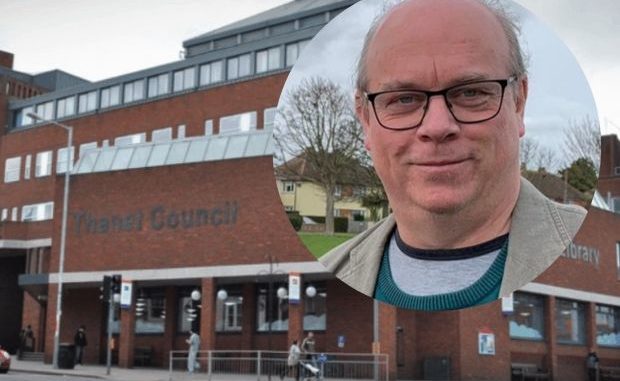
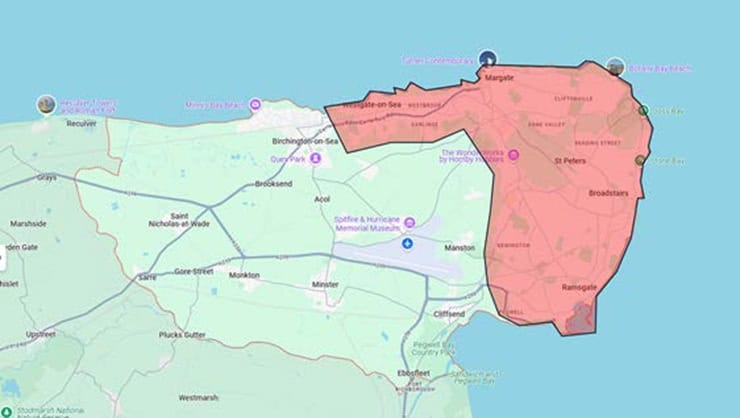
Thanet council’s latest alcohol and antisocial behaviour Public Spaces Protection Order (PSPO) for Margate, Ramsgate, Broadstairs and Westgate has been delayed once more after a challenge from the Free Speech Union.
The renewed PSPO was initially approved by Thanet council in July last year but rescinded just weeks later following a threat of costly legal action by the Free Speech Union, largely based around restrictions on the use of ‘foul’ language.
Following amendments it was again approved in July this year but the FSU claimed that although improved, the order “would still have a chilling effect on free speech in the borough (and) is still unlawful.”
The FSU sent a letter to the council at the end of July under the pre-action protocol for judicial review.’

The main areas of contention are around the “broad and subjective” language used in the order, with the ‘foul and abusive language’ restrictions hitting the headlines both last year and this year.
Thanet council has now confirmed the implementation of the PSPO is once again on hold and has responded to the FSU to confirm it will not implement the PSPO that was the subject of the pre-action correspondence and will review the evidence and consult on an amended order.
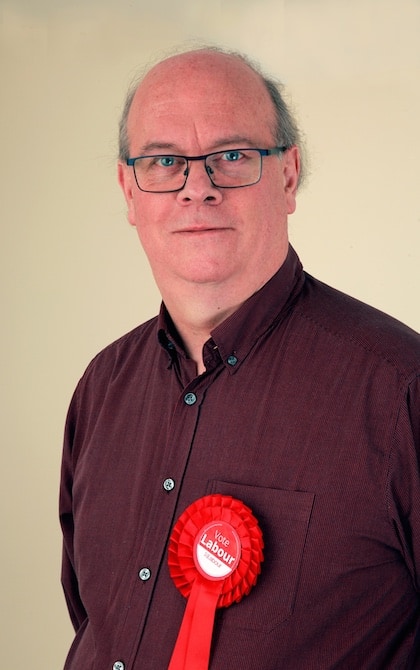
Cllr Rick Everitt, Leader of Thanet District Council, said: “This decision follows legal correspondence from the Free Speech Union relating to multiple aspects of the Public Spaces Protection Order.
“The council believes that entering into protracted legal disputes, at extensive cost to the local tax payer, should be avoided where an alternative approach can be taken.
“The intention is to review the order and to consult, both local people and relevant stakeholders, on any amendments.
“The Free Speech Union did not respond to the public consultation this year and their lawyers raised a large number of issues for the first time subsequent to the Cabinet decision to adopt the draft order in July.
“We do not believe that it is sensible for the first consideration of these matters to be in court, although at this stage we do not recognise them as having merit.
“The use of Public Spaces Protection Orders by local councils to help tackle antisocial behaviour is not unusual and the one agreed in July is predominantly based on provisions previously in force here from 2018 to 2024.
“There was overwhelming support from local people who responded to the consultation this year. Kent Police has also previously supported the implementation of this PSPO.”
‘Legal scrutiny’
Chief Legal Counsel at The Free Speech Union, Dr Bryn Harris said: “The FSU notes the decision of Thanet District Council to withdraw its unlawful order. We congratulate district residents on winning back their freedom of speech and remind the many local authorities with similar orders that prohibiting ‘distressing’ speech is unlawful and will not withstand legal scrutiny.
“We invite those authorities to reconsider urgently and thereby avoid a humiliating climbdown. Thanet proposes to amend and reintroduce its order – we will be watching closely.”

The PSPO has been backed by Kent Police’s Chief Inspector Ian Swallow who says it will mean an additional “small army of people” who can use enforcement powers while police officers are dealing with higher level crimes.
He described the PSPO as a ‘tool’ that sits below police powers under the Public Order act but above the extra provision of dispersal orders.
However, the Kent Police and Crime Commissioner raised concerns about ‘the consequences for speech and expression’ in regards to the clause about abusive language.
The PCC, Matthew Scott, said: “I do not believe the police or councils should be in the business of regulating what should be considered matters of free speech or expression.”
The PSPO restrictions:
Anti-social groups
All persons are prohibited from congregating in a public place as part of a group of two or more persons and from behaving together in such a way as is likely to cause harassment, alarm or distress to any other person.
Misuse of public place
Any person whom an authorised person reasonably believes is not using a public place in accordance with its intended use and is behaving there in such a way as is likely to cause harassment, alarm or distress to any other person shall leave that public place or cease that behaviour on being required to do so by that authorised person.
Using foul and abusive language
All persons are prohibited from using in a public place foul language that is abusive within the hearing of any other person likely to be caused harassment, alarm or distress thereby.
Excreting bodily fluids
All persons are prohibited from urinating, defecating and/or spitting in a public place, other than in a toilet.
Consuming legal psychoactive substances and other legal intoxicants
All persons are prohibited from consuming in a public place a legal psychoactive substance that mimics the effects of illegal psychoactive substances (such as nitrous oxide) or any other legal intoxicant (such as glue or the contents of an aerosol) and from, as a consequence, behaving in such a way within the hearing or sight of any other person as is likely to cause them harassment, alarm or distress.
Causing humiliation or degradation
All persons are prohibited from being abusive in a public place towards any other person, or behaving in such a way towards them, as is likely to cause them to feel humiliated or degraded. This includes in particular abuse or behaviour towards females.
Consuming alcohol
All persons are prohibited from consuming alcohol in a public place (other than in premises or places authorised or permitted to be used for the supply of alcohol, for example a pub or club) and from, as a consequence, behaving in such a way within the hearing or sight of any other person as is likely to cause them harassment, alarm or distress.
On being required to do so by a constable or authorised person, a person shall not consume alcohol or anything the constable or authorised person believes to be alcohol. On being required to do so by a constable or authorised person, a person shall surrender anything in their possession which is, or which the constable or authorised person reasonably believes to be, alcohol or a container for alcohol.
Fines
The PSPO is due to be in force for a period of three years. Enforcement officers will have the authority to issue Fixed Penalty Notices (FPN). The penalty is £100 to be paid within 28 days but is reduced to £60 if paid within 14 days.
Two previous PSPOs related to alcohol and antisocial behaviour, first enacted in 2018, came to the end of their three year lifespan in July 2024.

“All persons are prohibited from urinating, defecating and/or spitting in a public place, other than in a toilet.”…. well get your priorities right and keep toilets open all year round, you imbeciles!
There are laws to cover pretty much all the issues and the police and council seem intent to blame everyone but themselves. The Mods Vs Rockers in the 70s was far worse than anything these new youngsters do….. the police and council didn’t act like they needed this back then. The narrative this is worse today is project fear at its finest.
Be afraid of everyone but themselves the police, politicians and billionaires is the narrative. Divide the people. Make them live in fear.
I’ve been outside and it’s ok out there.
The Mods Vs Rockers was in the 60s, but otherwise I largely agree!
For public toilets charge 40p, contactless, and use that money to keep them clean, well maintained and open all year round,
I’m OK with paying, but there should always be a cash option for everything. That said, I’d expect them to be spotlessly clean, with an attendent on site.
Mods and Rockers! Is there anyone on this island who lives in the 21st Century.I suppose you will all be yearning for cold rooms(no central heating) badly cooked food, and of course much higher tax rates, the top rate being 97%. The toilets will be paid for but of course the loo paper would be torn up strips of the Daily Mail and Daily Express, hanging on a nail.Lovely.
The PCC is forgetting about context. It may be alright to “F & blind” in the street to one another, but is it OK to swear at the doctor and nurses in A&E? Or in a shop, cafe, or hotel? How about swearing at a bus driver or railway staff, should they have to accept such behaviour?
I find it hard to swallow that this small army will be arresting anyone for swearing unless there is threatening behaviour behind it.
Not being “a Putin loving free speech impostor” or part of a”drive by shooting of democracy”, I look askance as those who are all of these things, yet try to hamper a small provincial council with an anti social behaviour problem.
Shame they’re not looking for someone to clean the toilets. I heard Angela ‘Click-Bait’ Rayner might be looking for employment soon.
Will you be fined for farting in public? Just asking!
Had the original wording of the order not been amended to address one of the FSU’s concerns that would, technically, have been possible. The provision concerning urinating etc originally prohibited expulsion of bodily fluids. The FSU pointed out that that that would include breastfeeding and sneezing. Since gases are fluids it would also have included farting and exhaling.