

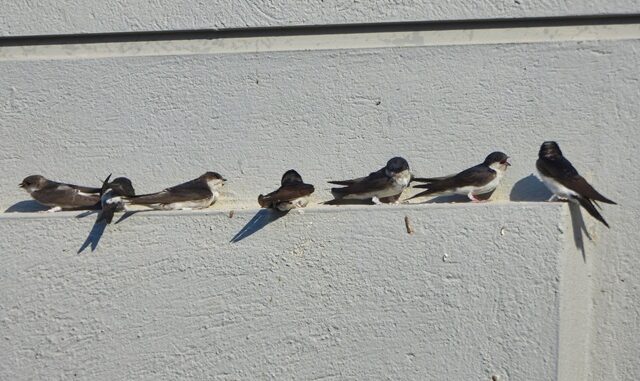
Look up at the eaves of houses near open countryside and you might spot charming little birds, named House Martins, they are busy little birds.
We call them House Martins precisely because of their delightful habit of nesting on our homes, often under the eaves, creating bustling communities. In many ways, they’re like our feathered neighbours and members of the family.

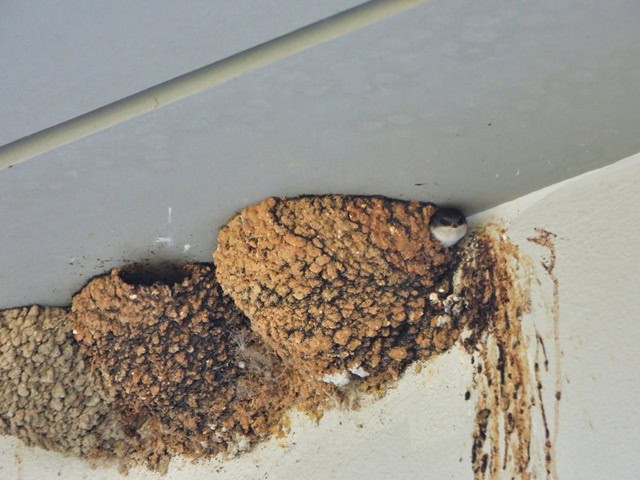
These aerial acrobats are master builders, constructing their distinctive cup-shaped nests from pellets of mud reinforced with grass and feathers. Each nest is a testament to their dedication crafted with around 1000 mouthfuls of mud, often in colonies. However, with the rise of modern building materials, House Martins are increasingly struggling. Their traditional mud nests find it difficult to stick to smooth, modern plastic soffits, leaving fewer suitable sites for them to raise their young and often leading to a nest collapse.
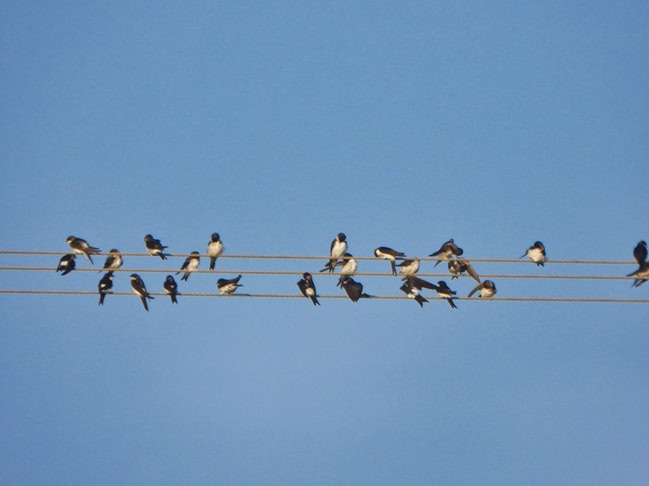
What’s even more remarkable is their communal spirit; House Martin pairs are excellent parents, and surprisingly, often receive help from their offspring from previous broods, who stick around to assist in raising their younger siblings. Often they gather communally on powerlines.
Their diet primarily consists of insects caught on the wing, such as flies, midges, and aphids, making them welcome visitors for any gardener. One House Martin can eat over 800 insects a day, that’ll help you deal with mosquitoes in your garden!
As the days shorten and autumn approaches, House Martins undertake an incredible journey. These small birds are long-distance migrants, embarking on a journey south to their wintering grounds in Africa, often covering thousands of miles.
Sadly, like many of our beloved bird species, House Martins are facing challenges. Loss of natural nesting sites and a decline in insect populations (insects have declined by 78% in the last 20 years), their primary food source, lack of wet muddy puddles and freshwater bodies in Thanet are contributing to their decline here.
But there are ways we can help. Installing artificial nest cups is incredibly beneficial, providing ready-made, secure homes that bypass the problem of slippery modern surfaces. Ensuring access to muddy puddles for natural nest material and promoting insect-rich gardens by avoiding pesticides, can all make a significant difference for these summer visitors.
Let’s do our part to ensure the familiar sight of House Martins gracing our skies for generations to come.
