


By media student Fenella Faux
Thanet is known for its seaside charm, however, it is also one of the least tree covered areas in the UK, with a canopy of just 4.4%.
According to a Kent County Council canopy cover report, Thanet stands in stark contrast to areas such as Canterbury (19.5%), Ashford (16%) and Tunbridge Wells ( 29% ). This means Thanet is missing out on not just the beauty of nature, but the many benefits that a thriving ecosystem brings.
“It’s a bit like anything and everything, the less there is of something, the more value it holds.” Peter Hasted, the founder of Thanet Urban Forest, said. “Thanet’s trees are more important because they are sparse.”
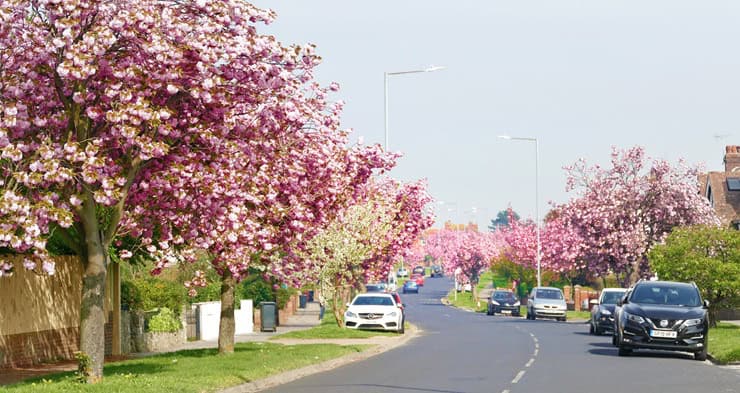
Tree canopy is an important part of urban wellbeing and improving it can greatly benefit those who live in Thanet. The tree canopy, the leaves, and branches work almost as a roof over the ground, shading the area, making it a necessary part of keeping cool during the summer. Not only that, but it provides habitats for animals and insects, improving biodiversity.
Peter said: “Generally, trees are important because they have many social and economic benefits, not only are they aesthetically beautiful and make you feel good, but they have a host of ecosystem services.
“They sequester carbon, are really good for reducing the impact of storm water, regulate airflow, act as an insulator, provide habitat for wildlife, filter air and water.”
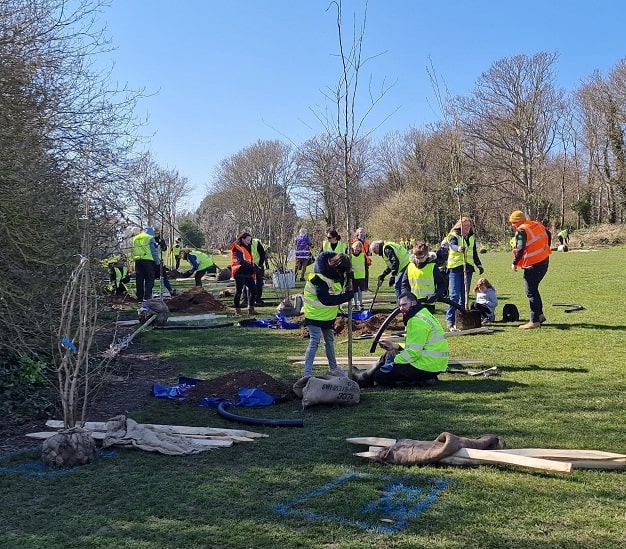
Thanet Urban Forest was born out of a need to sustain and grow Thanet’s green canopy.
It was originally set up as the Isle of Thanet Trees & Woods Initiative, when a number community groups came together in 2019. They were Thanet Community Forest School, Colourful Margate and The Sunken Gardens, Westgate.
The group was successful in applying for and winning grant funding from the Urban Tree Challenge Fund Forestry Commission. Planting started in 2020 and continues.
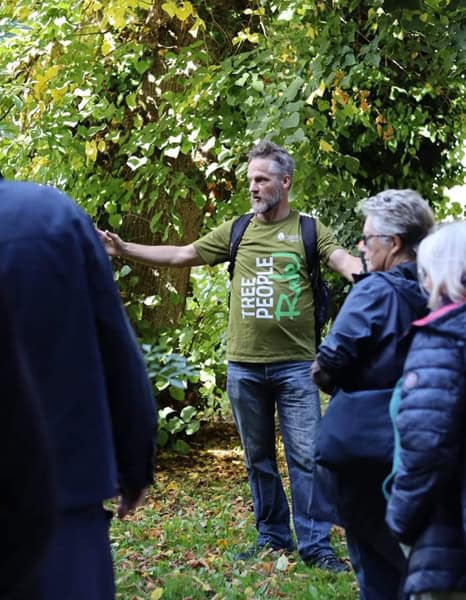
Peter (pictured above) said: “The landscape of Thanet has a noticeably lower tree cover than almost anywhere in the UK. There is an urgent need to raise the canopy of the urban forest.
“Historically, trees reached the end of their natural life, or they were removed to make way for development.
“Without a replanting plan, the few trees in Thanet will continue to decline in number. Thanet Urban Forest’s invaluable work has been superseded by TDC’s tree planning programme with several thousand young trees, whips and saplings planted this year as part of the Miyawaki experiments.”
The Miyawaki experiments are a fast forestation technique that aims to reconstruct indigenous woodlands by planting native trees in a dense formation to mimic natural forests. Thanet Urban Forest uses this technique across Thanet to repopulate the diminishing amount of trees.
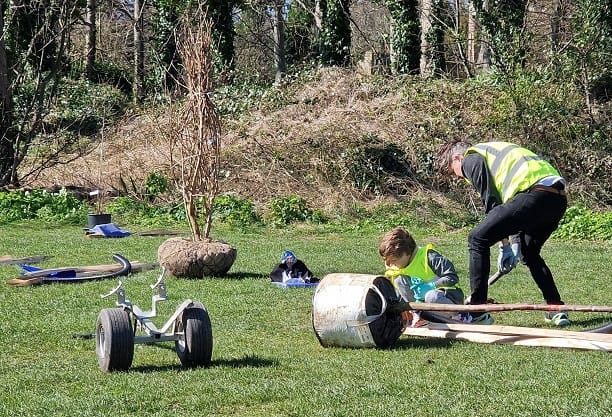
The group has trees planted over 3,000+ native and non-native trees, used over one million litres of water for the trees per year, while covering 11 sites across Thanet.
Last year Thanet council also gave approval for six mini-woodlands to be created at:
- Dane Valley Road, Margate,
- Garlinge Recreation Ground
- Memorial Recreation Ground, Broadstairs,
- Northdown Park, Margate,
- St Peter’s Recreation Ground
- Tivoli Park, Margate
At that time Mike Humber, Director for Environment at Thanet District Council, said: “Mini-woodlands are just one of the initiatives we are pursuing to protect our environment and keep Thanet a green and vibrant place to live.”
Thanet Urban Forest also engages with residents to help them connect with nature and join the cause.

Events include Hanami: Cherry Tree Walks with Peter Hasted with the next one being held on Sunday 13th April, at Dane Park and Ellington Park.
Hanami is the Japanese tradition of flower viewing. Peter will “expertly guide you through the park, whilst sharing his knowledge of trees and the story of ‘Cherry’ Ingram.
Hanami (花見, “flower viewing”) is the Japanese traditional custom of enjoying the transient beauty of flowers.
Walks take place at 10am Dane Park and 2pm Ellington Park.
Come prepared for a 1.5 to 2 hour walk through woodland, wearing suitable footwear – sturdy shoes or boots are recommended, with waterproofs and some water to drink.
Tickets – £4, £6 & £10. All ticket fees will go towards supporting the work of Thanet Urban Forest CIC, choose the option that you feel suits your situation best on https://thaneturbanforest.org.uk/
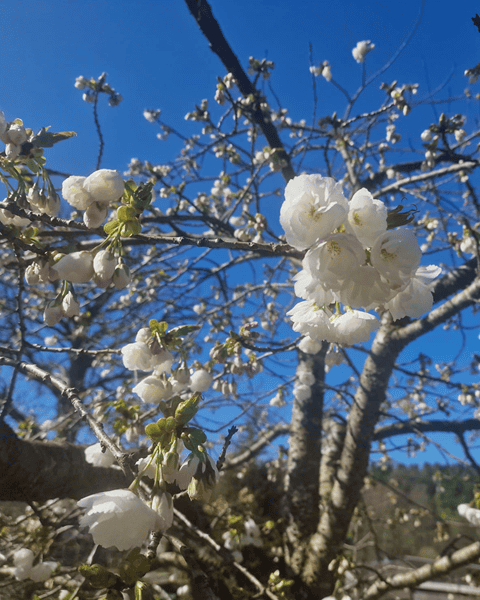
Peter said: “We want to highlight and play homage to ‘Cherry’ Ingram’s great work done for the natural world and flowering cherry trees in particular.
“Collingwood ‘Cherry’ Ingram grew up in Westgate-on-Sea where he gained his love of birds. He was and still is a much-revered ornithologist and cherry tree expert.”
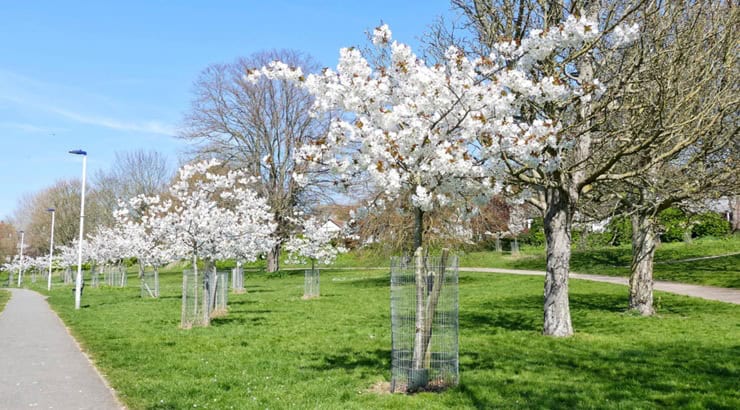
Peter says the walks are classes one of the most rewarding parts of his role, adding: “The Japanese pastime Hanami is to take time to admire and celebrate the blossoms, sharing that with the community that planted them is most definitely in the top five rewarding parts of this job.”
Find Thanet Urban Forest
website: www.thaneturbanforest.org.uk
Facebook: @ThanetUrbanForest

That because TDC always seem to waiver TPOs in favour of developments. This is why we’ve lost a lot of our tree cover. Even when there’s been protest to fight for protection, they still fall on the developers side and allow it to be destroyed. They also remove trees from the avenues under health and safety, but they never replace them with a new tree. They also do not check up on building developments that caveats to not only plant trees but ensure the tree stays maintained. After the developments complete and properties are sold the tree care seems to be forgotten and so the survival rate is poor. Not to mention that parcels of woodland are completely being sold off to be floored for developments, as are fields. So it’s not surprising our numbers are dwindling.
The island of Thanet had most of its tree cover removed hundreds of years ago to make way for agriculture and settlements.
All the more reason we should retain what we have left.
You’re right Kelly. TDC are over zealous about cutting down trees that some chinless wonder has deemed to be ‘dangerous’!
“Ecologists” understanding neither Ecology or History.
Birchington means, “The settlement by the birches”.
Acol means, “The settlement by the oaks”.
No cherries.
Japan consists of an arc of volcanic islands topped by acidic growing media.
Whereas, Thanet is chalk, with alkaline soil.
These cherry trees are not indigenous.
Total 🤡 World!
Why is Thanet now being populated with Japanese trees, based on a Japanese conceit?
Ignoring Harry’s usual inward looking gripes, the trees are nice and the more trees the merrier.
I find KCC only realising how few trees there are in Thanet to be incredible.
Part of the reason is Thanet’s agricultural estate which is intensive growing with no room for trees and nature, however there is a differential within the 4 towns.Ramsgate has far fewer trees and green space than the other towns, but nothing is said here about improving Ramsgate’s canopy, again it is all Margate.
Westwood cross is a disaster area with hardly any trees.If you look at other developments elsewhere there are more trees. Developers keep promoting housing estates with a sylvan prospectuses and then not following through.
I would sooner see a church fall down than a tree, but having said that they are a nightmare for Mobility Scooter users! From the Viaduct in Margate Road, Ramsgate, to Pysons Road, its a nightmare due to tree roots cracking, and raising the pavements! They are worse than the roads, and are probably due to the trees not being planted deep enough as saplings, or due to chalk which doesn’t let tree roots grow down, but only up! If a tree is deemed too diseased and must be cut down, then KCC/TDC should ensure the stump is removed, and the pavement re-laid flat!
Plant native trees and cut down all the horrible sycamore trees