

Local history enthusiast Luke Bigg heads up casual history tours in Margate and writes of the town’s past characters and events:
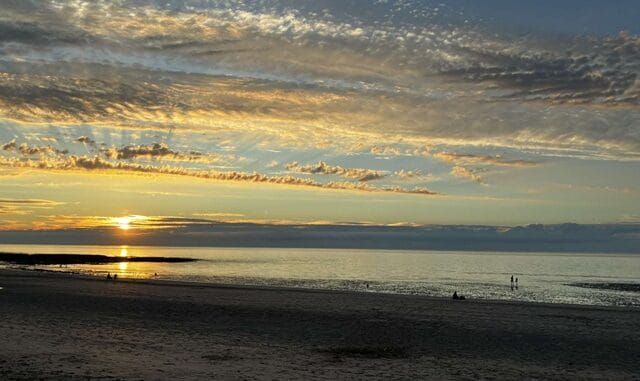
St Mildred’s Bay is now one of the quieter parts of Thanet’s coast. But just over 200 years ago, it was the site of a dramatic clash between smugglers, gunfire, sabres, and the men trying to stop them.
In the early hours of Sunday, 2 September 1821, the coastline around Margate erupted into the sound of gunfire.
This was not a military invasion. It was smuggling, but on a scale very different from the usual image of a few locals quietly rolling a barrel up the beach.
At around two o’clock in the morning, a six-oared galley arrived at Marsh Bay, the area we know today as St Mildred’s Bay, carrying a cargo of contraband spirits.
Waiting to receive it was a substantial gang.
At first, reports said there were about 100 men, many of them armed. Later evidence showed there were closer to 60, split into groups. Some guarded the operation while others carried goods away from the beach.
A lookout from the Coast Blockade spotted what was happening and raised the alarm.
Officer Washington Carr and a tiny number of Blockade seamen headed towards the bay.
What happened next was not a simple chase, but a full-scale battle.
As Carr and his men approached, the smugglers opened fire. Contemporary newspaper reports described repeated discharges of firearms, with the flashes visible from Margate Pier along the coastline.
Even though they were greatly outnumbered, the Blockade men charged forward.
The smugglers eventually abandoned part of their cargo and scattered, leaving behind a musket, part of another firearm, hats, a handkerchief and several large bludgeons.
Blood found along the escape route showed that some smugglers were wounded, but their companions managed to help them get away.
Carr was also injured. During the fight, someone took his sabre and he received a serious head wound. Three Blockade seamen were hurt as well, including one who was shot in the upper thigh.
Remarkably, nobody from the smuggling gang was captured that night.
But the story did not end there.
The hunt begins
One of the men recognised during the fighting was James Taylor, a 28-year-old who lived in Covell’s Row.
Identifying him gave the authorities the breakthrough they needed. A major investigation followed, led by Margate solicitor John Boys and a Bow Street officer who was sent to find the rest of the gang.
The Government took the case seriously and offered a huge £500 reward for information that led to convictions. They also promised a royal pardon to any smuggler willing to testify against others, except for those who had wounded the Blockade men.
Arrests followed across the following months.
Eventually 20 men were being held ahead of the Kent Spring Assizes at Maidstone in March 1822.
Nineteen ultimately faced trial over the events at Marsh Bay.
The consequences were severe.
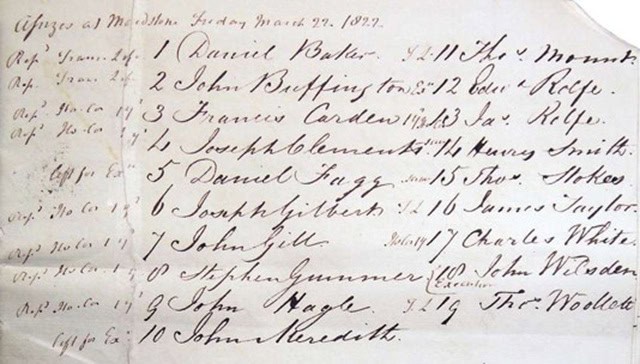
Four men, Daniel Fagg, John Meredith, Edward Rolfe, and John Wilsden, were sentenced to death and later executed at Penenden Heath. Many others were first given death sentences, but these were later changed to transportation.
It was a harsh ending to a violent night on the Thanet coast.
Smuggling wasn’t quite as romantic as we remember it
Today, Kent’s smuggling history feels almost like folklore, with stories of hidden tunnels, moonlit beaches, barrels of brandy, and clever locals outsmarting the authorities. But the real story was often much darker.
Organised smuggling gangs sometimes included dozens of men, armed with muskets, pistols, cutlasses, and clubs. The violence between smugglers and the authorities was real and dangerous.
The Marsh Bay clash is a striking example of how organised and dangerous smuggling had become along the Kent coast after the Napoleonic Wars.
Perhaps the strangest part of the story is where it happened.
Next time you walk along St Mildred’s Bay, imagine it at two in the morning on a September day in 1821. Picture a boat coming to shore, dozens of men pulling tubs of spirits from the water, an armed group standing guard, and then the darkness suddenly lit up by gunfire.
For a few wild minutes, this familiar Thanet beach turned into a battlefield.
Check out Luke’s new website www.margate-archive.co.uk coming soon. Email [email protected]
