

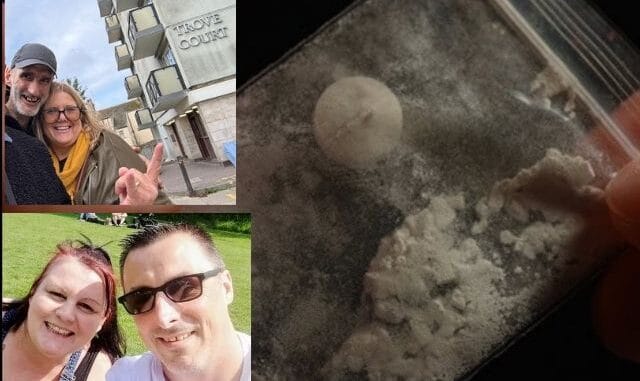
Marking International Overdose Awareness Day today (August 31), a bereaved family from Ramsgate and another from Ashford, who both lost loved ones to overdose deaths they believe were caused by synthetic opioids -nitazenes – are calling for five changes to prevent further deaths and help authorities assess the true scale of the problem:

Antony Irvin was found deceased in his Trove Court flat on September 16th last year. He was 52 years old.
The dad-of-one had been a heroin user and had taken methadone for many years. He was supported by substance abuse charity The Forward Trust.
His family say morphine in his system was at the ‘very lowest end of the range that could be considered fatal.’
His sister Nicola said it seems “ implausible” that his death would have been caused by the level of heroin recorded.
Instead, the family believe Antony died due to synthetic opioids, such as nitazenes, which are 100 times more potent than morphine and have been found mixed in with drugs such as heroin.
But, synthetic opioids degrade in the blood and this means any delay in blood tests – such as there was with Antony’s post-mortem- results in the presence being undetectable.
Nicola said: “When my brother Antony died, The Forward Trust alerted us to the possibility that nitazenes may have been involved because of a bad batch in the area and reports of other long term users dying.
“It took three weeks to sample his blood, and a further three months for the toxicology analysis to be complete. That delay means testing was next to useless.”
At Antony’s inquest in May, the coroner said that delays in testing were “not unusual in these circumstances due to cuts and reduction in service levels.” The family say they have come to understand that these delays are routine, not just in Kent, but around the country.
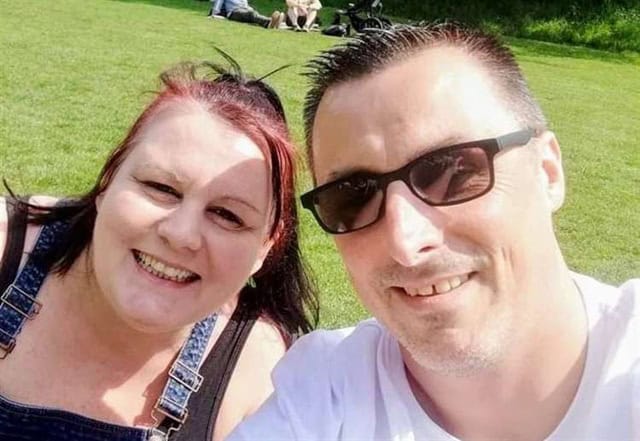
Emma Urquhart was found dead in her home in Ashford, aged 42. The coroner did not rule it a drug-related death, though she was found holding and using a crack pipe. Later, police tested the drugs Emma was using and discovered they were laced with nitazene. Post-mortem toxicology had failed to identify nitazenes in her system.
Her partner Tony Deaville believes Emma’s story is a clear case of nitazene death that the system failed to record.
Tony said: “Emma died on 5 July 2024 following a relapse. Her death devastated our family and left children without their mum and people who loved her trying to understand how someone could lose their life so quickly.
“One of the hardest things for me is knowing that Emma’s death became another statistic.
“Behind every drug-related death is a person. Behind that person are children, parents, partners, brothers, sisters and friends whose lives are changed forever.
“That is why I believe we need to do more to recognise the dangers people are facing, particularly with increasingly potent synthetic opioids such as nitazenes appearing in the drug supply.
“We need better awareness, better recording of drug-related deaths and quicker action when dangerous substances are circulating in our communities.”
Lifesaving changes
Tony, Nicola, David and Antony’s brother Tom are calling for five changes in the system:
- Police to routinely bag and test drug paraphernalia at the scene of death.
- Police to check the phones of the deceased within a week to identify dealers and vulnerable people.
- All police officers to carry naloxone and be trained in its use.
- Pathology labs to routinely have nitazene tests in their toolkit.
- Pathology labs to test for nitazenes within one week of receiving the body of a potential overdose.
The families say: “Our loved ones were canaries in the coalmine. We miss them, we love them, and we want to stop further deaths like theirs.
“We are not calling for big, utopian changes. We are calling for small, practical changes, that experience and evidence suggest will save lives.
“The authorities and the public need to wake up to this new danger before more people experience our nightmare.”
What are Nitazenes?
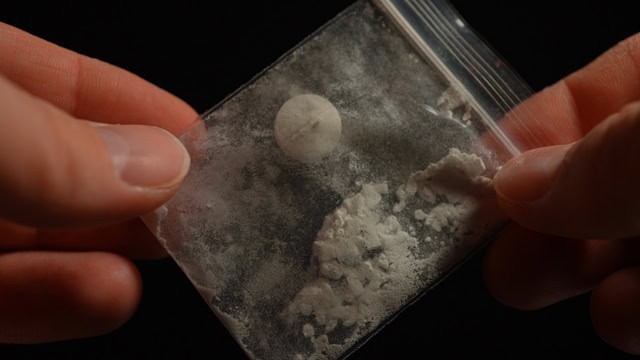
Nitazenes are a family of synthetic opioids which are hundreds of times stronger than heroin and research has shown they degrade quickly in blood samples. As they are stronger, they lead to higher levels of fatal overdoses which happen more quickly than a regular overdose, leaving a smaller window in which to save the person’s life with naloxone or another intervention.
Nitazenes have also been shown to degrade rapidly in the blood post-mortem, meaning the scale of the problem is significantly under-reported.
Since the Taliban began suppressing opium production in Afghanistan in 2023, nitazenes have become increasingly common in street drugs.
‘True scale of nitazene-related deaths’
The government says there have been more than 750 confirmed UK fatalities linked to the substances between 1 June 2023 and 28 August 2025.
However, Dr Caroline Copeland, Senior Lecturer in Pharmacology and Toxicology at King’s College London and leading expert on nitazenes, says this number is likely to be “a substantial underestimate of the true toll.”
She added: “ Not every death is comprehensively tested, nitazenes can be missed even when toxicology is performed, and detection does not necessarily mean the drug will be recorded in national mortality statistics.
“We need to understand the true scale of nitazene-related deaths; otherwise, the measures put in place to prevent them risk falling far short of what is actually needed.
“Most people exposed to nitazenes do not know they are taking them, which makes widespread access to naloxone essential. Naloxone is extremely safe: if someone is unconscious and opioids are not the cause, giving it will do no harm, but if a nitazene is involved it could save their life.
“Efforts to restrict illicit drug manufacture and supply have repeatedly resulted in one substance being replaced by another. We need to invest much more in reducing demand and, crucially, in supporting the people most at risk of drug-related harm and their families.”
Nitazene deaths in Kent
Kent Police says the force is aware of 14 deaths forensically associated with nitazenes since 2023: two in 2023, seven in 2024, and five in 2025.
There was also a warning issued by Kent County Council and The Forward Trust on April 1 this year saying: “Kent County Council has identified a heroin supply found to be containing etonitazene as a significant factor in one death and over ten overdose incidents in Canterbury between 11 and 12 March 2026.”
However, the Canterbury case has not been forensically associated with nitazenes from exhibits tested after being seized at the scene.
The Forward Trust
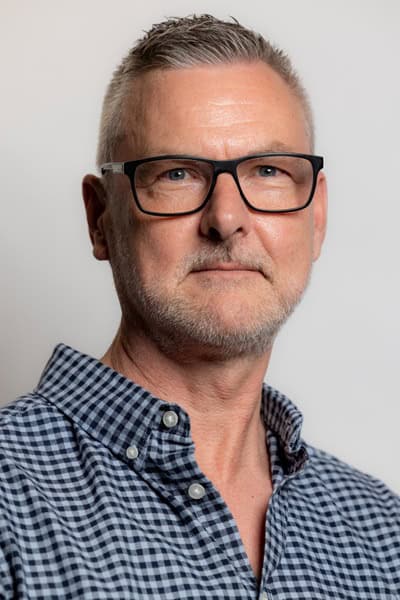
James Parker, Head of Community Services at The Forward Trust, said: “We have been seeing the use of nitazenes across all our services for over three years now, as has been reflected in the national picture around the use of nitazenes.
“As an organisation we have been working with all stakeholders in our communities such as Thanet and across the whole of Kent to raise awareness and provide specific harm reduction guidance around the specific dangers of using nitazenes due to their unpredictable potency and the high likelihood of overdose.
“We provide advice on reducing the risks of overdose; the greatest danger is always the likelihood of buying nitazenes instead of Heroin and then overdosing because of the potency of the nitazenes as opposed to the usual strength of street heroin.
“We are not absolutely certain of the reason for the current wide availability of synthetic opioids, but one common conclusion has been that their rise in availability has been driven by a reduction in the supply of opium from countries such as Afghanistan, and this has resulted in the market being saturated by synthetic drugs such as nitazenes.
“The most important driver for us as drug and alcohol treatment provider is that we raise awareness of the dangers of using nitazenes, and that we provide accurate information to our communities of the risks and dangers of using nitazenes, and also that anyone using nitazenes has at least 2 doses of Naloxone, which is used to reverse the effects of an opioid overdose, to prevent tragic deaths.”
Government action
The government has started to recognise the danger of nitazenes by creating the National Drug Treatment Monitoring System (NDTMS) and expanding access to naloxone to more services and professionals, but there are still limitations to the data gathered and access to naloxone.
Last October, the world’s first detection dogs trained to identify the synthetic opioids nitazenes and fentanyl became at key UK border crossings.
The pioneering K9 Synthetic Opioid Detection Units are helping frontline officers screen postal items, cargo, freight, and courier deliveries for hidden synthetic opioids and other Class A drugs.
There has also been a rollout of naloxone to police forces, with 32 now carrying it and further support underway.
Tackling the problem
Kent Police says it is aware of a small, countywide increase in both seizures and drugs-related deaths that have been forensically associated with nitazenes since 2023.
A force spokesperson said: “Kent Police is committed to tackling the use of illicit drugs and drugs-related deaths and their wide-reaching impact on victims’ families and communities.
“When a death occurs that is suspected to be drugs-related, enquiries are completed to identify which substances were involved. Due to the nature of new synthetic opioids – often referred to as nitazenes – and how they react within the body, they may not be forensically identified as the cause of death in every case where their use has been suspected.
“Kent Police has seen a small, countywide increase in both seizures and drugs-related deaths that have been forensically associated with nitazenes since 2023, and is part of a national law enforcement operation, led by the NCA, in response to the emergence of these substances within the illicit drug market.”
Remembering the people behind the statistics

Antony was adopted by the Irvin family a short time after his first birthday.
He loved food, particularly sweet food such as ice cream and butterscotch instant whip and during his school years had a natural ability for sports, including football, cricket, squash, swimming, tennis and table tennis.
His passion, and his downfall, was cars. His sister recounted how, as a small boy, he would turn the landing into a speedway with toy cars and how, when he was older, he loved to drive fast. His dad says Antony’s first word was ‘car.’
At 18 he moved to London to take up an apprenticeship scheme, training as a support worker for elderly people. He travelled in an old car bought by his parents.
But, the government withdrew funding from the scheme after a few weeks and he drove his car into the ground. Unable to come home, he was left homeless in London – and then he stole cars and eventually ended up in prison.
It became a pattern over the years and this is where Antony’s heroin addiction began. Nicola says she believes the drug provided a “safe, warm, feeling of being a baby held safely in their mother’s arms,” something that Antony craved due to his early experiences.
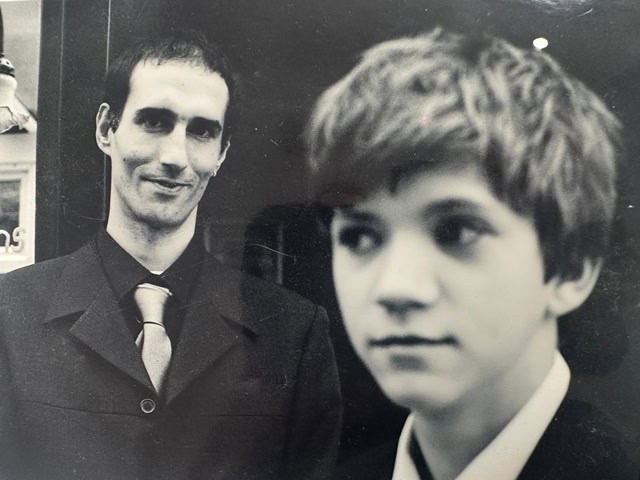
Antony had two serious relationships, the first giving him a daughter who he loved deeply and the second where he also loved his partner and her children. His dad says these were what gave him the most pleasure of all in his life.
Nicola, who remembers the energy of her brother arriving into the family ‘ like a hurricane’ said: “My brother had survived so much and still had a spark of love and life that people felt from him – I have heard over and over again from people who knew him how he had a heart of gold, would do anything for anyone and never had a bad word to say about anyone.”
Dad David added: ““What I think all of us will remember Antony for is his optimism in adversity, his cheerfulness, his fundamentally kind nature, his living always in the present. Antony – we miss you.
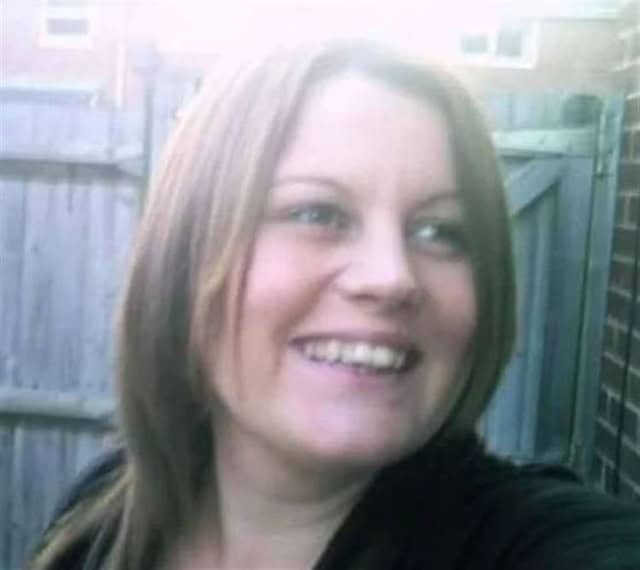
Both Tony and Emma battled many struggles in their lives but things took a positive turn for Emma when she moved to Kent and began The Forward Trust Day Programme. She completed that and began to volunteer with the Trust, eventually being taken on as staff.
Sadly, Emma relapsed and was found dead in July 2024.
Tony said: “Emma was much more than her addiction. She was a mum, a daughter, a sister, a partner and someone who was loved by so many people.
“Emma and I spent 17 years together and had two children together. We both experienced addiction and all the chaos that comes with it, but Emma also experienced recovery.
“She volunteered with The Forward Trust and ROAR and used her own experiences to try to help other people. She knew what addiction could take from a person, but she also knew that recovery was possible.

“Emma was someone who had fought incredibly hard to change her life. Addiction doesn’t make somebody less deserving of help, and relapse shouldn’t be a death sentence.
“If speaking about Emma and what happened to her can help bring about changes that save even one other family from going through what ours has, then her story needs to be heard.”
Stopping more deaths
Nicola said: “People are dying who should not be dying. People in the future will die unnecessarily if the dots are not joined up.
“My brother deserves dignity in death, and we, as a family, deserve clarity, but mostly other people deserve for this not to be how their lives end.
“The data gathered post-mortem matters, it is an essential part of stopping more deaths. My brother’s life, Antony Shaun Irvin’s life, mattered.”
The families are now due to meet with Public Health in Medway, are talking to more families and services, and are in conversation with MPs about the hoped for changes. They are also in the process of trying to have direct conversation with coroners.
International Overdose Awareness Day
Charity MIND says: “Overdose continues to affect people from every walk of life and across every community. Behind every statistic is a person – someone once loved and valued. Behind every loss is a ripple felt by families, friends, and communities everywhere.
“Yet it can be prevented. There are ways to reduce risk and keep people safe. By speaking openly, learning from one another, and treating each other with care and respect, a world where fewer lives are lost can be built.”
Risks and what to do
Nitazenes can cause sudden, rapid respiratory depression (breathing stops), requiring multiple doses of the overdose reversal drug, naloxone.
In case of an overdose, naloxone should be administered quickly if safe to do so. It can reverse the opioid component and may save a life. Beware that due to the strength of these drugs and other synthetic opioids, several doses of naloxone may be required.
Signs of an overdose include:
- Breathlessness or loss of consciousness.
- Limp limbs.
- Blueish tinge to lips and fingernails.
If you believe someone has taken an overdose:
- Make sure the area is safe with nothing around that the individual can hurt themselves on.
- Check for signs of an overdose – pinch the ear and gently shake their shoulders to see if they respond.
- Call 999 and ask for an ambulance.
- If you have access to naloxone, use it. This won’t harm them, and it could save a life.
- Put them in the recovery position.
- Monitor and give support to the individual until the ambulance arrives. You can administer a second dose of naloxone if needed.
- Take care of your personal safety and dispose of any unused naloxone or sharp objects.
Find The Forward Trust at: https://forwardtrust.org.uk/

Addictions a horrible disease. Will police be at anytime doing surveillance of Thompson’s passage, meeting place car park, Cavendish Street car park and Clarendon gardens to catalogue and eventually arrest the dealers and users that regularly purvhase their drugs in broad daylight in these places every single day?