

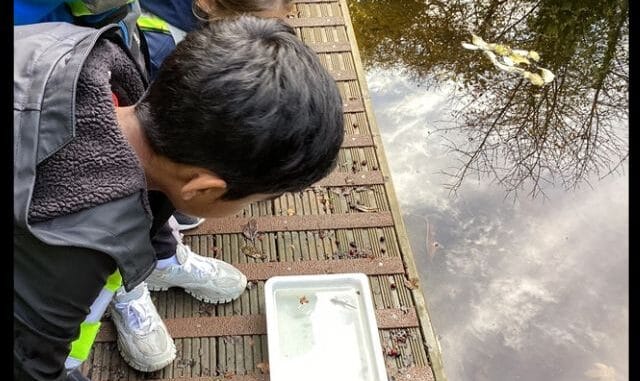
A bug hunt at Monkton nature reserve saw children from St Gregory’s Catholic Primary in Margate become young explorers for a day.
The Year 5 and 6 group enjoyed searching through plants, a bug hotel, undergrowth and compost heaps. They found a range of creatures including ladybirds, slugs, snails, woodlouse, centipedes, spiders and worms.

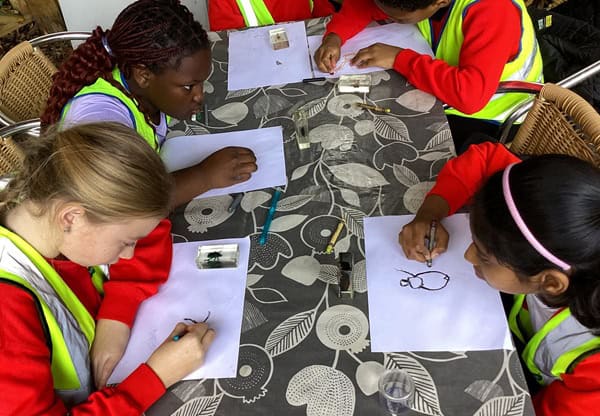
They were also given the opportunity to release some insects that had previously been collected including feathered thorn moths and parasitic wasps. The group also studied minibeast samples and drew detailed sketches of their choice.
In the upper and lower areas of the Reserve the St Gregory’s team explored and searched for statuettes of British species and brass rubbing plaques, and hunted for fossils in the chalk cliffs. They also enjoyed trying to locate a late flowering orchid species, native to the reserve.
At the Reserve museum the group explored the artefacts and were fascinated by the different skulls and animal finds they could handle and observe.

The visit was completed by a workshop on lifecycles. The group showed their already-acquired knowledge and were amazed at what they discovered about the lifecycles of newts and dragonflies at the nature pond. A great crested newt yet to hibernate was a highlight for the groups.

Teacher Shimona Sandwell organised the trip. She said: “The children were engaged in every aspect of their visit. They were fascinated by animals and plants that they had not seen and some things that whilst common place, they had previously not been studied.
“They showed impressive knowledge and asked insightful questions to our excellent guides. The pupils were great ambassadors for our school.”
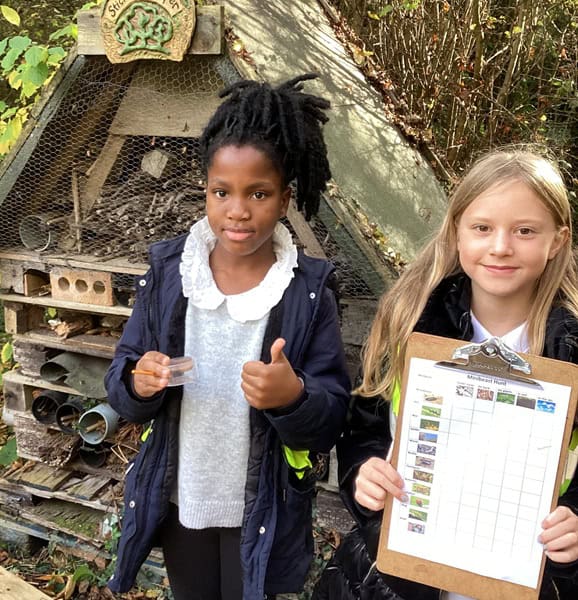
Athanasia Papa-Adams, Assistant Head Teacher, added: “This was a wonderful opportunity for our children to engage with a wide breadth of nature right on our doorstep. This hands-on learning captivated the group as it deepened their knowledge of their current science topic.”
Thanks go to the Cummins Group that funded luxury coach transport for the visit.
