

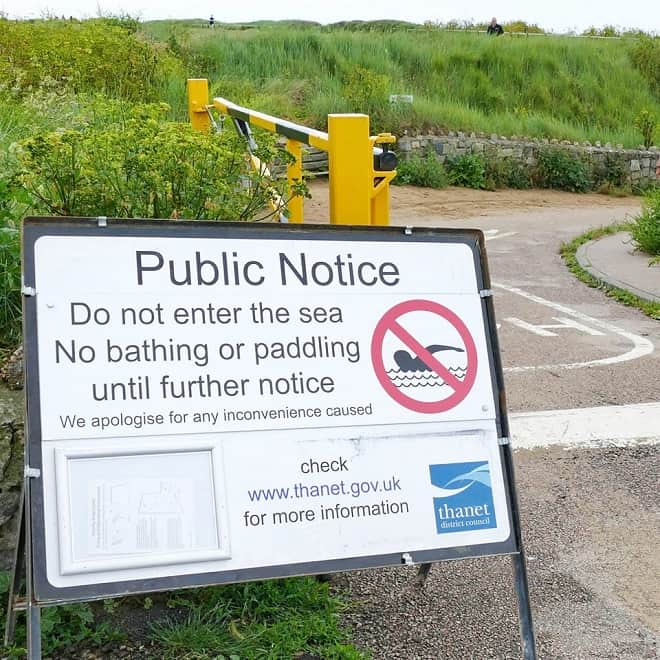
Southern Water has been told to ‘get a grip’ by the Environment Agency after 269 pollution incidents by the company were reported for 2024.
The figures are revealed in the latest Environmental Performance Assessment (EPA) with 2024 having the lowest ratings across the country’s nine water companies since the process began in 2011.
The EPA report is an independent comparison of environmental performance across the sector. Since 2011, the Environment Agency has used the EPA to rate each company in England from 1 star to 4 stars, to highlight where improvement in water company performance is required.
In 2024, the nine companies collectively achieved just 19 stars out of a possible 36, down from 25 in 2023.Only Severn Trent Water received the top four-star rating for industry-leading EPA performance.
Southern Water received a 2 star rating. In 2024 it was responsible for 269 pollution incidents, 35 more than the previous year. Fifteen of these were classed as serious pollution incidents.
‘Get a grip’
Dawn Theaker, the Environment Agency’s water industry regulation manager for Solent and South Downs, said: “Everyone wants Southern Water to improve. And it can. It needs to get a grip on the concerning number of pollutions.
“Environment Agency inspections of Southern Water sites are way up, each visit providing vital feedback for the water company about its performance. If Southern Water acts on that intelligence, improvement will follow.”
The Environment Agency inspected 339 Southern Water sites and assets last year and another 350 inspections have been carried out since then. This is part of the goal to double the number of site and asset inspections by April 2026 and hit the overall target of 10,000 inspections.
The EPA criteria has been regularly tightened over the years to reflect rising expectations for water company performance, so the bar is higher than ever. Based on current criteria there had been a steady trend of improvement since 2011—but these results mark a dip in that trend.
Serious incidents—those causing significant environmental harm—have increased by 60% compared with 2023. Thames Water, Southern Water and Yorkshire Water were responsible for 81% of these serious incidents, while Northumbrian Water and Wessex Water recorded none.
Poor results
Environment Agency Chair Alan Lovell said: “This year’s results are poor and must serve as a clear and urgent signal for change.
“What is needed now from every water company is bold leadership, a shift in mindset, and a relentless focus on delivery.
“We will support them however we can but will continue to robustly challenge them when they fall short.”
The report cites a number of factors for the decline in performance, including the wet and stormy weather in 2024, underinvestment and poor maintenance of infrastructure, and also increased monitoring and inspection.
To ramp up its regulation the EA is investing in 500 additional staff including environment officers, data analysts, enforcement specialists and technical experts, as well as team leaders and managers. It has developed new digital systems and significantly increased the number of water company inspections.
The EPA has been released on the same day as Ofwat’s Water Company Performance Report, reflecting the regulators’ commitment to a more integrated and transparent approach to water sector regulation.
The Ofwat report speaking on Southern Water, says the company has made: “improvements in some areas, for example in reducing the number of pollution incidents and reducing annual leakage from 2023-24 levels.
“However, it still needs to deliver material improvements on these and other measures if it is to meet its long-term commitments. Long duration interruptions to water supply are particularly concerning.”
Southern Water CEO Lawrence Gosden says the reports show the company is not yet meeting all its regulatory targets but also says there are “signs of real progress, stability and action – the kind of things our communities have told us they’re desperate to see.
“By their very nature, regulatory targets are black and white, and we understand that. We’ve retained our 2-star EPA rating and have improved our individual scores in the majority of Ofwat metrics – but we also accept that we aren’t yet where we want to be.”
Mr Gosden says a two-year Turnaround Plan was launched in April 2023 to deliver a rapid boost to performance in key areas, resulting in:
- Overall pollution incidents cut by 30%
- Internal sewer flooding incidents down by 40%
- Drinking water quality compliance score up by 40%
- Leakage reduced by a record 18.5% last year
The company says there has also been a £1.5 billion Clean Rivers and Seas Plan to drive down storm overflows, in line with the Government’s commitment to see them halved by 2030.
He added: “To deliver this progress at pace, we chose to spend £1.5 billion more than the 2020–25 budget agreed with Ofwat, resulting in record capital investment. This enabled costly but critical upgrades, including a new 24/7 Control Centre and the installation of 32,000 digital sewer monitors to spot possible pollutions before they even happen.”
No dividends have been paid to shareholders since 2017 and Mr Gosden says none are likely to be until at least 2030.
Surfers Against Sewage
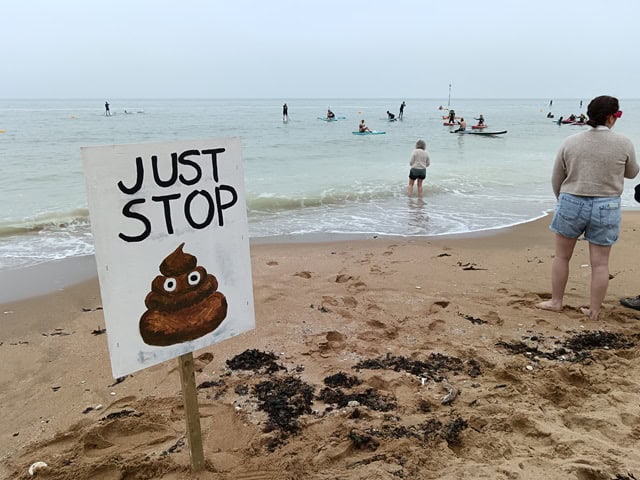
Surfers Against Sewage (SAS) continue to call for urgent reform of water companies and sat they need to be brought under public control.
Surfers Against Sewage is running a Million Mile Clean on Sunday 26 October.
For the Thanet stretch, meet at the Harbour street end of Broadstairs pier at 10am. SAS is logging rubbish that washes up to see how the movement of tides and the dumping of raw sewage into our seas is affecting our beaches.
Please come along, with a picker, if you have it.
SAS will provide gloves, bags and tally sheets to record what you pick up between Viking and Stone Bays.

SW have been poor for years, polluting rivers and the sea blaming it on the rain. Didn’t stop them putting the bills up by 47%.
Perhaps we could also clamp down on Thanet Council whose neglect of emptying bins on the A299 laybys, has left the area festooned with litter.Making the approach to Thanet disgusting.There are laybys with 8/9/10 times more litter than the broken bins can cope with.They never empty the bins.Due to their low standards and leaving the laybys looking like a dump has encouraged fly tipping.Its the dirtiest most polluted road I have seen in England.
Dave
Why are people driving to a lay by to put their rubbish ?
I have never needed to unload my car rubbish in lay bus. After a trip we unload the car when we get back.
As for SW I bet they’re scared ! Another few fines that we will pay due to increasing prices. How was Thatcher allowed to sell off water ?
“Drinking water quality compliance score up by 40%”
40%? How bad was it?
Mr X the bins are used by lorry drivers or people putting singular items in them.After a week or so most councils go around and empty them.If they are neglected for months on end they get full and seagull abd foxes attack them.Also people leave their picnic stuff beside them because the bins are overspilling. The litter then flies all down the road never to be litter picked by the council.
I drive once a week to Heathrow and there is more litter on the Thanet Way than the whole drive.Pretty much every layby in West Kent,Surrey and Middx is clean.These areas also have considerably more traffic.TDC are not doing their job and emptying the bins.Next time you drive the A299 take a look.
Mate, it’s an article on Southern Water. Why are you banging on about bins?