

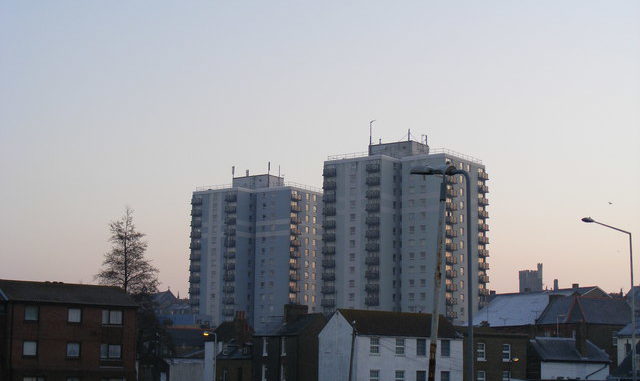
Thanet council has increased the waking watch service at five of its tower blocks in line with revised guidelines from the Kent Fire and Rescue Service and as part of actions taken following the report into the Grenfell Tower tragedy in June 2017.
Thanet council is responsible for six residential tower blocks – Harbour Towers, Kennedy House, Brunswick Court, Staner Court and Trove Court, in Ramsgate; and Invicta House, Margate.
Recommendations were for an increase in the number of waking watch officers at each of the five tower blocks fitted with external wall insulation (all bar Brunswick) from one to two during the day and increasing the number of officers at Trove Court and Kennedy House in Ramsgate from two to four at all times.
There is also a review of the working procedures and training for all waking watch officers and upcoming completion of the installation of new evacuation alarms in all flats.
The additional waking watch officers increase the cost of the service by an estimated £180k. The current waking watch budget of £768k was already reporting an overspend of £247k as a result of the difficulties in completing the installation of new evacuation alarms in all flats.
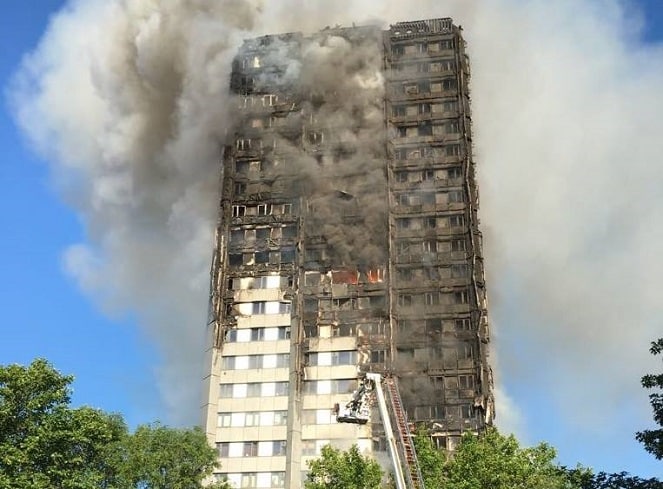
At the meeting Cabinet members will also consider implications and recommendations for local authorities and social housing providers, on fire safety and emergency planning following the conclusion of the Public Inquiry into the Grenfell Tower fire and publication of the Phase 2 Report in September.
Thanet District Council is a Registered Social Landlord with responsibility for approximately 3,400 properties across the district with 14 buildings over 11m tall including the six residential tower blocks.
The council is also a Category 1 responder and has a duty to provide a response in the event of an emergency. In preparation, there is an obligation to undertake a risk assessment and maintain emergency response plans.
More than 70 people died in the devastating Grenfell Tower fire in London. The blaze was tackled by some 250 London Fire Brigade firefighters and 70 fire engines.
The fire started accidentally in a fridge-freezer on the fourth floor. The rapid growth of the fire was accelerated by the building’s exterior cladding,
Following the fatal blaze the government relieved Kensington and Chelsea London Borough Council of responsibility for supporting the survivors, after their inadequate response to the disaster.
Responsibility was handed over to the Grenfell Fire Response Team (GRT) led by a group of chief executives from councils across London.
Report recommendations
Following the tragedy the Phase 1 report, aimed at addressing the responsibilities of social housing landlords, made 46 recommendations. Of the 14 relevant recommendations for Thanet, 12 are completed and two are partially completed
The remaining two are for the installation of evacuation alarm sounders in every flat. This work has progressed but there remain some outstanding installations where there has been difficulty gaining access.
The other is to inspect all communal fire doors quarterly and flat entrance doors annually. A programme has been implemented and replacement of fire doors in low rise blocks and separately at Brunswick Court is taking place and replacement of fire doors within the other tower blocks is included in Tower Block Retrofit and Refurbishment Programme.
Currently, mitigation arrangements of the tower block waking watch services are place.
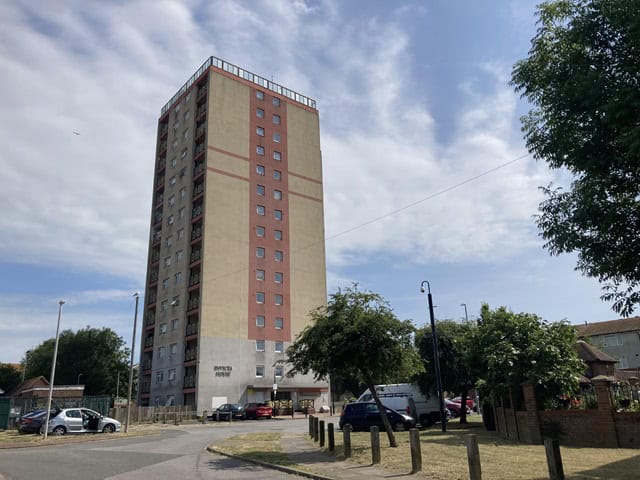
A report to councillors says: “Due to the presence of non-compliant external wall insulation (EWI) on 5 of the council’s 6 tower blocks, these blocks currently have a simultaneous evacuation strategy in place, meaning that the buildings should be evacuated in the event of a fire.
“A key role for the waking watch service is to continuously monitor the building for fires and to initiate and support an evacuation if necessary.
“The Tower Block Retrofit and Refurbishment Programme includes the removal, replacement and upgrade of the EWI. Once this is removed and replaced, we will consult with our fire risk assessors and the KFRS with a view to change the building strategies back to ‘stay put’, meaning that only residents in the immediate vicinity of a fire should evacuate.
“At this point the upgraded alarm sounders we are installing will be reconfigured so that they are in the direct control of KFRS, should they ever decide that a full evacuation is needed in the event of a fire.”
The phase 2 report made a total of 58 recommendations with the council focusing on some areas that specifically relate to emergency planning. These include additional training for all staff, improved community liaison and a review of communications protocols.
As an active partner in the Kent and Medway Resilience Forum, there are established emergency plans and Thanet has responded well to previous emergencies.
Council officers have started to develop a detailed action plan for the improvement of the council’s plans and preparedness for a major emergency, aimed at addressing the points raised.

Cllr Helen Whitehead, Deputy council leader and Cabinet Member for Housing, said: “The failings that led to Grenfell, and further continued with the management of the crisis will always be remembered; not only to ensure that we remember those lost and affected by an appalling and preventable tragedy, but also to ensure that the damage previously done to our central regulatory systems is repaired, and that residents across the country are never, ever again exposed to that level of risk.
“These are the lessons that the Grenfell Inquiry teaches us; and its transparency and clarity is important and will be matched by our own.
“There has been a huge amount of work done in recent years to ensure that the safety of our residents remains the priority, as well as the huge strides forward we have taken to strengthen residents’ voices through our systems and our Tenant and Leaseholder Groups. Their work on all of our policies is recognised and greatly appreciated.
“Seeing Grenfell unfold was, for so many of us, a moment of horror and powerlessness and grief; but we reclaim that power in ensuring that such a tragedy is never repeated and by continually prioritising resident safety.

And yet TDC still accepted fire risk assessments that they accept were based on incorrect assumptions and which the council has no mechanism to inform the assessor of the correct information and as such further incorrect assessments were accepted.
Wow!
I’m curious that Cllr Whitehead makes no mention of the replacement of the flammable cladding. I thought there was target set for that.
The flammable cladding is polystyrene behind a render finish, totally umlike the grenfell system. No air gap , so the only way air could get in to sustain a firemis if the render finsh is removed and the polystyrene ignited.
Try and find an example wherensuch a system has burnt out of control. The measures are a resultmof massive mission creep and based purely on the polystyrene being flammable.
The biggest fire TDC have had in a tower block was when a tenant decided to take a mototrbike into a flat and work on it.
The cost of the disposal of the removed polystyrene alone will be immense , let alone the scaffold cost , replace,emt system etc etc, it was said in one article all the blocks would be done for around 12 million. Ask an engineer and they reckon it’d be no surprise if it cost that per block. The current system being such a relatively low risk i, these blocks will be at the end of a long queue.
And all this because so ial housing at grenfell ignored building regulations from the day it was built , making fire fighting on the night of the fire just about impossible and lack of oversight/ quality control mean t the cladding system wasn’t installed properly. As a result the firestops in the system could never work.
But of course all that and many more public sector failings were ignored by the press to protect the image,of social housing . And as above TDC have been just as bad in the way it has procured and finagled its own fire risk assessments. Goes back at least a decade and accepted by each administration in that time. Properties that still don’t comply with the 2005 fire safety order act.
“VLGI”- you sound as if you don’t approve of social housing.
MM Rees – you cannot help yourself can you? I found the post very informative but you find a need to have a very negative opinion! Grow up.
“Fed Up B” – what reply of mine to “Vlgi” would you describe as “a positive opinion”?
M m rees, i’ve no problem with social housing , but it needs to accept it’s failings and that it’s not the panacea it’s seen as by some. Grenfell was built without complying with building regulations for fire safety from day 1, but how many of those employed by the council and made those decisions and or failed to put it right lost their pensions or are likely to go to prison , their actions having helped lead to the deaths of 72 people? Likewise Lakanal House.
TDC accept that have patently incorrect fire risk assessment but for many years did nothing about them. Look back and you’ll find serious failingsover gas safety. East kent housing couldn’t get rid of one employee fast enough when it was revealed that he’d been closely involved in the works at grenfell.
So i have great misgivings about a system that puts people at risk and costs the taxpayer a fortune , in order to promote the illusion of cheap social housing.
Look at the misery and costs being inflicted upon many thousands of flat owners as a result of all the fire safety legislation that has arisen from the failings at grenfell, how many tens of billions lost because a council decided to flout the rules.
Rather than criticise from a position of ignorance, google Dr. Barbara Lanes report on grenfell, a large volume, but a real eye opener as to how the tradgedy really occurred to the extent it did.
The fire service are also culpable, they would have been the inspecting authority for many years, yet they allowed the building to be occupied in full knowledge that they would be unable to fight a setious fire effectively.
There was no wet riser in the building, so fire crews would need to run hoses up through the stairwells to fight any fire. Imagine the time that takes in a block the height of grenfell.
As for the cladding system, elsewhere in the world such fires don’t lead to loss of life. But at grenfell there were no fire stops around the windows, the cladding system was poorly installed ( fire stops fitted wrong way round and in gaps far too large for them to work).
So yes social housing is a mess, covering it’s failings up is a scandal.
Imagine the private sector had killled as many people, would it have been treated as leniently?
As for TDC it accepts risk assessments where assessors choose convenient build dates that allow them to “assume” the construction was done under building regulations, it’s been pointed out to TDC that this is not the case and they accept the building is much older and those assumptions donn’t apply. But apparently there is no mechanism to correct the report or provide the surveyor with pertinent information
Other reports are accepted assumably unread as they are incredibly flawed.
Inone rather trivial example an EPC says a flat is in a building with a pitched roof, but it actuall has a flat roof, how do such basic errors get missed and how many others are made?
On the back of such poor reports works that should be do aren’t and money is instead wasted doing things that are totally unnecessary.
Possibly the length of your reply prompted it to go into moderation. Be patient as I do usually check to see if anything is stuck in the queue
I wrote a lengthy reply , but it seems to have gone into moderation for some reason.
All sounds a bit OTT, and not a good use of public funds.
A risk assessment written by someone in an ivory tower, with a money tree on his desk.
No wonder Thanet is looking such a poor run down area if this is how our council tax is spent.
No council tax is being, or can be, spent on any of this. Council housing funding is ring fenced and the source of any expenditure comprises rents, service charges and government grants.
Ultimately governing grants come from general taxation collected nationally in but not from council tax.
Mr Everitt – it still comes out of my tax! I am also dreading Council Tax rise for 2025 which will be maximum Labour can get away with!
But still public funds
I can’t believe that, some 7 years after the tragedy of Grenfell, that the Council still haven’t replaced the external cladding on its tower blocks.
Surely that can’t be right ?
But not as unbelievable that TDC still has property that doesn’t comply with the 2005 fire safety order act.
I question the reason for replacing cladding to tower blocks anyway! The Grenfell fire was a freak accident when a Fridge caught fire in one of the flats, so I understand! Has any other tower block exterior insulation been tested for a similar incident? Is it possible existing cladding could be fire proofed? I think we should be told!
In reality not really a freak accident, a flat that was occupied by 3 unrelated people, had an extra (old) fridge freezer, this was plugged in via an extension lead, a hot night fridge freezer working hard, extension lead acted as an induction heater and caught fire. New windows weren’t firestopped properly and the kitchen extractor fan was installed in a flammable panel, ao the fire got out easily and then reentered other flats easily.
Fire service couldn’t deal withvthe blaze quickly enough as there was no wet riser in the building so hoses had to be run manually up stir wells , considerably delaying the fire fighters response.
An excellent report by Dr. Barbara Lane is available on line and well worth looking up. The number of failings in the tragedy is extraordinary.
Yet another reply that seems to have fallen foul of moderation
With regard to Grenfell it was built to building regulations of the time by Kensington and Chelsea council. As were the other high rise blocks in that area of the borough. The only difference between Grenfell and the surrounding high rise blocks, it got”modernized” and had this dangerous cladding added to the exterior of the building, the other blocks are still concrete slab construction without the added cladding, if the cladding hadn’t been added it would be as safe as the surrounding blocks are to this day. I say this as a health and safety advisor in my day job. I grew up less than an half a mile from the estate, originally built for slum clearance of the Notting Hill and Latimer areas of west London. It is hard to think Nothing Hill once had road after road of slum housing, when you see the gentrification of the area now. Decent working class people moved into the estate/area, with properties built by Kensington and Chelsea council, plus some low rise blocks built also by the London County council in the same period. Things, started to go down hill in the mid 1970s, when the housing department (Kensington and Chelsea council) by this stage had taken control of the GLC properties too
I’ve placed 3 links in another post , but this will be held up by the moderation software , hopefully Kathy will allow it through later ( i’ve no idea of the legalities behind publishing links).
If not try a few searches along the lines of
Grenfell firesafety failings
Grenfell wet riser
Grenfell firemans lift
Grenfell firedoors
Grenfell gas supplies
Dr. Barbara Lane grenfell report
The fire compartmentation failed catastrophically, there was no effective firestopping around the new windows, the cladding was fitted badly. The list of failings goes way beyond the cladding alone. How was a fire meant to be fought in the upper floors with no wet riser ? Was the firefighting plan for Grenfell ever published?
But all this rather deviates from my central point that Grenfell ( and the wholesale avoidance of compliance ) has resulted in considerable economic damage to hundreds of thousands of individuals and the nation as a whole, but those responsible in the buildings management seem to have escaped with no sanction, the very cosy public sector looking after itself.
https://www.fbu.org.uk/news/2018/09/10/tuc-18-fire-safety-failed-grenfell-tower-long-fire-broke-out
https://www.insidehousing.co.uk/news/grenfell-inquiry-day-five-expert-highlights-key-issues-56828
https://www.grenfelltowerinquiry.org.uk/evidence/dr-barbara-lanes-expert-report-supplemental
Very interesting.
But what does this have to do with TDC?
https://www.lrb.co.uk/the-paper/v46/n19/james-butler/this-much-evidence-still-no-charges
I’m hoping Kathy will allow this link. To support “Very Little Gavitas Indeed” this is an article from the London Review of Books by James Butler on the Grenfell inquiry.
On What’s it to do with TDC, they are the responsible body as far as the law is concerned. If, as has been said, TDC are knowlingly operating with flawed Fire Risk Assessments this is a breach of the criminal law.
TDC also have a role in the planned Battery Storage System for Richborough, part of the Save Minster Marshes campaign. The known fire risks from lithium BESS is well known with many fires across the world to date. The fire management arrangements have been “passed” by Kent Fire & Rescue with no comments to make. TDC Planning have voted through the plans despite them not having the competence to judge the risks.
At Grenfell many failed elements came together to create a Perfect Storm. Similarly, the very complex arrangements at the Richborough BESS require everything from the weather, road conditions and communications to the BESS systems to work 100% all the time to avoid a population disaster at worst. As with Grenfell no one at the Council, at Central Governement or local MP’s are taking this risk on board. As with Grenfell, it seems, we’ll have to wait for the disaster before anyone will look at how bad the preventative and management measures are.
It seems to me that everyone and his aunty Nelly is using the issue of TDC’s high rise flats as a hanger on which to drape his own pet theme.
I suppose it’s about expecting those in authority to take responsibility for their actions and ommissions. For TDC they should be operating their tower blocks (as well as their other homes) lawfully and in compliance with Decent Homes principles. Similarly TDC seen to have brushed aside their role in enforcement and planning around the Richborough BESS and Converter.
Why is it that so many people in positions of authority leave a known risk unmanaged and, when it hits the fan, it’s all crocodile tears and back covering?
“Similarly TDC seen [sic] to have brushed aside their role in enforcement and planning around the Richborough BESS and Converter”
In what way has TDC neglected its duties in this respect?
Hi Andrew,
In response TDC have duties within their planning process to identify harm arising from an application, to the environment and to people. I examined the application papers for the Richborough Battery Electric Storage System (R-BESS) for a TDC Cllr to advise them. I submitted a series of questions to TDC Planning, various Cllr’s, our two MP’s and the Secretary of State for Energy in April 2024.
I got a minimal response from Roger Gale, asking to be copied in to any responses I got. Craig Mackinlay sent me the response he got from the Sec of State which was a simple politicians brush-off, not addressing any of the questions. I replied with my concern that the fire safety issues were being ignored, adding that the potential risks require a halt to any operations and further development until they have been assessed and managed according to UK law, but nothing back to date.
Cllr John Davis said he and Cllr Brenda Rogers were concerned. TDC gave no responses at all.
In April Cllr Becky Wing forwarded these same questions to Bob Porter (Director of Place, Iain Livingstone (Planning Applications Manager) and Duncan Fitt (Planning Officer). Cllr Wing wrote to this group again asking to meet and discuss but, to my knowledge, no responses received.
Following the General Election I wrote with my questions/issues doc that had been amended to account for new fire safety papers in the application. This went to the new Sec of State as well as our new MP, Polly Billington and Roger Gale, I also sent it to National Grid’s Sealink project.
In August I wrote again to National Grid as well as the central government planning department dealing with the Sealink project, with these same questions, no response to date. I also followed up the non-responders by writing again the Sec of State (Ed Miliband) and our two MP’s. Miliband handed my Questions doc to DEFRA who told me guidance has been issued and that the Council (TDC) were responsible to decide what issues were “material” so, TDC are squarely in the frame of responsibility. And, as the Grenfell inquiry said, it was the duty of the Council (“the last line of defence”) wholly failed in its duty.
I see that Rick Everett, Leader for TDC has commented on this article so one can assume he will see this post.
Cllr Tricia Austin Raised some of the questions in the September TDC Planning Meeting but, limited to a few minutes, it was very brief.
My Questions doc is on the Save The Minster Marshes facebook site and, if Kathy Bales was able, I’d be happy to give it to her for publication in IoTN.
A few points to contextualise my concerns.
Lithium batteries do not need oxygen to burn. Their chemical make-up is such that a full battery is not the same as one that is half full of discharged, making understanding how they act complex. The international Energy Storage Industry Summit of 2021 spoke about 30 BESS fires since 2017. The Summit concluded with a serious dilemma, “dosing them for several days with water causes toxic fire-water runoff which contaminates land and water ways. However, leaving them to burn out means that huge clouds of toxic gas are released into the air damaging human health and soil.”
Traditional fire fighting methods do not work as the fire continues to burn, even under water. The Liverpool BESS fire burnt for at least 10 hours, in Arizona one burnt for 15 hours and both sites were far smaller that the R-BESS. The R-BESS submission states a “thermal event may burn for 8 hours” which shows the planned tank size is inadequate.
Lithium fires create smoke that contains many highly toxic chemicals. This plume will travel according to wind direction but the R-BESS application limits itself to SW winds although north winds in Thanet are common. This puts Cliffsend, Minster and Sandwich in the line of fire depending on direction. I have seen no Civil Contingencies Act compliance in the applications, TDC’s responses or those of Kent Fire & Rescue.
The “fire suppression system” at Liverpool was the same for the R-BESS. But I found that the manufacturer of this, the USA company 3M, was withdrawing it in 2025 (at the latest). This said the actual use of this system was never to suppress a lithium fire but heating in the electrical support systems such as cooling fans so one of my Q’s was asking why the application was misleading us in this.
The automated detection is sound practice but, at Liverpool the control centre was off site and reported to Fire & Rescue 30 mins after the general public phoned in the fire. A Q was about the control centre and reporting process.
Our BESS will have automated vents allowing the toxic plume to form and spread. Kent F&R will have to be on site in minutes to cool containers next to a fire with water to avoid other batteries over-hearing and further lithium run-away fires. But the application tells us that site control will need to disable the electrical systems and electric security fence before first responders can take action but it fails to tell us if this control is on site and its operational hours.
Also, at Liverpool water run-ff from fire fighting was collected in tanks on site, as per international BESS guidance. No such tanks have been included in our BESS. Run-off will be contaminated with heavy metals and other chemical residues and have to flow into drainage channels and the Stour even though it is required to be managed as toxic waste followed by licensed removal.
Within the Civil Contingencies Act Part 1 TDC has “Category 1” duties:
assess the risk of emergencies occurring and use this to inform contingency planning
put in place emergency plans
put in place business continuity management arrangements
put in place arrangements to make information available to the public about civil protection matters and maintain arrangements to warn, inform and advise the public in the event of an emergency
share information with other local responders to enhance co-ordination
co-operate with other local responders to enhance co-ordination and efficiency
provide advice and assistance to businesses and voluntary organisations about business continuity management
Has Rick Everit got all this in hand?
Are TDC Officers and Councillors considering the R-BESS submissions given the following?
no lithium cell chemical reaction heating detection
no cell cooling system
no fire-fighting arrangements specific to battery failure fires and thermal run-aways
a long and fragile communication chain before Kent F&R are informed of an incident
a many stepped and unclear process before of fire fighters can access the site safely
wind taking toxic smoke over the fire-fighting water tank and access points
the inadequate quantity of water in the fire fighting tank for this site size
no plan for a failed battery cell explosion at the centre of the battery array
no plan for heating from a fire/explosion causing a runaway chain reaction in battery cells in neighbouring containers
no major incident plan to manage population centres, environments and transport at threat from toxic plumes and contaminated fire-fighting water run-off?
no details of UK regulatory compliance
failure to acknowledge BESS industry best practice in planning site operations and emergencies
failure to demonstrate any learning from recent BESS fire and explosion events.
So, if you’re still with me, our BESS at Richborough is very similar to the Grenfell disaster (and so many others) where known risks are ignored with appalling results.
Garry raises so many serious questions here, that deserve answers.
Someone once said, “Let all things be discussed and truth prevail”.
No point of view should be banned.