

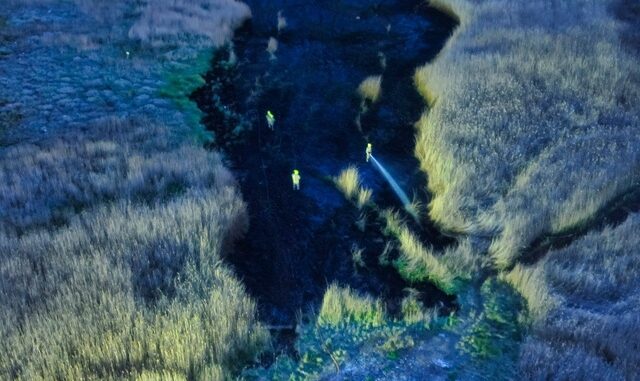
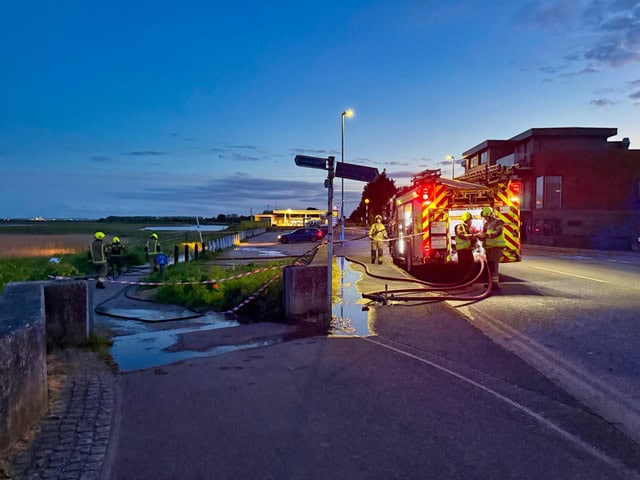
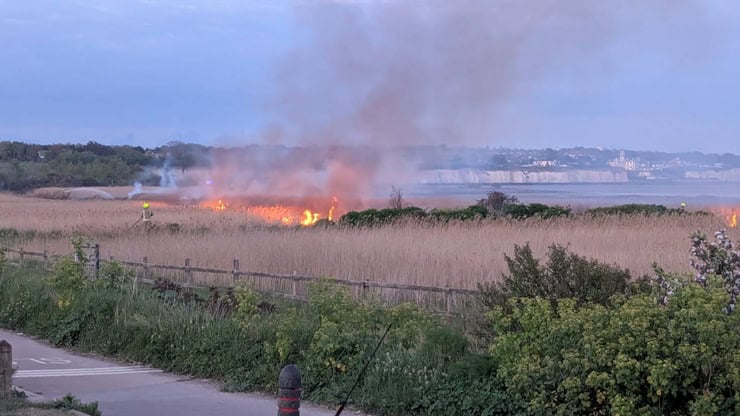
A huge fire believed to have been started deliberately ripped through the reedbeds at Pegwell Bay, a vital Site of Special Scientific Interest (SSSI), last night (April 19).
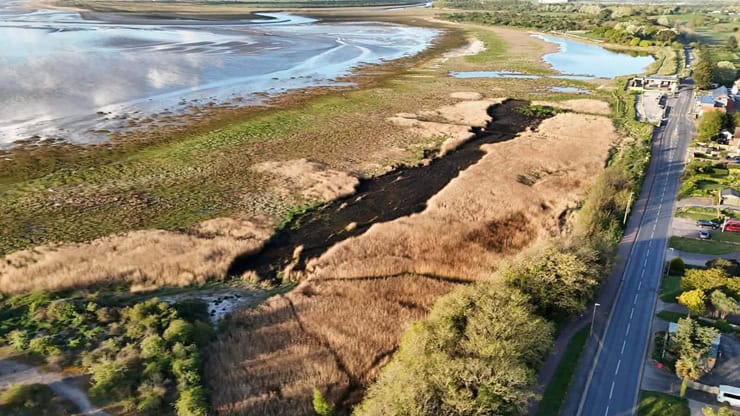
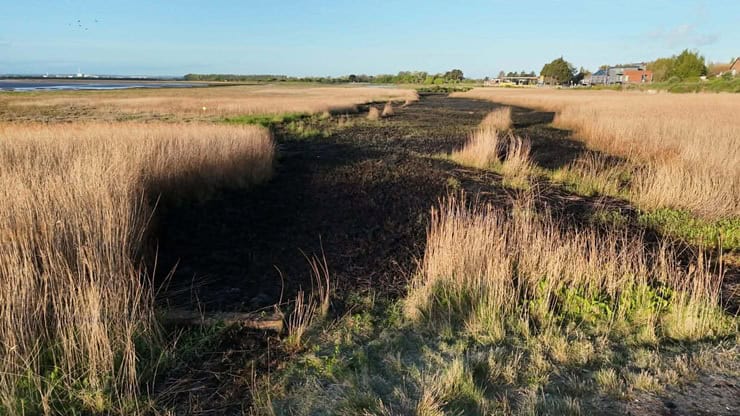
Resident and environmentalist Nik Mitchell – who runs the Get Wild social media page – said the damage was ‘devastating’ with a burned out area of about 300 metres.
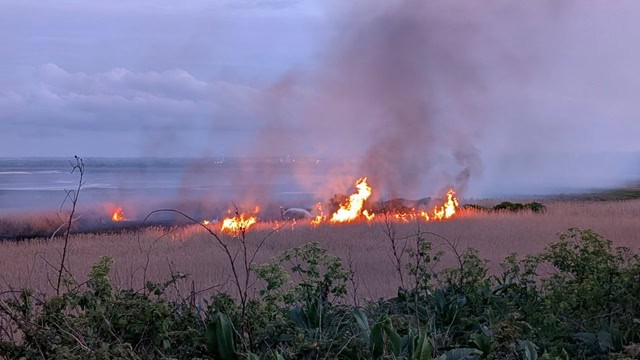
He said: “There is probably about two and a half to three acres of burnt reed bed in a site of scientific interest. There would have been loads of nesting birds in there and lots of nest building as well. It would have killed a lot of those nesting birds and the insects too which are ‘the buffet,’ they feed everything.
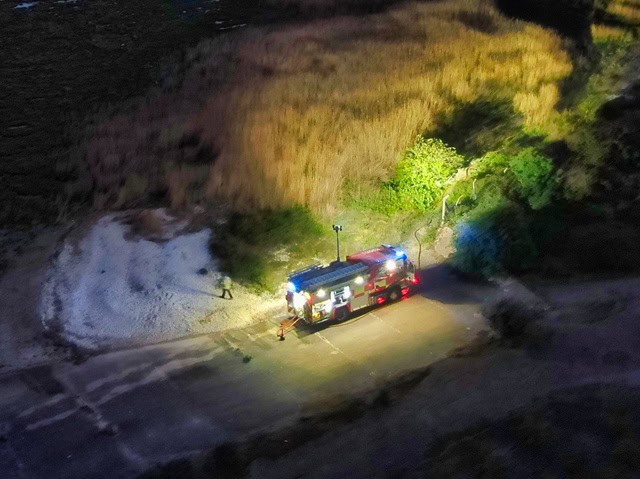
He said the Kent Fire and Rescue crews did ‘an incredible job’ of dealing with the blaze, which took hold at around 7.30pm last night, considering the difficult location.
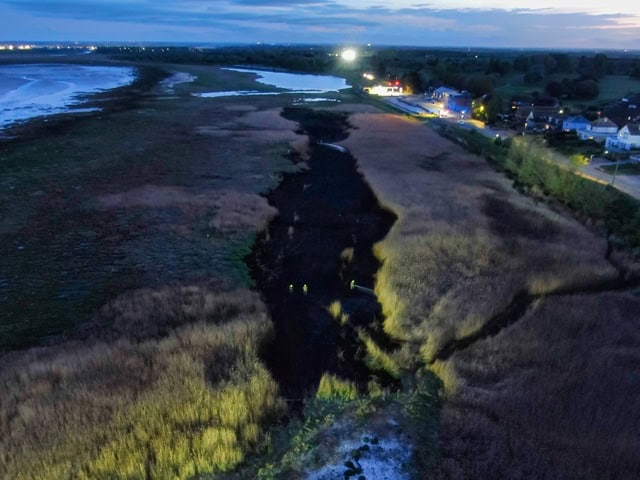
He added: “Going forward, I am very concerned about it becoming and issue with people walking through it, causing a disturbance to whatever is left in there. It will grow back as the marsh is extremely fertile but nature is already on the edge and can’t deal with big hits like this and it won’t grow back if people are walking through it.”
Cliffsend Parish Council asked residents to check CCTV for suspicious activity in the areas of Sandwich Road, Mount Green Avenue, Cliffsend Road, Foads Hill and Canterbury Road West from 6pm to 9pm.
The council said: “A number of wheelie bins have been reported to have been set light to following the fire on the marshes.”
A Kent Fire and Rescue Service spokesperson said: “Kent Fire and Rescue Service was called to reports of marshland alight in Sandwich Road, Ramsgate.
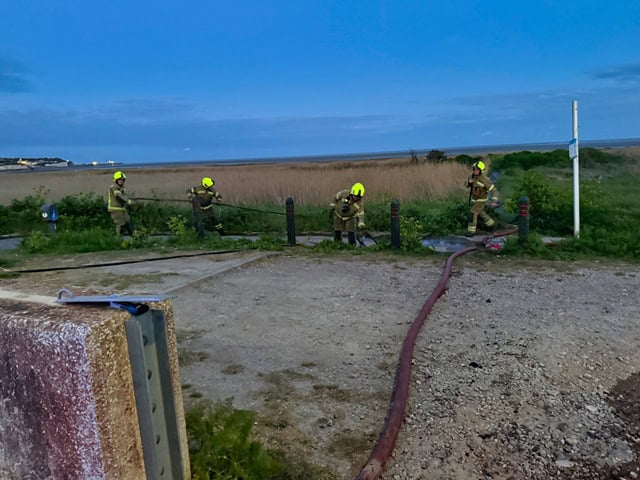
“Three fire engines attended, and crews used main jets and hose reel jets to extinguish the flames.
“No injuries were reported.”
Crews finished at the scene at around 8.50pm.
Kent Police said an arson investigation is now taking place.
A spokesperson for the force said: “Kent Police was called to separate reports of bins being set alight in Cliffsend, Ramsgate, including in Chapmans Fields and Pegwell Bay Nature Reserve at around 8.30pm on Sunday 19 April.
“The fires were extinguished each time by Kent Fire and Rescue Service with no reported injuries. Officers attended the scene and an arson investigation is ongoing.”
Kent Wildlife Trust says it is deeply concerned that the fire has destroyed a significant area of priority saltmarsh habitat at Sandwich and Pegwell Bay National Nature Reserve.
‘Fragile habitat’
The blaze was in the Sandwich and Pegwell Bay Site of Special Scientific Interest (SSSI), Special Protection Area (SPA), and Ramsar site, recognising its international importance for wildlife. The loss of saltmarsh is particularly serious as it is an irreplaceable habitat, home to rare plants and animals.
KWT says this latest incident adds further pressure to an already fragile and recovering habitat, highlighting the cumulative impact of repeated disturbance.
KWT says the concerns are central to Kent Wildlife Trust’s Rethink Sea Link campaign, which highlights the risks posed by National Grid’s proposed Sea Link project. The £1.1 billion high-voltage subsea electricity connection includes landfall at Sandwich and Pegwell Bay National Nature Reserve, with cables proposed to pass through areas of saltmarsh, where there are concerns that similar impacts to those seen during the Nemo Link works could be repeated. It also includes infrastructure at Minster Marshes, including a proposed 28-metre high converter station.
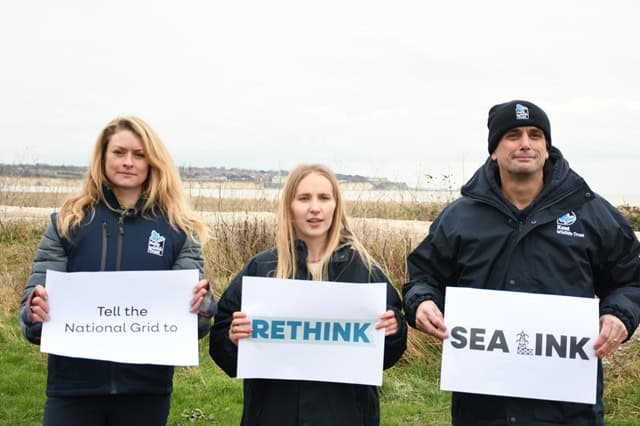
Emma Waller, Senior Planning & Policy Officer at Kent Wildlife Trust, said: “Pegwell Bay is one of the most sensitive and important coastal sites in Kent. Its saltmarsh is an irreplaceable habitat that supports rare species and underpins the functioning of the wider ecosystem.
“We are devastated by the damage caused by this fire, particularly during the breeding bird season when wildlife is at its most vulnerable. The likelihood of destroyed nests, loss of reptiles, and widespread disturbance is deeply concerning. Incidents like this also set back recovery in habitats that are already fragile and slow to regenerate.
“We are already seeing the long-term effects of previous infrastructure, including visible damage from the Nemo Link project. This fire adds another layer of stress to an already heavily pressured site and reinforces our concerns about National Grid’s proposed Sea Link project, which is why we are calling on them to Rethink Sea Link. Further large-scale development risks causing permanent harm to these internationally important habitats.
“What is increasingly concerning is that this is not isolated. We are seeing rising disturbance across other Kent Wildlife Trust reserves, from antisocial behaviour through to recreational pressures that are becoming harder for wildlife to withstand. We have recently had to remove our herd of Highland cattle from Hothfield Heathlands Nature Reserve following viral social media content that led to people actively approaching wildlife.
“Without urgent action to address these growing pressures, we risk permanently losing the wildlife and habitats that make places like Pegwell Bay so special.”
Kent Wildlife Trust is urging the public to help protect its nature reserves by respecting site restrictions, keeping dogs under control, and reporting suspicious behaviour.
Supporters can also help the Trust respond to incidents like this by donating to its Nature Nightmares appeal – kwtg.uk/nature-nightmares

My mum’s asked if the reed beds are owned by the Godden’s?
I doubt it but maybe National Grid have contracted out work?
Dave, the Godden’s what? Or do you mean the Goddens?
i prefer pirate jenny,s version ,i expect we will see more of this type of thing ?
Probably kids playing with matches soon grow back as nature does whatever they build around it nature will adapt and flourish.
Very sad news. I hope the culprits are identified and brought before the courts.
HOPE THEY CATCH THE LITTLE S–TS
I wonder how many times these beds have burned since these islands were first formed? Has anyone bothered to measure the methane given off by the decaying matter beneath the waterline? Fire is a natural phenomenon. It is how Nature rebirths and feeds herself.
A point is that the habitats within the reeds are special because the flora and fauna found there have very few places to exist. Before humans encroached the reed beds would have been very extensive but they are not any longer and the Sealink, money laundering project, will devastate what little we have left.
I don’t know anything about biology, birds and religions, hence my question.
Were the nests already full of (Easter) eggs? Would birds wait for the Fire Brigade or would they fly away and gob a few panicking mozzies on their way?
Would birds return to the reed beds to collect their belongings afterwards?
Please help, I’m clueless.