

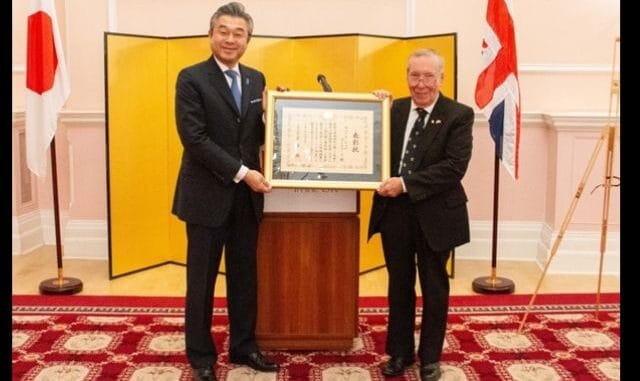
A Ramsgate resident has been honoured for his contribution to promoting understanding of Japan in the UK and fostering friendship and goodwill between the two countries.
Historian Robert John Pritchard – best known as John- was named in the Japanese government’s Spring List of Honours in April to receive The Order of the Rising Sun, Gold and Silver Rays.
He will receive the honour in a special presentation from the Ambassador at the Embassy of Japan in London in June.
The award recognises John’s work on the British end of the Murayama Initiative – often referred to as the “Peace, Friendship, and Exchange Initiative,” it was announced on August 31, 1994, by Japanese Prime Minister Tomiichi Murayama. It was created to mark the 50th anniversary of the end of World War II, focusing on addressing Japan’s past actions through historical research and youth exchange programs.
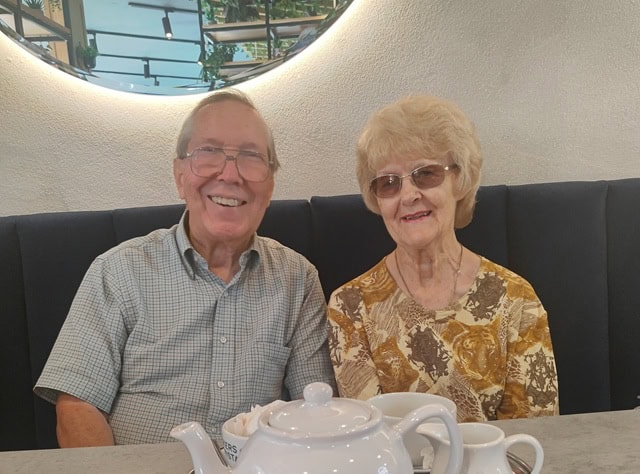
John, 80, said: “There will be a number of former British Foreign Office mandarins, including several retired Ambassadors, my immediate family, a few close friends, and a very considerable number of former Pacific Venturers, grandchildren of former Far East Prisoners of War or civilian Internees who took part in a programme that I was originally asked to head at the request of the Japanese Embassy for ten years between 1995-2005.
“This was later expanded in size and then extended by a further five years. That was one of three parts of the British end of the Murayama Initiative, and it followed earlier efforts by me in association with the British and Japanese Governments to overcome enduring wartime and post-war Allied hatred that millions of people in the UK and USA felt about all things Japanese.
“My demi-official engagement on these programmes was prompted by my work as a leading historian of pre-war perceptions, policies and relations between Japan and the Western powers that had prompted the initiation of rearmament years before the rise of Hitler and which then continued through the years of Appeasement and the first two years of the Second World War.”
John is one of 94 foreign recipients and one of just four who have dual nationality or who reside in one country while a citizen elsewhere.
Originally from California, John came to the UK as a post-graduate student in 1967 to complete a one-year MA degree in International History at the London School of Economics.
He returned to California for a PhD in History but was unhappy with the quality of the PhD programme and so, with his then-wife, went back to LSE where they both completed doctorates.
The couple separated and John went on to meet and marry Ela Lodge-McHugh in 1989, moving to Margate and then, in 2006, to Ramsgate.
He has published or contributed to 180 volumes of works in the fields of history and international criminal law.
Last year John received a Letter of Commendation from the Foreign Minister of Japan in the previous Japanese Government for his decades of research and publications on the records of the International Military Tribunal for the Far East (1946-48) almost 1,000 other British trials of Japanese, Korean and Taiwanese war criminals.
These were recognised along with numerous other published works concerning the broader canvas of the pre-war and wartime period. Four other people in Britain were given similar Letters of Recommendation at about the same time.
The letters were presented by the Japanese Ambassador last autumn.
Unlike the honours system in the UK, where there is an honours committee that largely decides who should be considered, in Japan the Imperial Palace determines who should be honoured and the Emperor makes the final decisions. Those decisions are then ratified by the Japanese Cabinet.
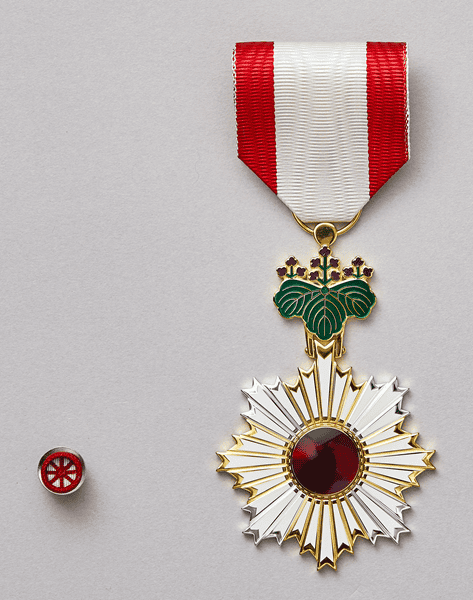
John says the Order of the Rising Sun (Gold and Silver Rays) is “a very beautiful object that I and my family will treasure.”
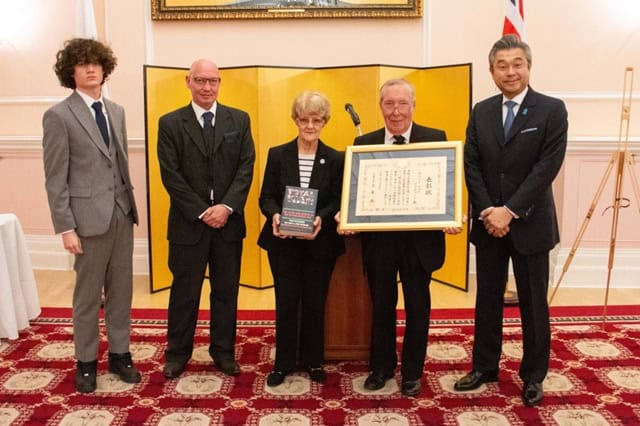
The formal presentation by Ambassador Suzuki at the Embassy of Japan in London in June will be during the Embassy’s annual Peace, Friendship & Reconciliation Meeting.
Many of those at the ceremony will have previously taken part in John’s Pacific Venture Programme, a parallel programme organised by Keiko Holmes for visits to Japan by former Far East PoWs and Civilian Internees.
The Order of the Rising Sun was established by the Emperor Meiji in April 1875, the first national decoration in Japanese history. At present it is awarded in a number of different classes, one of which is the with the Gold and Silver Rays, generally for contributions to international relations, cultural promotion, and social welfare.

Ramsgate’s Rising Sun is now an Indian restaurant :D
Funnily enough I watched a documentary the other week all about Litte Boy and Fat Man, also the English H bomb experimental survivors employed by Churchill during the Cold War. Still fighting for justice from the MOD to release their blood tests following exsposure to huge amounts of radiation.