

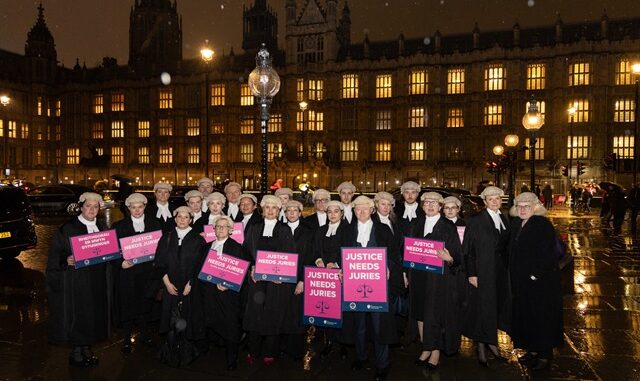
Barristers on the South Eastern Circuit (the legal region covering London and the South East) have strongly opposed the Government’s plans to restrict jury trials by engaging with MPs at Crown Courts in the region.
Events were organised as part of the ‘Justice needs juries’ campaign, spearheaded by barristers who argue that delays in the courts are not due to juries, but due to chronic under-investment in the system.
In December Deputy Prime Minister David Lammy announced planned reforms to axe juries for cases with a likely sentence of three years or less in favour of ‘swift courts’ where cases will be heard by a Judge alone.
The Deputy PM said reforms were prompted by a record backlog of cases needing to go in front of a judge, with tens of thousands of victims waiting for justice, and the caseload set to hit 100,000 by 2028.
The reforms consist of:
- New ‘Swift Courts’ heard by a Judge alone – estimated to take 20% less time than a jury trial.
- Handing courts the power to decide where cases are heard no longer allowing criminals to game the system
- Guaranteed jury trials for the most serious and almost all indictable offences – including rape, murder, aggravated burglary, blackmail, people trafficking, grievous bodily harm and the most serious drug offences.
- Judge-only trials for particularly technical and lengthy fraud and financial offences freeing up jurors who have to give up months of their lives to hear particularly burdensome cases;
- Giving magistrates the power to hand down sentences of up to 18 months so more cases can be heard by magistrates. This could go up to two years if needed.
The government says the changes will mean around a quarter of cases that would otherwise have to wait to be heard by a jury will be fast-tracked to go before a judge.
However, the Bar Council of England and Wales argues this threatens a cornerstone of the justice system.
As part of the Justice needs juries campaign Barristers practising in London and SE courts invited MPs to meet them in Inner London and Maidstone Crown Courts to show them around the court buildings, meet with court staff, and talk with barristers in the robing rooms about the proposals which are due to take effect this year.
Vice Chair of the Bar Council, Heidi Stonecliffe KC, visited Inner London Crown Court with Neil Coyle MP (Labour, Bermondsey and Old Southwark) and Kate Osamor MP (Labour, Edmonton and Winchmore Hill).
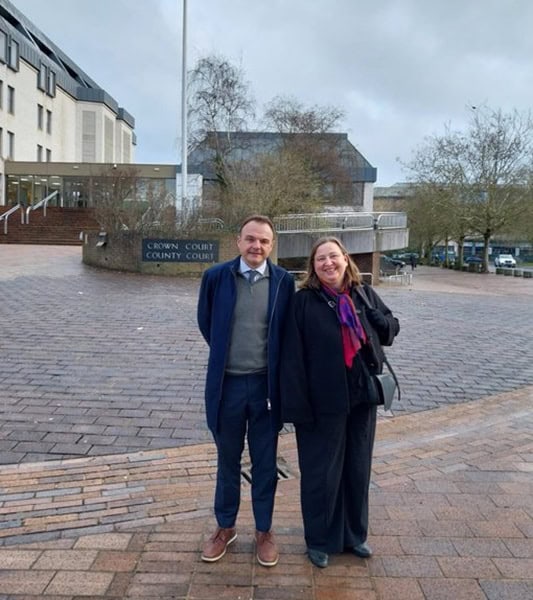
Nina Ellin KC (criminal barrister at 6 Pump Court Chambers in London) attended Maidstone Crown Court with Tristan Osborne MP (Labour, Chatham and Aylesford).
The constituency court day took place across England and Wales with around 20 MPs visiting 10 Crown Courts – at least one in each of the 6 circuits (legal regions).
Alongside the Bar Council, which represents 18,000 barristers across England and Wales, and the Criminal Bar Association (CBA), which represents barristers specialising in crime, South Eastern Circuit barristers, including the Circuit Leader Claire Davies KC, then travelled to Westminster to meet with their local MPs.
There they spoke to MPs about the problems in the criminal justice system and asked them not to support proposals to curtail juries as it is draining energy and focus from implementing the changes that can be shown to bring down the Crown Court backlog now.
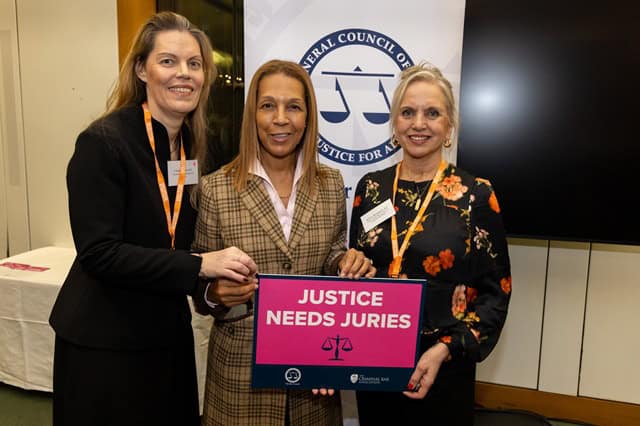
South Eastern Circuit Leader Claire Davies KC said: “The strength of feeling among barristers across the South Eastern Circuit is clear: we oppose plans to restrict jury trials.
“Juries have not caused the delays; under investment for years and inefficiencies have. Restricting jury trials will not solve the delays as the research shows. Juries ensure fairness and confidence in our justice system.
“We all want to see the backlog in the courts brought down for the sake of complainants, witnesses and defendants, as well as those working in the system. We have consistently called for full utilisation of the existing court estate, not court rooms being left to lie empty whilst the backlog grows. This would have an immediate impact.
“The Government must invest in the system now not wait any longer, address the inefficiencies that have contributed to the backlog, things as simple as ensuring buildings are in a fit state, defendants in custody are produced on time and that the technology works. The Bar stands ready, as ever, to play their part.
“The MPs who visited Inner London Crown Court saw as an example the state the court building has been allowed to get to – a visual representation of the problems in the system.
“I’m proud that barristers practising in London and the South East have taken the time to meet with their MPs – both in our courts and in Westminster – to set out our argument, both principled and practical, that justice needs juries.”
The government aims for the changes to become law by the end of this year.
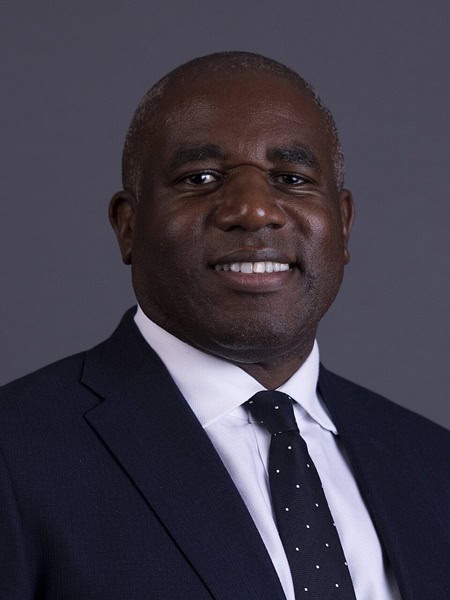
Deputy PM David Lammy said: “This government inherited a justice system in crisis – victims are waiting far too long to get their case to court, and even more are being let down by a system that allows nefarious defendants to try and game the system.
The crumbling system we inherited has resulted in a Crown Court backlog of nearly 80,000 and rising. Justice delayed is justice denied. This is not acceptable.
“I have set out a bold blueprint for a modern justice system that works for – not against – victims – one that is faster, fairer and finally capable of giving brave survivors of crime the justice they deserve.
“These reforms are bold and it will take time to turn the tide on the rising backlog, but these measures are necessary to tackle the emergency in our courts. We are putting victims before tradition for tradition’s sake and fairness before those who want to game the system.”

It’s rare that I would agree with a professional legal body, but in this case I do.
The withdrawal of the “either way” election choice – the defendant’s in otherwise “minor” cases that could attract a maximum sentence currently of less than a year – is a fundamental change to our historical rights. Whilst it may be customary on the continent, it is not and never has been here. Neither should it be. Removing the fundamental right to a jury of one’s peers would be a very sad day.
That said, the entire legal system is run by lawyers. If they worked more rapidly – judges, barristers, solicitors, advocates, etc. – the “backlog” would not have arisen. Speak twice as quickly and pose less and the job is done in half the time!
And I don’t suppose that Barristers make more money from Jury trials at all …..
The lawyers have been gaming the system along with the criminals. I don’t agree with much this government has done, but keeping jury trials only for serious offences is totally correct.
For decades these pissant cases involving shoplifters, burglars, car thieves etc have cost vast amounts when they plead not guilty & take up valuable police time giving evidence & people having to take time away from their businesses/jobs/life at no pay to sit while these people mess around feigning physical illness, claiming psych issues etc to string it out as long as possible-before 90-95% of the time turning up on the final day of the trial & changing their plea-a colossal waste of time & money.
If these lawyers were actually acting in the best interest of their clients they would have advised them to plead guilty right away to lessen their sentence-instead they have in many cases colluded with them so they get paid more & have more resembled the ambulance chaser lawyer companies so popular in our high streets in the 2000’s. A judge can hear their defence & decide-no need for juries in such trivial matters. Most of them have a list of these offences a mile long as well.
https://petition.parliament.uk/petitions/756036