

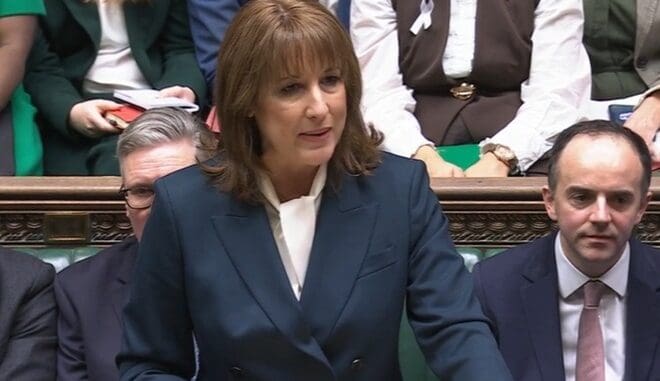
Today’s Budget announcement by Chancellor Rachel Reeves has confirmed the end of the two child welfare benefits cap.
The government says: “The historic decision to remove the two-child limit in full from April 2026 will lift 450,000 children out of poverty – the biggest reduction at any Budget this century.
“Making children poor costs us all in the long run with a child growing up in poverty less likely to work and 25% more likely to be on benefits as an adult. “
Helen Barnard, director of policy at Trussell, said: “Trussell is delighted to see the Chancellor take this bold step which will protect hundreds of thousands of children from growing up facing hunger and hardship. She has listened to the families and food banks across the UK who have been imploring her to act.
“The cruel two-child limit has driven countless families into hardship, forced to turn to food banks to survive. Today’s announcement of its full and swift removal will help ensure all our children have the best possible start in life, ease pressure on public services, and help to boost our economy.
“This government came to power promising to end the need for emergency food and reduce child poverty. Removing the two-child limit will make a vital and significant contribution towards delivering on those manifesto commitments.
“This move will pull 470,000 children out of severe hunger and hardship by 2027 and ease pressure on food banks throughout the UK.”
Ms Barnard added that there needs to be even further action, adding: “Food bank need remains well above levels five years ago and many people are still struggling to afford the essentials. We need more bold choices to transform lives across our communities.”
The two child cap was introduced in 2017. It prevents parents from claiming child tax credit or universal credit for more than two children. It does not apply to child benefit payments.

East Thanet MP Polly Billington has welcomed a number of key points in the Budget, which she says will benefit Thanet residents and businesses.
She said: “Things are really tough for people at the moment, so I welcome a budget that puts tackling the cost of living at its core. A £150 cut in the average energy bill, a freeze on rail fares and prescription charges, lifting more than 3,000 children in Thanet out of poverty, and an increase in the minimum wage will all make a real difference for families locally.
“Small- and medium sizes businesses are the bedrock of Thanet’s economy. For months, I have been pushing the Chancellor to do more to support coastal economies like ours, so I particularly support the announcement of a permanent cut to business rates for over 2,600 retail, hospitality, and leisure businesses in Thanet to the lowest level since 1991.
“Labour was elected to deliver change after years of chaos and austerity under the Conservatives which did so much damage to towns like ours. While there have undoubtedly been difficult choices, I remain optimistic that we are on the right path to fixing our NHS and public services, repairing our shattered public finances, and putting more money back into people’s pockets.”
Other Budget measures announced today:
Cost of living
Cut £150 off energy bills by removing levies. Poorer households will save up to £300 when combined with the Warm Homes Discount.
Raising the National Living Wage and National Minimum Wage meaning full-time workers on the National Living Wage see a rise of £900 a year, while full-time workers on the 18-20 National Minimum Wage rate will see a £1,500 rise. The rise will be to £12.71 an hour for eligible workers aged 21 and over and for 18-20 year-olds, it will rise by 85p, taking it to £10.85 an hour. This will, however, raise costs for employers.
Universal Credit Standard Allowance for a single person aged 25 or over will increase by around £295 a year. For couples, where one partner is aged 25 or over, it will increase by around £465 a year.
Commitment to the pension Triple Lock for this parliament, pensioners on the full new State Pension across the UK are set to receive an extra £575 a year, which they’ll start seeing from April 2026.
The current personal tax thresholds will be frozen from 2028 to 2031. However, taxes on property, dividend and saving income – which currently face no equivalent of National Insurance – will be increased by 2p.
Freeze on prescription fees for another year, keeping the cost under £10.
Freeze on student loan repayment threshold
Business and employment
Permanently lower business tax rates for 750,000 retail and hospitality properties.
Pledging £1.5 billion over the next three years for the Youth Guarantee and the Growth and Skills Levy.
Transport
Introducing a new per mile levy for electric and plug-in hybrid cars, coming in 2028.
Extending the temporary 5p cut to fuel duty for a further five months until the end of August 2026, as well as cancelling the planned inflation increase for 2026-27. After this extension, the fuel duty rate will gradually return to early 2022 levels.
Freezing regulated rail fares in England for the first time in 30 years – saving commuters hundreds of pounds off season tickets
Community
Funding 3,000 more neighbourhood police officers and police community support officers in England by the end of March 2026.
NHS to deliver 5.2 million more appointments and 250 new Neighbourhood Health Centres
Other
Abolish bingo duty from April 2026
Increase for online gambling duties
Introduction of a High Value Council Tax Surcharge on homes worth more than £2 million
