

People can now register to have their say on National Grid’s Sea Link project for a 2 gigawatt (GW) high voltage direct current (HVDC) cable between Suffolk and Thanet.
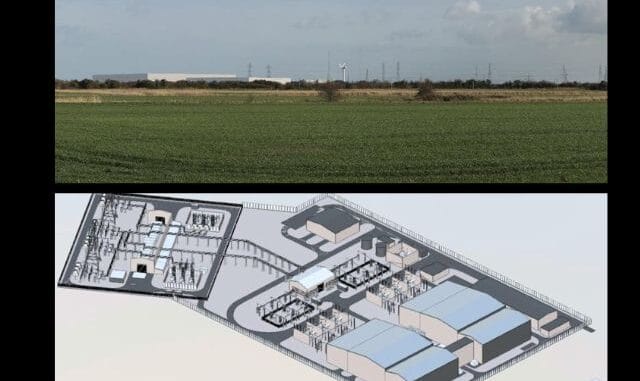
To bring the power from the subsea cables into and out of the electricity network there will be converter stations, substations and new underground and overhead electricity lines at both ends. This includes a 28-metre high, 90,000 square metre onshore converter station at Minster marshes in the Stour Valley.
Documents outlining the Thanet end of the scheme say it will comprise of:
- A landfall point at Pegwell Bay.
- A Transition Joint Bay (TJB) – an underground, concrete box structure where the offshore cable connects to the onshore cable – connecting to cable the converter station.
- A 2 GW HVDC converter station (including a new permanent access off the A256), up to 28 m high plus external equipment (such as lightning protection, safety rails for maintenance works, ventilation equipment, aerials, and similar small scale operational plant) and a new substation at Minster Marshes.
- Removal of approximately 2.2 km of existing overhead line, and installation of two sections of new overhead line, together totalling approximately 3.5 km, each connecting from the substation near Minster and the existing Richborough to Canterbury overhead line.
Permanent access to Minster 400 kV substation and Minster Converter Station will be via a new access point off the A256, north of Jutes Lane. The site will have external lighting.
The converter station will comprise of a DC hall, converter transformers, valve hall, reactor hall, AC switchyard, control building, strategic spare parts building, LV electricity supply, fire deluge pump house, car parking, a permanent access road and landscaping.
The construction of the proposed converter stations would take approximately four years from first site access to reinstatement, excluding ongoing landscaping monitoring or maintenance
An indicative timeline says, subject to gaining development consent, construction works would be expected to start in 2026 and be completed by the end of 2031 with reinstatement potentially continuing into 2032.
National Grid’s development consent application for the scheme is now being examined by the Planning Inspectorate.
Campaigners, including Save Minster Marshes and Kent Wildlife Trust, are urging people to register their objections to the scheme
The Trust will be putting forward a case for nature and urging officials to look at other possibilities for the underwater cable.
Campaigners have created a step-by-step guide to assist people in navigating the system in a bid to help them engage with the process.
Emma Waller, Planning and Policy Officer and Rethink Sea Link Campaigner at Kent Wildlife Trust said: “This is a crucial moment for people to speak up. Registering as an Interested Party is the first step in making your voice heard in the examination of this Nationally Significant Infrastructure Project.
“We are supportive of efforts made to decarbonise the energy sector; however, we believe in progress that works with nature, not against it. The habitats at Sandwich and Pegwell Bay and Minster Marshes are too valuable to lose. They support an extraordinary variety of wildlife and play a vital role in our natural landscape and act as natural carbon sinks which should be protected. #
“We urge everyone who cares about Kent’s environment to take this opportunity to stand up for nature.”
Find out more about the Rethink Sea Link Campaign on Kent Wildlife Trust’s website and subscribe to the Stand up for Nature newsletter.
The deadline to register is 23:59 Monday 23 June.
Find the Project information
