

By Dan Thompson
It’s time to look beyond retail to reverse the High Street’s decline, says a new House of Lords report, which includes evidence from Margate-based Dan Thompson Studio.
‘High Streets: Life beyond retail?’ says that whilst shopping will still be a key feature, there is greater demand and opportunity for creative projects, community use, and leisure activity in town centres. And there’s space for more public services, such as health centres, museums, and libraries, in town centres.
The report suggests that the government should introduce a ‘town centre first’ policy to ensure new public services like libraries, health centres and local government buildings are opened on our high Streets.
The report also finds that people, particularly young people, value having space to socialise and spend time without spending money on the High Street. It suggests more green space and an improved public realm should be a key consideration in proposed regeneration programmes.
‘High Streets: Life beyond retail?’ is published today {November 28} by the cross-party House of Lords Built Environment Committee.
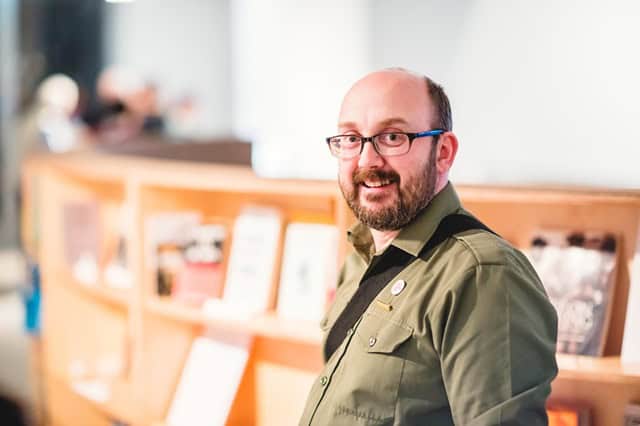
Dan Thompson Studio was invited to submit written evidence to the inquiry, after 25 years of work in town centres using empty shops.
Pioneering the ‘pop up shop’ idea, Dan Thompson is author of the For Dummies book on the subject, which was launched at an event on Margate’s High Street in 2012. He also wrote a handbook for museums and libraries moving into empty shops in 2010, and has run almost 50 projects across England and Wales.
Dan said: “For years, I have said that the town centre isn’t dead, just changing, and this report suggests that many of the things that artists, community organisations, and local change-makers have pioneered are the way forward.”
“Local high streets are places where generations have shopped, socialised and worked. Many of them are in decline and to reverse this they need to look beyond being simply a destination for shoppers,” Lord Moylan, Chairman of the Built Environment Committee, said, adding: “Retail will always be important, but people want to see a variety of businesses and other services such as NHS diagnostic centres and libraries on their high street.”
The report looks at how leisure and hospitality fit in the high street and at changing uses for large department stores.
It says: “The dominance of retail that we had become so accustomed to on our high streets has declined. Retail will always remain a vital component of the high street but local communities are increasingly seeking out restaurants and leisure activities as well as wanting to see more public services in their town centres.
“Those places that have adapted in response, for example by moving local libraries into vacant department stores or by opening high street diagnostic centres, are leading the way for the future of high streets across the country.
“Variety, both within the retail offering and beyond, will aid recovery now and is key to ensuring the long-term resilience of high streets into the future. Changes need to enhance rather than damage the unique, and often historic, character of each high street, and the specific local appeal. This is not always easy, but with the involvement of local business owners, landlords, residents and the local authority, it is achievable.”
Report recommendations include
- Better public transport connectivity, particularly through improved bus networks
- Car access and available parking
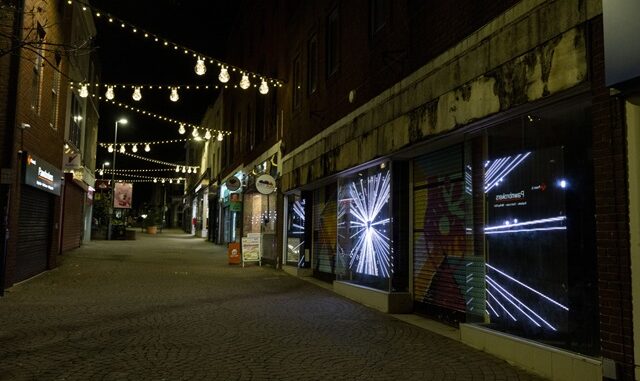
- Adequate street lighting, clear sightlines and “eyes on the street,”
- Celebrating the local history of a place and conserving and repurposing historic buildings on the high street
- Local markets which can boost footfall on high streets
- More green space and an improved public realm
- Public toilets to make it possible for everyone to use the local high street with confidence and comfort.
Thanet retail to leisure
Thanet could be seen as an emerging example of mixing leisure and health with retail in our towns and at Westwood Cross shopping centre.
The out-of-town centre has repurposed the former Debenhams building into a leisure and food complex.
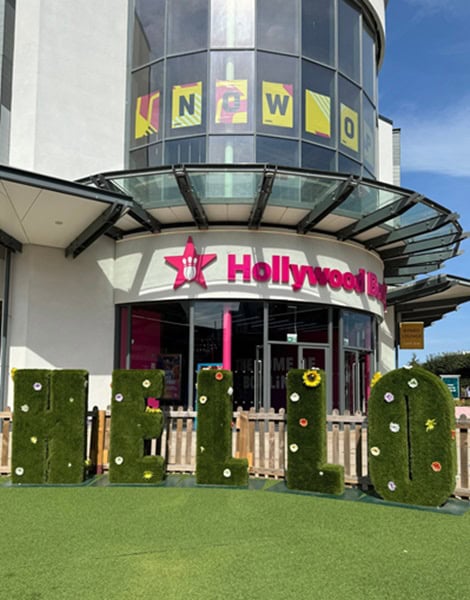
In February Riparo Lounge, operated by Loungers, opened its doors. Then in August came Jump Inc’s new indoor leisure park features over 35,000 square feet of interconnected trampolines, inflatables, obstacle courses, laser tag arena, and interactive challenges designed to engage visitors of all ages. The same month Hollywood Bowl opened a £3.5 million family entertainment centre and Taco Bell is set to open in the building on December 11.
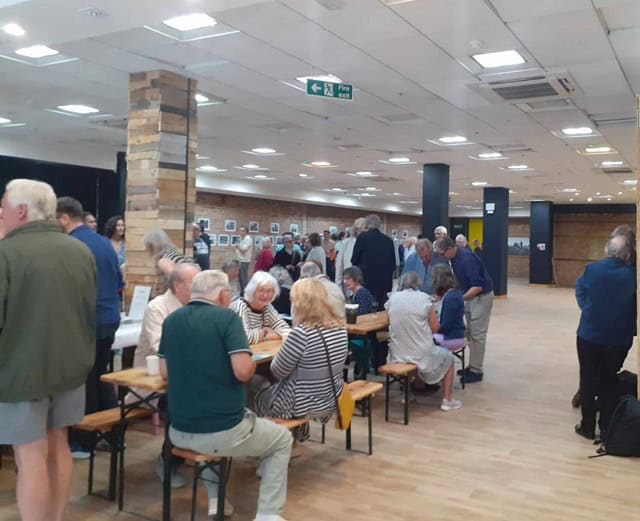
The high street trend for leisure and hospitality in former retail spaces can also be seen in Thanet towns where High Street stores have been taken over by leisure ventures. Ramsgate is a particular example with Sugar Rush community theatre, café, performance space, speakeasy style bar, studios and offices at the former WHSmith shop. They join close neighbours Arts in Ramsgate and Discovery Planet science workshops who also use former shop space.
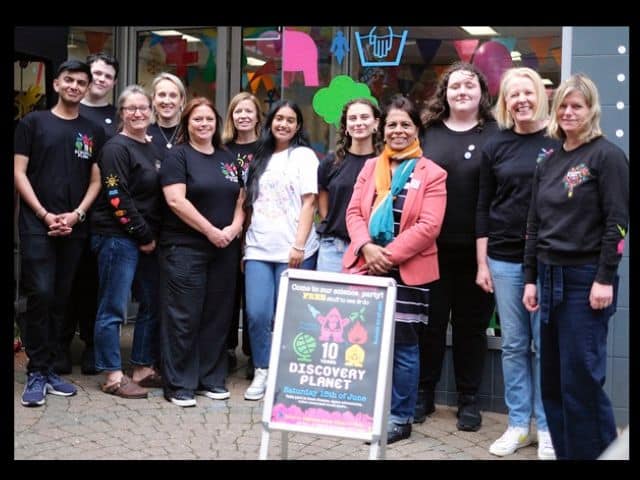
Also in Ramsgate High Street are children’s leisure spaces Kids Bright House and Little Seaside Town while above Kids Bright House, CG Fight Club gym will be opening its doors this weekend.
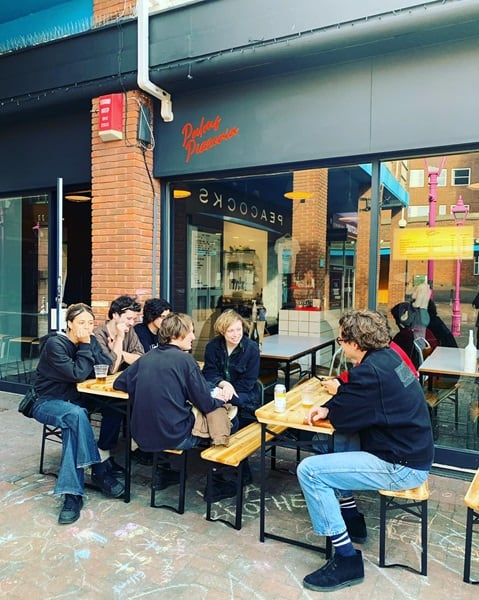
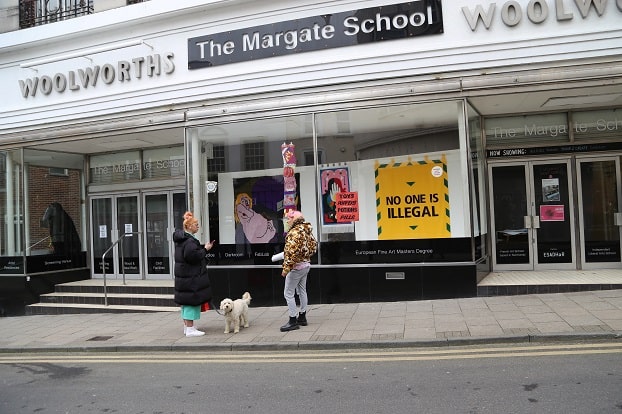
In Margate, The Centre has seen restaurant Pomus and Palms Pizzeria spring up while Bar 7 in the High Street is set to be replaced by a snooker club. La! Nightclub is set to open further down the High Street at the former Thanet Age UK shops site and both Woolworths and the former Primark are used by The Margate School for artistic outlets.
The top end of Margate High Street is home to Portman Smile Clinic and art, craft and design courses can be found at nearby Go Create.
A more traditional mix of retail and leisure is found – and thriving- in Broadstairs, Birchington and Westgate.
Retail pressures and closures
The High Streets report says high streets across the country have been impacted by pressures including the growing popularity of online shopping, the impact of the COVID-19 pandemic, the cost-of-living crisis and competition from out-of-town shopping centres, and changing behaviours and preferences from their customers.
The past decade has seen the closure of large retail chains and between March 2020 and March 2022 there was a net loss of 9,300 retail outlets on high streets in Britain, with department stores, pharmacies, clothing stores, pubs and banks all seeing closures.
In Thanet this has been seen with closures including Wilko, Boots in Cliftonville, banks including Barclays and Nat West, JC Rook’s and numerous small shops and food outlets including The Modern Boulangerie.
The full High Street report can be read on the Houses of Parliament website at https://publications.parliament.uk/pa/ld5901/ldselect/ldbuiltenv/42/4203.htm
Additional reporting Kathy Bailes

Just do some more ‘art’ pop-ups. Libraries & government buildings are now all under one roof-dubbed hubs, like at Cecil Square which is now a library, a council office & other activities.
The only way our towns will ever survive is completely remove online shopping and stop super stores like Tesco Asda Sainsbury’s etc from selling anything but food groceries. Just like the good old days
Number one priority to revive high streets should be to police them properly by removing drunks and druggies, as well as ensuring that homeless people are taken to somewhere more suitable. They also need safe, clean and preferably free car parks. Otherwise, they haven’t a hope in hell of competing with out of town shopping centres with their security, parking and regular cleaning.
Totally agree Peter
Get rid of tuneless Buskers too, Peter! Some time ago there was some idiot blowing a trumpet in the middle of Ramsgate High Street, he was clueless, and couldn’t play a note! Yet people gave money for this dummy to pollute shoppers ears! Last week there was another one, growling into loud speakers, Duurh! I have always said music is a bit like food a question of taste. No one would force feed someone food they don’t like, so why do Buskers (or anyone) think people enjoy their taste in music?
I give money to buskers if they’re good, but I NEVER give money to beggars! Why do they expect money for nothing? Get a tin of shoe polish and some brushes, and clean my shoes!
i think mr checksfield has it pretty well covered , but with all the will in the world the shops in thanets towns are finished . and putting a front door and a window in them and calling them a house does little for the area
We should re populate town centres. More empty buildings turned into dwellings. More flats above shops. The spaces are there. Not everybody wants a suburban 3 bed semi. Many young people 3ant flats and would like to live at the centre of the action. And many older people want to downsize from family homes but would prefer to be able to avoid personal isolation by having a home that enables them to watch the passing scene and to get to basic shops without car or bus trips. By increasing the population in the town centres, local shops and services would be better supported. Also there would be more people around in the street and watching events from nearby windows, reducing crime by reducing the sense of anonimity and emptiness. Making the area seem more like a busy village than a deserted ex-town centre. As I have been writing this, images of Margate town centre were constantly in my mind . I used to work there so I am always looking for improvements being proposed.
Problem is, once random shops are turned into housing, the whole High Street quickly deteriates further. I saw it happen in Garlinge High Street (which had around 30 shops when I lived there in the ’80s and now has around 6), as well as opposite Aldi in Cliftonville. Far better to somehow move any existing shops closer together, and then turn the rest into housing – for exampl, Margate High Street would work well if there were no shops beyond McDonalds.
I wonder if Dan Thompson-Studio can tell us more about his ’25 years of work in town centres using empty shops.’
I didn’t write the above comment, but I agree with it. To be fair on Dan Thompson though, he’s (apparently) an artist – so his “work” isn’t the same as most people’s definition of the word.
The House of Lords are behind the times on this one. There has already been an excellent project and resultant book produced 2-3 years ago about how High Streets are changing to bring in more non-retail leisure spaces.
What’s it called and who wrote it?
The report is somewhat out of date and contradicts itself in that it mentions good quality connectivity by bus (or other forms of public transport) and in the same breath requiring that good access by car is necessary. The car in an urban area is a catalyst for congestion.The bus on the other hand can replace up to 70 car journeys and can reduce congestion.
Westwood Cross is a badly planned car dominant retail area, which teeters on gridlock during large parts of any day.It has loads of “free” car parking, yet retail still struggles to thrive.
Bluewater and to some extent Lakeside, have moved or are moving to becoming a destination, where retail activities are only a part of the offer. It is difficult to see how the legacy retail areas in Thanet can offer that sort of experience, unless a great deal of money is spent.
The big problem is not re-purposing the high street,that merely takes money and a viable plan, the big problem is finding the freeholders or identifying them and buying the sites from them at a reasonable cost.Prior to the banking crisis there was a lot of land speculation in secondary sites, the fall out from that speculation is still on going.
Housing is an option, but it has to be done carefully, and not by letting poorly maintained flats etc to the poorest in society, without a plan.
Checksfield says remove the drunks and “druggies”,how?
Taser them, bung them inside some kind of gulag, send them to Rwanda?
Our police and court system are in a bad enough state as it is, without adding in more individuals who find they can’t cope with life. Unlike the self righteous ones, they can’t just snap out of it, so if you mean treatment and rehabilitation, plus good housing and support, I agree, if not what?
It’s Mr Checksfield to you, Nokes.
As for how? How were drinks and druggies removed in the past? Throw them in a cell for the night, of course… duh!
Much as I don’t drive and like public transport, I also live in the real world – unlike self-righteous fantasists like youself. Good car parking IS essential these days for High Streets to survive, which is one reason Margate High Street is in a state – Mill Lane is dark, smelly and very uninviting, and should be demolished.
Lastly, congratulations on reading andarticle properly before commenting. I was genuinely worried about your mental health when you told us all off for NOT talking about the assisted dying bill – on an article entitled “East Thanet MP calls for Church of England to be subject to FOI rules in wake of shocking abuse report”!
I don’t think you’re in a position to require people use the tile “Mr”, Checksfield.
Not until you treat other people with respect.
Thank you for your usual insightful contribution to the thread. Some excellent ideas to revive our High Streets.
The ridiculous cigarette thing should be banned in the high street. And all other public spaces.
While I agree on principal, the police are either unable or unwilling to prevent the smoking of dope in our streets, so how do you think they’ll cope if smoking is banned? Something that does need banning is nurses smoking at hospital gates and teachers smoking at school gates. What sort of message does that give?
Dan most definitely DID NOT coin the term pop up shop, it had been in use for decades.
“The concept of temporary retail spaces has been around for centuries, but the term “pop-up retail” didn’t appear until the late 1990s:
The Ritual Expo
In 1997, media entrepreneur Patrick Courrielche created the Ritual Expo in Los Angeles, a one-day event that combined music, food, and fashion. The event was nicknamed the “ultimate hipster mall” and was very successful.
Comme des Garçons
In 2004, the Japanese fashion label Comme des Garçons opened the first pop-up store in Berlin. “