


A Margate man who brutally murdered his then-partner Mary Malkin, 40, in January 2005, has been granted parole.
Dean Williams was convicted of murder in October 2005 and sentenced to life imprisonment with a minimum tariff of 20 years.
That tariff expired in March 2023 but Williams has remained behind bars with two previous parole bids denied. Now, following a hearing in July, the Parole Board has directed that he be released.
Franky Dillon, the younger sister of his victim Mary, has vowed to appeal on the grounds that she believes he still represents a danger to women, making the decision ‘irrational.’
Williams brutally murdered Mary in the flat the couple shared at Invicta House in Margate at that time. He then slept beside her body all night before finally calling police.
A post-mortem found Mary died from asphyxia, consistent with strangulation. During his trial in 2005, the court heard how Williams had a history of violence against women and had attempted to strangle a previous girlfriend.

Mum-of-two Mary, whose right leg had been amputated below the knee, was also subject to beatings, said her family, and alcoholic Williams would take her disability benefits.
The father-of-three, who had a history of violence against Mary and other partners, had initially tried to claim an intruder had killed Mary but the jury saw through his lies.
He appealed against his conviction, but this was dismissed at the Court of Appeal in June 2006. He then applied to the Criminal Cases Review Commission (CCRC) for a review of his case in October 2011 on the grounds that he had been suffering from psychiatric vulnerabilities that impaired his responsibility.
A retrial was held in 2014 where he was again found guilty of Mary’s murder and given a life sentence with a tariff of at least 17 years in prison.
Williams, 62, had an oral review with the parole board in July. His ‘life’ tariff expired in March 2023. This was his third parole review.
The decision to release him from custody is provisional for 21 days and between now and March 9 will be reviewed by the Secretary of State’s Reconsideration Team.
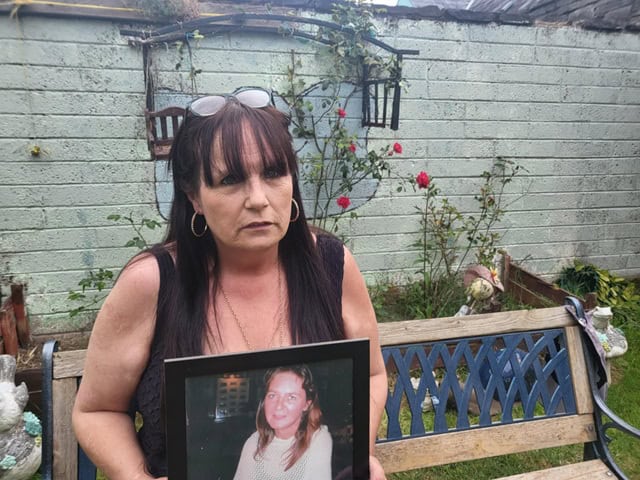
Franky, 54, will be appealing the decision. An appeal can be made on grounds of an error of law or because the decision was irrational or unreasonable.
Mum-of-six Franky, who lives in Ireland, said: “I will appeal because it was the wrong decision.
“He is a danger to women, full stop. No women would be safe, just look at his past. It would have been better if he’d just died in prison.
“This is not just about the past, it is about safety, accountability and the reality of what Mary endured.
“There is a documented history of abusive behaviour, including previous acts of strangulation in relationships. Mary herself had been strangled by him before. On a previous occasion she lost consciousness. The next time, he killed her. These are facts that cannot and should not be forgotten.
“Mary was a loving mother, sister, daughter and aunt. She should still be here. Instead, our family continues to live with the consequences of his actions every single day.
“This decision has caused immense distress and has reopened wounds that have never healed. I will be appealing it because I believe it does not reflect the seriousness of the violence that took Mary’s life, nor the wider pattern of abuse that existed.
“We will continue to fight for Mary. We will continue to speak her name. And we will continue to stand together as a family.”
‘Release directed’
A spokesperson for the Parole Board said: “We can confirm that a panel of the Parole Board has directed the release of Dean Williams following an oral hearing.
“Parole Board decisions are solely focused on what risk a prisoner could represent to the public if released and whether that risk is manageable in the community.
“A panel will carefully examine a huge range of evidence, including details of the original crime, and any evidence of behaviour change, as well as explore the harm done and impact the crime has had on the victims.
“Members read and digest hundreds of pages of evidence and reports in the lead up to an oral hearing.
“Evidence from witnesses such as probation officers, psychiatrists and psychologists, officials supervising the offender in prison as well as victim personal statements may be given at the hearing.
“It is standard for the prisoner and witnesses to be questioned at length during the hearing which often lasts a full day or more.
“Parole reviews are undertaken thoroughly and with extreme care. Protecting the public is our number one priority.”
