

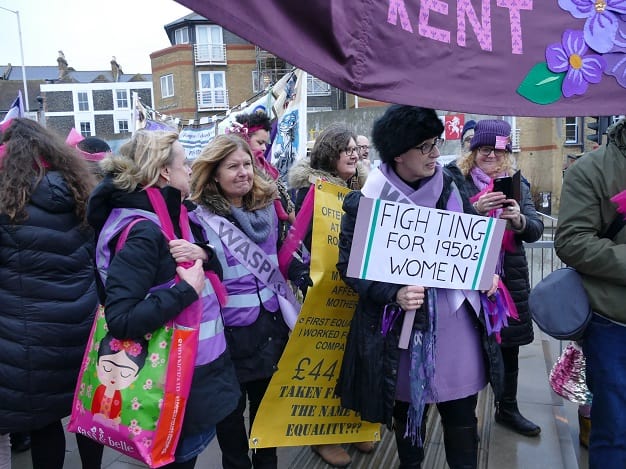
Members of WASPI – Women Against State Pension Inequality Campaign say the decision announced today (January 29) to again deny compensation to those affected by how changes to raise the state pension age in 2011 were communicated shows the government’s ‘utter contempt’ for 1950’s born women and the Parliamentary ombudsman.
Campaigners say there was a lack of adequate notice of the increase in women’s state pension age from 60 to 65 which impacted 3.6 million women born in the 1950s.
Up until 2010 women were eligible for their state pension when they reached the age of 60 but changes have seen this rise with the age at which women qualify for the state pension moving up to 66 for both men and women.
A legal challenge to the way the Government changed the pension age for women was dismissed by the High Court in 2019 with a finding in favour of the government. An appeal brought the following year was also lost.
In 2021 the Parliamentary and Health Service Ombudsman (PHSO) ruled that the Department of Work and Pensions had committed maladministration when it failed to give women born in the 1950s adequate notice that they would have to wait several years longer to receive their State Pensions.
In 2024 the ombudsman recommended compensation of between £1,000 and £2,950 to each of those affected but in December of that year the government stated there would be no compensation paid out.
This decision was reviewed after the rediscovery of a 2007 Department for Work and Pensions evaluation, which at the time led to officials stopping sending automatic pension forecast letters out.
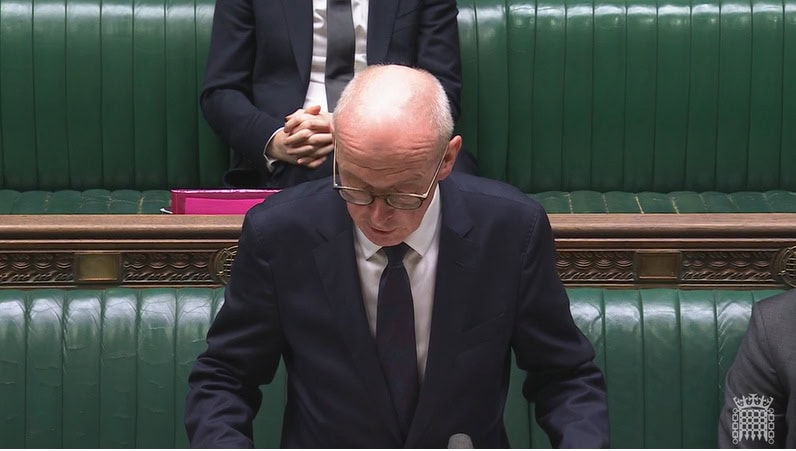
But today, Work and Pensions Secretary Pat McFadden told the Commons that the decision to not pay compensation remained the same.
He said a targeted compensation programme to those who had specifically suffered injustice would “not be practical.”
A wider flat-rate scheme he said, costing some £10billion, would not be ‘right or fair given that ‘the vast majority’ of affected women were aware of the changes.
Mr McFadden said: “The evidence shows that the vast majority of 1950s-born women already knew the state pension age was increasing thanks to a wide range of public information, including through leaflets, education campaigns, information in GP surgeries, on TV, radio, cinema and online.
“To specifically compensate only those women who suffered injustice would require a scheme that could reliably verify the individual circumstances of millions of women.”
He did acknowledge that ‘individual letters about changes to the state pension age could have been sent earlier,’ and apologised but added that he agreed with the Parliamentary Ombudsman that ‘women did not suffer direct financial loss.’
He added: “The Government has come to the same conclusion on compensation as the previous secretary of state, announced in December 2024.”
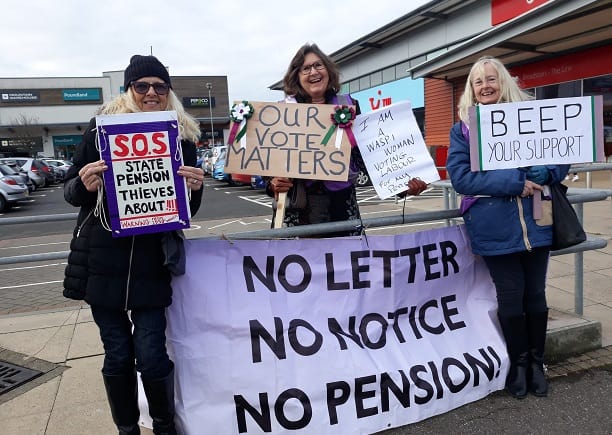
Waspi, the campaign group for 1950s born women who say the were impacted by rapid and steep increases to their State Pension age without adequate notice, have slammed the decision.
A statement says: “Ministers have demonstrated their utter contempt for 1950s-born women, for Parliament and for the Parliamentary Ombudsman.
“The government kicked the can down the road for months only to arrive at exactly the same conclusion it has always wanted to.
“This is a disgraceful political choice by a small group of very powerful people who have decided the harm and injustice suffered by millions of ordinary women simply does not matter.”
Waspi says legal advice is now being taken and all options remain on the table.
What is Waspi and the campaign
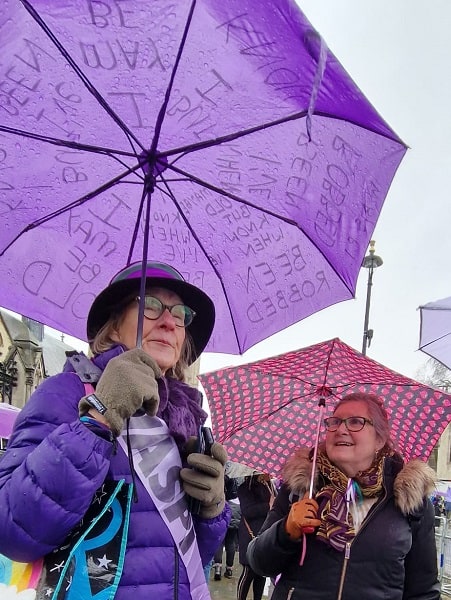
Women Against State Pension Inequality (Waspi) aims to highlight hardship and unfairness the movement says is suffered by women born in the 1950s, on or after the 6th April 1951, as a result of the Government’s lack of notice about alterations to the State Pension Age (SPA).
The changes mean the age at which women qualify for the state pension rose from 60 to 65 in November 2018 and then to 66 in October 2020.
The aim is to bring it in line with men’s retirement age. Increasing life expectancy means the government needs to make pension payments later in a person’s life.
But Waspi, and other protest groups, say the changes were not publicised after a decision in 2011 to bring them forward, leaving many women unprepared and facing devastating hardships.
A version of the plans was first outlined in 1995, when the then-Conservative Government planned to gradually raise women’s retirement age to 65 between 2010 and 2020.
This was followed in 2007 by a Labour announcement that both men and women would see their retirement age go up to 66 between 2024 and 2026.
But in 2011, Chancellor George Osborne brought forward the timing of both changes meaning women who had been expecting to start drawing their state pensions between 2016 and 2020 found out that they would face a delay.
