


By Local Democracy Reporter Simon Finlay
Kent’s soaring cost of special educational needs and disability (SEND) provision could be reduced under new government plans for children with neurodiversity, including autism, dyslexia and ADHD, to have placements in mainstream schools.
Currently, families of children with extra requirements can apply for a legally binding education, health and care plans (EHCPs) which guarantees support from Kent County Council (KCC).
In recent years, Kent has seen a rise in EHCPs, at one point about 20% higher than other large authorities, which has cost a huge amount of money.
Extra funding and resources
Now the government, according to reports, says in future EHCPs will only be available to youngsters with the greatest requirements while the rest will attend mainstream schools.
An extra £3bn will be allocated to provide extra support to ease the process, including more classroom assistants. The aim is to create around 50,000 to 60,000 new specialist places within existing mainstream schools nationwide.
The government says it will help create calming spaces, supporting children with needs such as autism or ADHD who may feel overstimulated by busy school environments, as well as breakout spaces for children who need more support.
The process would be placed into the hands of the schools, replacing parents’ direct legal role.
One consequence is that holders of an EHCP can currently claim home to school transport (HST), a service which costs Kent nearly £100m a year. Pupils attending local mainstream schools instead would mean this bill is reduced.
According to figures issued by KCC in March last year, the cost of assessing applications and issuing EHCPs was £17m. At the time, there were 21,000 pupils with EHCPs, half of whom were eligible for HST.
Last year, Reform UK KCC leader Linden Kemkaran described the HST cost as “absolutely enormous” and vowed to examine the contracts with carriers.
Reform UK is now carrying on the previous Conservative administration’s efforts to bring the overall bill down.
The high needs block (HNB) which cost more than £300m in 2024 is currently more than £50m overspent, according to the latest available data.
Specialist state-funded provision and the increasing use of expensive independent providers has contributed to that position.
The new rules are reported to be part of a new white paper by Secretary of State for education Bridget Philipson but she is likely to face opposition from her Labour backbenchers.
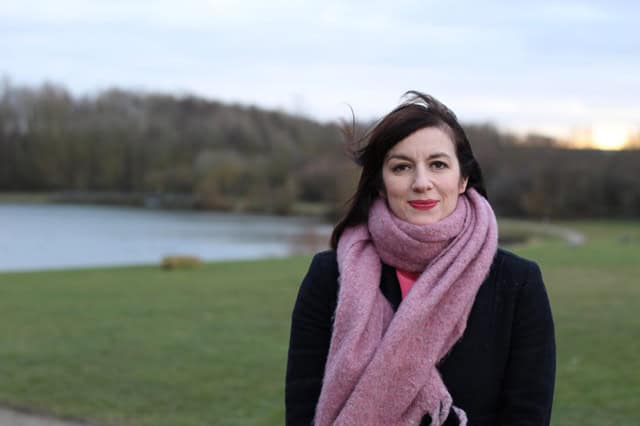
Education Secretary, Bridget Phillipson, said: “A child’s background should not determine where they end up. Education is the route to opportunity, and opportunity should be for every child, regardless of their individual needs and circumstances.
“For too many families, the reality has been very different, but this government will fix the broken education system for children and young people with SEND by making sure that their local school is also the right school. Ahead our reforms (this) year, we’re laying the foundations of a new system that shifts children with SEND from forgotten to included and earns the confidence of parents.
“This £3 billion investment will transform lives. It will open the door to opportunity for tens of thousands of children with SEND, giving them the chance to learn, belong and succeed in their local community. This is how we build an education system that works for every child.”
The main strands of the reform include:
- Children to receive the support they need as soon as possible. This will start to break the cycle of needs going unmet and getting worse, instead intervening upstream, earlier in children’s lives when this can have most impact.
- Children and young people with SEND to be able to learn at a school close to their home, alongside their peers, rather than travelling long distances from their family and community. Special schools should continue to play a vital role supporting those with the most complex needs.
- Every school to be resourced and able to meet common and predictable needs, including as they change over time, without parents having to fight to get support for their children. Where specialist provision is needed for children in mainstream, special or Alternative Provision, there will be clear legal requirements and safeguards for children and parents.
- Reforms to be grounded in evidence, ensuring all education settings know where to go to find effective practice that has excellent long term outcomes for children.
- Education, health and care services to work in partnership with one another, local government, families, teachers, experts and representative bodies to deliver better experiences and outcomes for all our children.
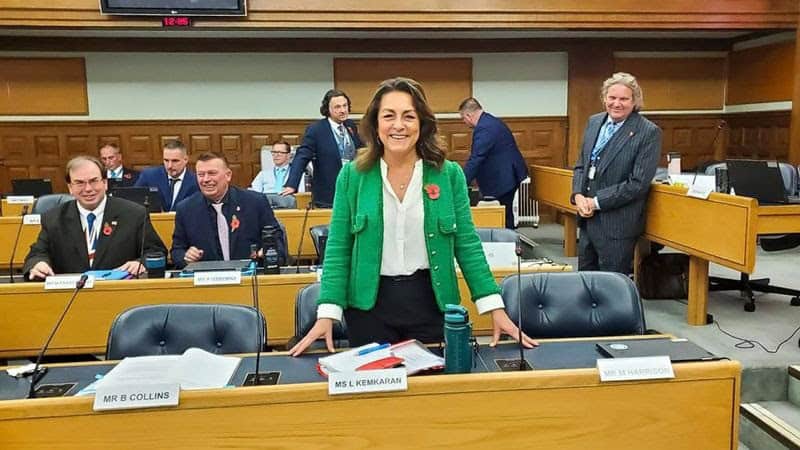
KCC’s SEND Strategy 2025-28 promotes the principles of “inclusion, partnership and participation”.
It states: “Every child has the right to access opportunities without discrimination. They deserve the right support in their own communities, surrounded by friends and families.”
But recent papers said: “The council is currently overspending on its high needs block…(and) the use of more specialist provision such as state-funded or independent special schools, rather than supporting children to remain more locally in their mainstream school, has been highlighted as a key contributing factor to this position.”
The council has already signed up to the Safety Valve programme in which it has agreed to pay back an £82m deficit by 2028, while receiving an extra £140m towards the rising cost of provision.
The scheme only works if KCC can demonstrate it has achieved value for money and a break even position by 2028.But this will mean reducing KCC’s reliance on specialist education placements and providing a wider mainstream offer.
Earlier this year plans to redesignate seven special schools were ditched after head teachers threatened legal action.
Kent Special Educational Needs Trust (KsENT), representing 24 heads, was seeking a judicial review of Kent County Council (KCC) plans for a shake-up of admissions’ policies.
Then Conservative-led KCC, in a bid to find budget savings and streamline the system, wanted some of the county’s special schools to accommodate children with complex needs – a move KsENT described as “deeply flawed”.
In April it was confirmed that the plans had been shelved.
KCC declined to comment until the details have been released.

Whilat infants, most children get to play with a shape sorter toy of some sort. This is the academic ideologues again attempting to make square pegs fit round holes. As their predecessors attempted and failed to do during the 1960’s and 1970’s.
Those who fail to learn the lessons from the mistakes of History…