

A growing grassroots movement called Smartphone Free Childhood is being supported by St Nicholas at Wade CE Primary.
The worldwide initiative isn’t about banning tech or turning back time – it’s about giving children more of what really matters: time, connection and freedom for kids to be kids.
High profile celebrity supporters of the UK campaign, which hopes to present its aims before Parliament, include Paloma Faith, Myleene Klass, Benedict Cumberbatch, Meera Sodha, Sara Pascoe, Joe Wicks and Jamie Redknapp.
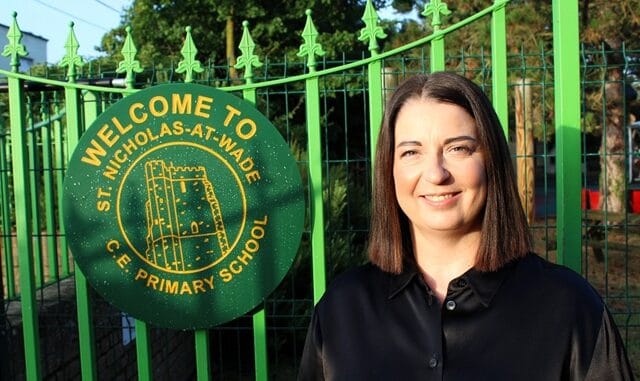
St Nicholas Head Teacher Taralee Kennedy is clear about the need and the benefits for introducing the idea. She outlined her detailed reasons in message to parents.
She explained: “We are committed to giving the children the very best start in life, where they learn to build on solid foundations. That’s why we’re supporting Smartphone Free Childhood.
“We’ve all been put in an impossible position, including families, schools – and children themselves – when it comes to smartphones. The pressure to hand one over seems to come earlier and earlier, but the truth is, so many of us feel uneasy about it.
“We want to let you know: if you’ve ever felt that tug in your gut – the “is this too soon?” feeling – you’re not alone. You’re in good company. It’s not a top-down campaign. It’s a bottom-up one, driven by families, carers, teachers, and children– all trying to figure this out together.
“It’s about creating healthier childhoods, and giving kids the chance to learn, grow and thrive, free from the pull of addictive algorithms and 24/7 internet in their pockets.”
She said St Nicholas is ‘very fortunate not to have a wave of smartphones’ coming in to school which puts the school in a strong position.
She added: “Our motivation for joining this initiative is to show our solidarity with you as families and to start building healthy habits now—before our children reach secondary school, where the pressures surrounding smartphones can become much greater.
“As a school, we are thinking carefully about how this will look in practice and how we can support our whole community in making positive, confident choices. We will be sharing more information with our families very soon.”
Mrs Kennedy referred to the recent bold step in Australia where social media access to under 16s has been banned.
She said: “This landmark decision highlights a serious commitment to protecting young people from the growing risks of the online world. Many believe it’s time for our own government to show the same level of leadership.
“Stronger protections for children online shouldn’t be optional—they should be a national priority.”
Smartphone Free Childhood online states its objectives. It says: “We help families delay smartphones and social media together – building community, sharing support, and changing the conversation. Step by step. Brick (phone) by brick (phone).
“Because real change doesn’t come from the top down. It starts with all of us, working together. United for childhood.
“The Smartphone Free Childhood ‘Parent Pact’ is a way to band together with other parents in your area to agree to delay getting your child a smartphone until at least 14, and social media until 16.
“It’s all about strength in numbers – if your child knows that other kids in their class won’t be getting a smartphone for a few years either, the peer pressure instantly dissolves.”
The Smartphone Free Childhood Parent Pact is spreading fast. More than 150,000 families have signed in just eight months, from over 40% of schools in the UK.
To find out more about the campaign and the pact, go online to www.smartphonefreechildhood.org/parent-pact.

I’m in my 60s, and I still don’t feel ready for a smartphone (I’d rather actually talk to people while I’m out than scroll through an electronic gadget!).
Who gives a primary school aged child a smart phone? Genuinely had no idea that was a thing.
I do the school run daily to a primary school and not seen a single student with a phone?!?