

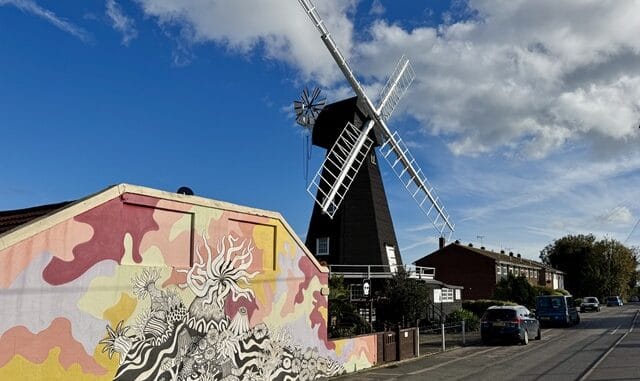
Draper’s Windmill in Margate has been granted an upgrade to Grade II* listed status by the Department for Culture, Media and Sport (DCMS) on the advice of Historic England.
The timber-framed windmill on St Peter’s Footpath in Dane Valley had been Grade II listed since 1973, but its significance as a 19th-century smock mill with rare surviving internal machinery has now been formally recognised and its entry on the National Heritage List for England revised.
Its new Grade II* listed status puts the windmill in the same category as some of Thanet’s most significant historic buildings, including the 1930s Dreamland Cinema on Margate seafront and the Clock House at Ramsgate’s Royal Harbour.

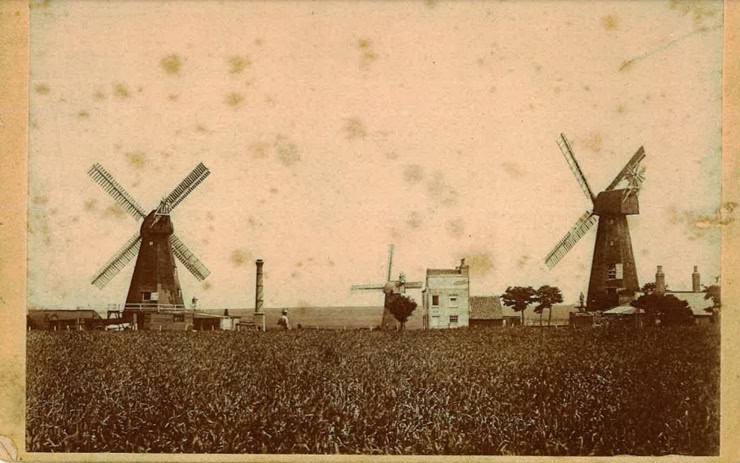
Draper’s Windmill was built in around 1843, probably by the millwright John Holman of Canterbury, to grind grain into flour. It is the earliest, and only survivor, of three windmills that were built along St Peter’s Footpath during the 19th century. A second smock mill known as ‘Little Draper’s Mill’ and a brick tower mill called ‘The Pumper’ fell out of use and were demolished by the early 20th century.
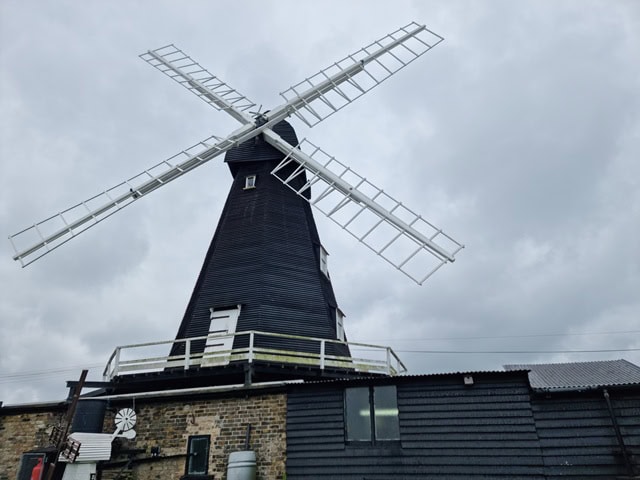
Alongside the mill is an engine house, workshop and cart shed which help tell the story of how the mill was powered over the years – by wind, steam and gas.
The mill has been fully restored to working condition thanks to the dedication of the Draper’s Windmill Trust in partnership with owners Kent County Council. Last month marked the 60th anniversary of the founding of the Trust on 16 September 1965. Draper’s Windmill is open to visitors and run as a museum by volunteers from the Trust.
Tim Horne, Listing Adviser at Historic England, said: “Upgrading Draper’s Windmill to Grade II* recognises the building as a particularly important survivor of Kent’s rural past. It’s unusual for a 19th-century windmill to survive this well, with much of its original machinery, and remain functional. The Grade II* listing reflects the increasing rarity of operational historic mills across England and celebrates this important and evocative part of Thanet’s heritage.”
Anny Squire, Vice Chair and Trustee at Draper’s Windmill Trust, said: “We are delighted to have our windmill and its ancillary buildings recognised as having both intrinsic importance and interest. This new listing gives the whole site the status it deserves for now and the future. We hope that it will encourage even more people to visit us and experience this valuable asset to Margate itself.”
David Wimble, Cabinet Member for Environment at Kent County Council, added: “Draper’s Windmill is a cherished part of Kent’s heritage, and its upgraded Grade II* listing is a fitting recognition of its historical and architectural significance. For over 60 years, the Draper’s Windmill Trust has worked tirelessly alongside Kent County Council to preserve this remarkable structure, and I’m proud of what this partnership has achieved. This listing not only honours the past, but it also helps secure the windmill’s future as a community asset for generations to come.”
Polly Billington MP for East Thanet said: “I am so pleased Draper’s Windmill is being recognised with an upgraded listed status. A landmark of history in Dane Valley, the windmill is part of the heritage of Margate which deserves to be protected for future generations. Congratulations to the volunteer team who work so hard to preserve the building and share the story of its history.”

Listed buildings are buildings of special architectural or historic interest. The record of each listed building is hosted on the National Heritage List for England.
The National Heritage List for England is a publicly available, searchable database of entries containing information on England’s designated heritage. There are over 370,000 entries for listed buildings on the List.
There are three grades of listing – Grade II, Grade II*[star] and Grade I.
Grade II* buildings are particularly important buildings of more than special interest. Around 5.8% of all listed buildings are Grade II*.
The Missing Piece Project: Add your information about Draper’s Windmill
People are being asked to add your story about Drapers Windmill to the Missing Pieces Project. It could be a photo or something you know about the mill. You can add photos, drawings, audio, film, or text.
Everything added is an important piece of the picture.
Through the Missing Pieces Project, Historic England invites everyone to discover the listed places on their doorstep and contribute their own unique piece to the picture by adding photos, videos, stories and memories on the National Heritage List for England.
New Local Heritage Hub
Find out more about historic places in Thanet on the Local Heritage Hub – a dedicated digital resource packed with stunning images, aerial photographs, historic archive material, videos, podcasts and local stories, all in one place.
