


As the last of summer’s blooms fade, a true ecological champion steps into the spotlight: Ivy (Hedera helix).
Often unfairly seen as a weed and removed, this native plant is an essential lifeline for wildlife as we head into autumn.
One of Ivy’s most critical roles is its flowering time. Blooming from late September well into November, it is one of the few plants offering nectar and pollen when resources are scarce.
If you see a patch of flowering Ivy on a sunny day, it will be buzzing with life. For late-season insects like bumblebees, butterflies, hoverflies and even a new arrival to our shores, the ivy bee. The flowers provide crucial energy needed to survive the coming winter. Without this late feast, many pollinators would struggle.
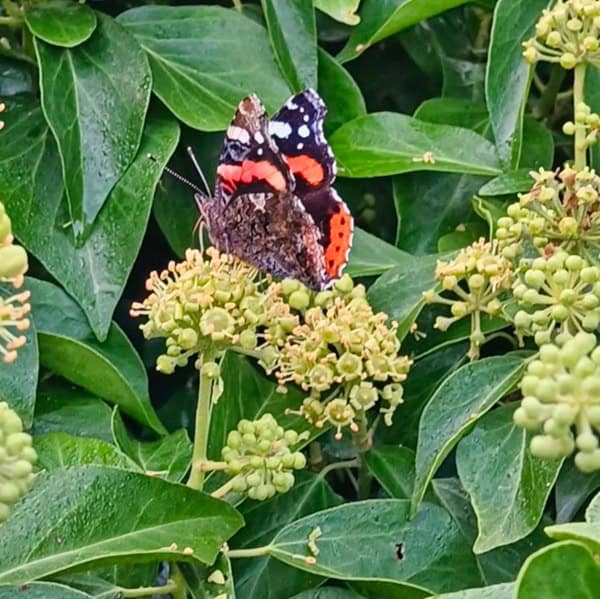
Insects have declined by 78% in the last 20 years so they need our help. Beyond nectar, Ivy provides year-round benefits. Its dense, evergreen growth offers superb, sheltered cover for birds like Wrens and Robins building nests deep within its foliage—and provides roosting spots for bats.

Later in the year, the black berries that mature on the plant become a high-energy food source for a wide range of birds, including Blackbirds, Thrushes and lots of wood pigeons, helping them through the leanest months.
Debunking the ‘Strangler’ Myth

The most damaging misconception about Ivy is that it harms or “strangles” the trees it climbs. This is simply not true. Ivy is a climber, not a parasite. It derives all its nutrients from the soil, only using small, root-like structures to attach itself and ascend the trunk. Healthy, mature trees can easily support the weight of the Ivy without being damaged. In fact, the dense growth can offer insulation. The only time Ivy can cause issues is on already dying or very weak trees.
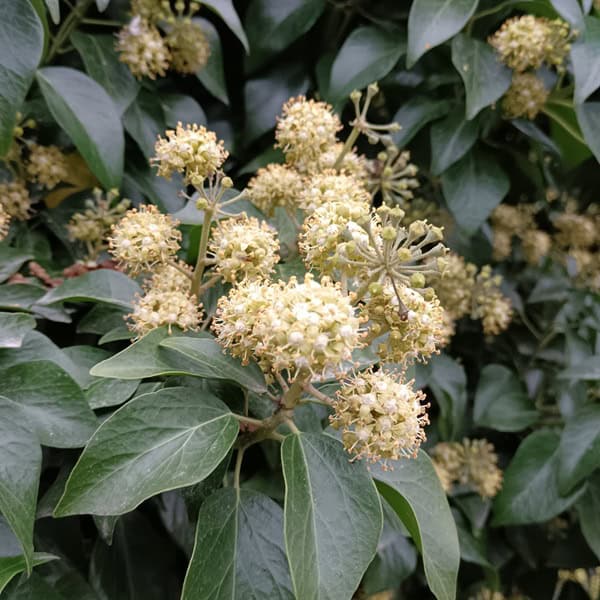
As a native, resilient, and life-sustaining plant, Ivy deserves our appreciation, not our prejudice. Let’s cherish this vital part of our landscape and recognise the immense support it gives to our local wildlife.
