

By Local Democracy Reporter Daniel Esson
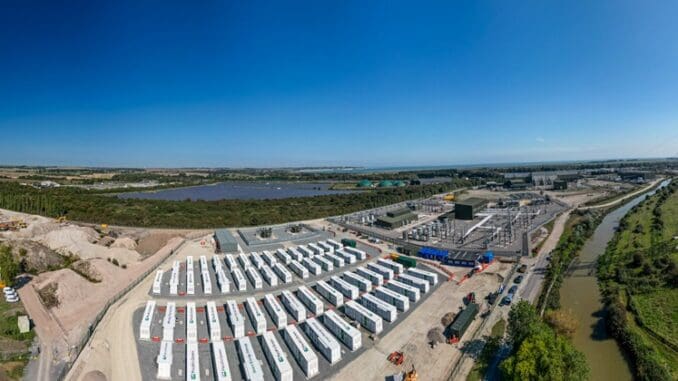
Thanet District Council (TDC) has given retrospective planning permission for a 99.9-megawatt Battery Energy Storage System (BESS) at Richborough Energy Park, near Sandwich.
Consent was originally given for battery storage in 2020, with a second phase in 2021.
But developer Pacific Green built its project to different specifications and layouts than those originally approved – so a retrospective planning application was needed.
The application was discussed at a meeting of TDC’s planning committee on September 18, where officers recommended members to back the plans.
Howard Banks, on behalf of the energy park, told the planning committee: “The site’s evolution from coal power to storing solar and wind energy for when the country needs it is a fantastic example of the energy transition in action.
“Richborough Energy Park stores carbon-free electricity which would otherwise be wasted.
“Additionally, it is able to deploy this energy extremely quickly thus providing an important grid stability service.
“The facility is making a material contribution to energy security and decarbonisation towards the ultimate destination of net zero.”
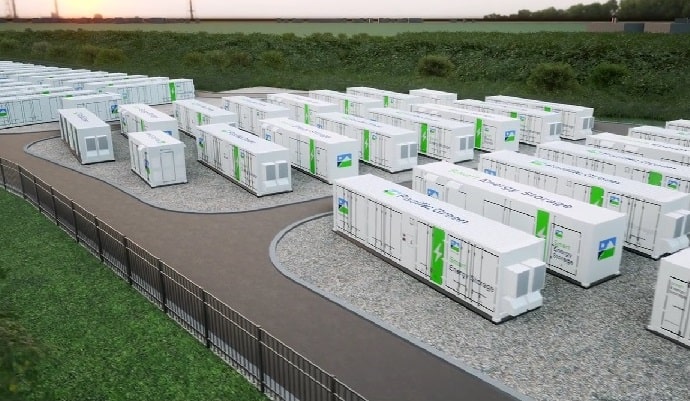
He added that due to technological advancements, the original 56 battery units were no longer needed, and there are now instead 38 on-site.
“Richborough Energy Park benefits from newer technology and better processes than some of the UK’s earlier battery storage sites. Site safety will always be our number one priority,” he said.
However, some councillors were not as glowing in their reviews of the scheme.
“Traditional energy consumption created peaks and troughs in our energy supply and we didn’t need to destroy our environment to store it,” said Cllr John Davis (Con).
The site of the units sit close to the Sandwich and Hacklinge Marshes Site of Special Scientific Interest (SSSI).
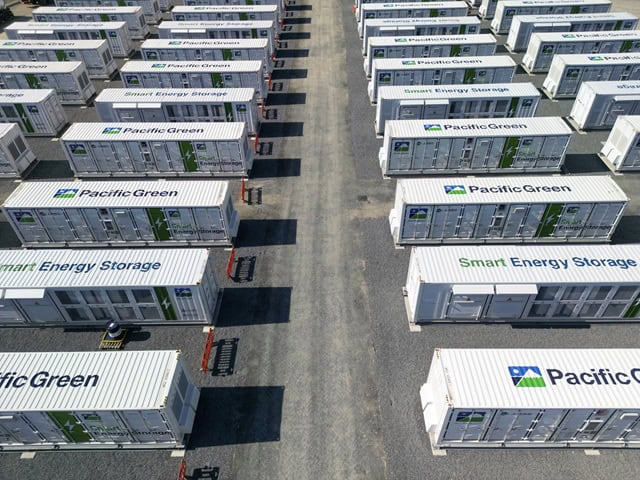
The 38 batteries are stored within single-storey shipping containers on the site, with 19 power converters located between them – also in shipping containers.
“You’re being asked to give retrospective approval to a proposal with potential to threaten the lives and health of residents as well as the environment next to an SSSI,” said Cllr Tricia Austin (Green).
“This project depends on every element working perfectly 100 percent of the time, but we know from tragedies like Grenfell that doesn’t happen in the real world.
“We cannot and must not take a chance on our being lucky every single day, I urge you to reject this proposal.”
National Grid started developing Richborough Energy Park after the coal power station’s demolition.
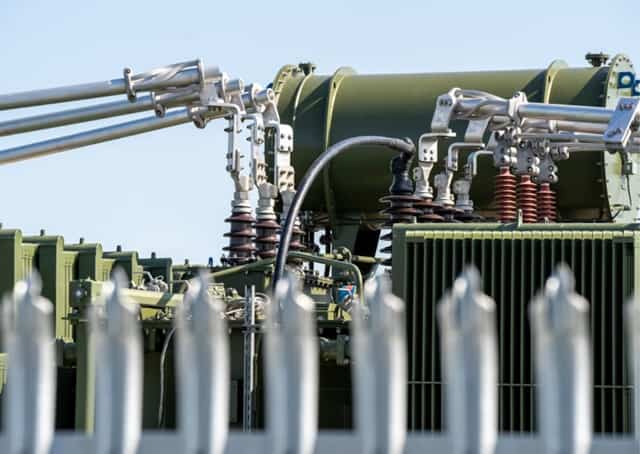
It now hosts the converter station for the Nemo Link – the huge new cable connecting the UK to Belgium.
But BESS have been controversial around the country – as they store energy in lithium ion batteries.
Fires in such batteries do not require oxygen to burn, and cannot be extinguished with water, they can only be put out with some forms of chemical gas.
In 2020, a fire at a 20MW lithium battery storage plant in Liverpool took 59 hours to extinguish.
Nearer to home, in February, Swale Borough Council’s planning committee voted down the battery safety management plan for the 150MW storage facility at Cleve Hill solar farm, near Graveney, one of the UK’s largest.
Swale councillors and residents cited safety concerns about fire management at the site.
But the developers appealed against Swale council’s refusal and, in July, the government planning inspectorate ruled the council had voted wrongly and awarded damages which will cost the authority thousands.
At the TDC planning meeting, an officer stressed to members: “This type of facility does support the transition to low carbon energy from electricity sourced from renewable sources.”
He also said that to combat possible fires, the site stores 74,460 litres of water – giving them the capacity to spray at a rate of 1,900 litres per minute for two hours.
If one of the batteries catches fire, as they cannot be extinguished by water, the water is instead used to cool down the neighbouring battery units to stop them from catching alight.
They also store Novec 1230 halon gas which can extinguish the fires, but as this gas is being phased out of usage, the developers say they will find alternative substances.
The planning officer continued: “It is not the responsibility of this council to ensure that the site is operated safely, that is the requirement of the actual operator.”
He acknowledged the “real concerns” of councillors and residents, but added: “It is not the purpose of the planning system to debate the safety of this technology, it’s about ensuring whether or not the impact of the development has been dealt with.
“We have to rely on the technical expertise of the people who are going to be fighting an incident there, and they are happy with what’s been put forward.”
Kent Fire & Rescue Service has told the council it has no issue with the plans from a safety perspective.
Some councillors wanted to defer approval to visit the site, with Cllr Mike Garner (Green) saying: “This isn’t like building a few houses, an estate or extension, this is quite a large, potentially risky build of infrastructure.”
“This might not be the only battery plant that we are going to have to approve, and I sit here and want to be absolutely certain that everything is in place to protect the environment and the people that may be living around that site,” added Cllr Rebecca Wing (Green).
However, others slated that suggestion, with Cllr Kristian Bright arguing: “I’m not an expert on battery parks, I think a site visit would show me a bunch of shipping containers.
“We as a council declared a climate emergency, developments like this are absolutely necessary if we’re going to combat climate change and move to net zero.”
The planning committee voted to give retrospective planning permission, with seven votes in favour, two against and no abstentions.
A release from Pacific Green’s website shows that in the summer of 2023, they sold the 99MW storage site to green investment management firm Sosteneo Fund 1 HoldCo S.à.r.l – and the facility connected to the grid in December last year.
Richborough formerly hosted a coal based power station, which opened in 1962 and was decommissioned in 1996, with its iconic three cooling towers and chimney stack demolished in March 2012.

Tricia Austin should read some proper material regarding Grenfell before speaking, it never complied with building / fire regulations from the day it was built ( in fact the the design should never have been approved) the most glaring fault being no wet riser, then until the day of the fire every inspection / assessment glossed over this omission. When the fire occurred the fire service couldn’t fight the fire in the manner they should have because of this omission.
So all she needs to do is check that the battery facility has been signed off properly and she can be assurred it’ll be safer than Grenfell.
Will this alleviate the necessity for the totally un-necessary proposal near Minster. I suspect TDC will approve the proposal and quote “If we refuse the applicants will appeal. The Government inspector will allow the appeal with costs” Big brother rears its ugly head again. The majority voted for both the present council and Government. You reap as you sow.
If you are referring to the SEALINK proposal at Minster Marshes, then the decision will have absolutely nothing to do with TDC. It won’t even go via TDC. It’s a straight DCO application to central government. SEALINK is one of 17 similar developments around the entire country which was started way back during the last series of Conservative governments but the odds are Labour will support it because of the drive towards ‘clean energy’. Can’t blame any one Party for this. Google The Great Grid Upgrade.
Another example of the uselessness of our Planning laws. Or Planners. Can it be true that planning committees cannot consider the later safety issues associated with constructions that they have allowed? So how about a new zoo for lions and tigets but NO BARS ? Why not? After all, safety isn,t an issue for planners to consider,apparently. Why not approve some new blocks of flats with dodgy cladding? ” Nothing to do with us. We just sit here and rubber-stamp the application” as the planning officers might put it.
Which also raises the question of why we need to store all this energy in metal boxes rather than pumping it straight into the National Grid. Too much electricity being pumped in? Then reduce the production of energy from oil gas or timber burning. Aren,t we supposed to be phasing out fossil fuels to reduce the CO2 in the atmosphere? We shouldn,t be storing energy from wind or solar as if these sources are just “extras” for a rainy day. Solar and wind should be the basic energy sources with batteries used to store small amounts of fossil fuel-generated power to “top up” at low points. As usual, we are getting it all backwards pandering to whatever company wants big money, and our planning depts completely fail to protect us.
“Kent Fire & Rescue Service has told the council it has no issue with the plans from a safety perspective.”
The reason this sort of facility is necessary is that on a sunny, windy day, vast amounts of electricity is produced, far more than can be used.
On the other hand, on a still, winter’s night, no electricity is being produced.
So, huge battery plants are used to store excess energy when it’s available, ready to be used when wind and solar aren’t producing enough.
Wahey, winner! Bout time the nimby’s knew their place.
I am not sure TDC are competent to judge on the safety case for this facility, but neither are messrs Austin,Garner,David,and Bright.What would a site visit achieve? If the installation exists,it has to be managed not deliberated over.
I think TDC would be better registering its concerns with the depth of Energy and asking them to step and set standards.
I do find the Green party frustrating. One minute they are berating people for using their cars and flying too often, to which I concur,but in the same breath they criticise every Energy scene because it does not meet with their idea of perfection. To that I say, if half of Thanet is under water because of climate change, what price perfection then.
As for Davis he is just a lout in a suit, and his opinions flow with the political tide.
This article is very similar to one I have seen elsewhere ,which is a pity because a local perspective might have been more interesting.
As the article rightly states, I argued against a site visit for exactly the reasons you give. I’m not an expert on the safety of these proposals and listened with interest to the advice of the Fire Service.
Well, odd that. A site visit would have helped understand what is being done on the ground rather that the very confused plans submitted.
Also, it’s more than possible for intelligent people to ask questions even if they are not experts.
The battery will burn for 15 hours or more, the water tank allows 2 hours of squirting to keep adjacent containers cool. What’s the plan?
For more usefully intelligent questions please let me know.
I am a retired Central Electricity Generation Board (CEGB) engineer on both the Dungerness nuclear power stations, with 65 staff. Its poorly understood that nuclear power stations can only generate base load, that is they can’t be used to raise and lower generation according to demand. This means a great deal of power is generated mostly at night, which is not used! The only way to store unused off peak electricity until now, was with Pumped Water Storage systems, of which Britain built 3. These are used to pump vast quantities of water from a lake at the bottom of a mountain, to the top at night using cheap Off Peak power. The water is then released during the day to meet demand using water turbines. This form of power generation is used world wide, but is expensive to hollow out mountains, so if using lithium batteries to store off peak electricity which would otherwise not be used, it must be a good thing! A Converter station was built at Sellinge near Folkestone to accept French power during off peak times there, when it wasn’t needed but could be used in the UK because of the time difference. The power from France was mostly nuclear generated.
Cllr Tricia Austin (Green). Please remember those that did not survive the grenfell fire. 1 was not even born during the fire incident 18 different nationalities 72 souls are not here now.Those 72 lost human beings were neighbours and got on as best as they could do.
Please only quote grenfell when you have new evidence , you want a coach load of grenfell survivors arriving on your doorstep ?
Sorry, it had to be said.
Uk electricity generation current source now, just now.
gas 33%
solar 11%
wind 19%
nuclear 14%
biomess 10%
Plus and minus leccy interconnectors around europe>gb>europe>+other countries. its all about the money honey.
It’s not about the money.
It’s about decarbonising energy production. Moving away from coal (the last coal powers tatian is about to close), gas and oil to “green” production. You must have seen the news stories of torrential rains and flooding across Europe and parts of the UK?
Unlike some sorts of fossil fuels production, wind and solar cannot be fired up to meet a sudden unexpected demand. Batteries can help.
I beg to differ Andrew! A few years ago I was invited by Vattenfall to a presentation of their off shore wind turbines, in a launch! When I worked at Dungerness we had to use a contractors RIB, which meant a good soaking, as there was no jetty!
I asked that question, how long does it take to bring a wind turbine up on load, and was told 3 minutes! A nuclear reactor takes about ten days for a controlled close down, and again to bring it back up on load, so no contest! One thing to remember is so far, after 70 odd years, no one has come up with a sensible way to store radioactive waste, especially spent uranium fuel rods (which are also used to make nuclear bombs after re-processing!) The last time I looked £120 billion was the guestimated cost to try and come up with a fool proof way of storing this, some of which had a half life of 100,000 years!
PS. Before I moved on promotion into nuclear power, I worked as one of a number of assistant civil engineers to the Chief Civil Engineer constructing the Oil Fired Power station on the isle of Grain (there were 4,000 people working on it!). It was the largest power station in Europe at the time, and the most expensive! It never worked! Oil prices after the Arab/Israeli war in the early 70’s quadrupled, which made it too expensive to run, although I believe one or two of the 6 units were brought up on load occasionally, during excessively cold winters. I believe Grain Power station has been demolished, which is a shame, as I am one of the few people who were carried up to the top of the 840 foot high chimney, in an Alimak lift, and I would like to do it again!
I think what andrew was saying is that wind and solar can’t respond on demand , as they are totally reliant on there being wind or sun. So it’s impossible for solar panels to produce when its dark and likewise wind turbines won’t work if there’s no wind.
That the answer is to build endless batery facilities and more solar and turbines to make a system that doesn’t work, work is totally absurd. Ignores all the environmental damamge and cost of building such obscene amounts of capacity purely because the installed “na,eplate capacity” is rearely if ever reached and then only for short periods.
Renewables can hardly be seen as cheap once all this extra infrastructure is included and not forgetting the costs of upgrading the grid to male it all work.
We’d be much better off putting all the moneys into energy efficiency and carry on as we were, slowly replacing the reduced demand with nuclear.
No one ever did reply to my rebuttal of Anon’s link to a report about climate change being known for years.
IoTn seems to block many links , so search “John Christy, July 2023, ABC lecture” and listen to a real scientist explain the problems with many of the claims made in support of man made global warming / climate change.
This is aimed at Andrew and Anon
Just recently I decided to have a bit of a clear out of my man cave, and found 80 pages of notes I made on the future of nuclear power, dated 1985! There was a 2nd copy updated from the first dated December 1986! This was after the Chenoble nuclear power station disaster, and I think I wrote this in the event of a similar accident here, and wanted to cover my backside with paper!
I never published these as a book, as looking at them again after a gap of 40 years, feel it would only appeal to a few people who understand nuclear power generation, which the Green part never did! Something to consider about the construction of nuclear power stations, is that many parts have to be duplicated as “back up plant” in the event of failure, and their location being inaccessible when the reactor is on load, due to high levels of radiation. This means duplicated plant is installed which may never be used, but its there just in case it has to be! This extra cost should be taken into account when building nuclear power stations!
The climate emergency council who also supports aviation expansion.
Go figure
The aviation council of 2015 made up of mostly UKIP, ex-UKIP, and Tories, voted in by a public who wanted an airport. Inherited by a more balanced council of 2019 some of whom managed to get climate emergency on the agenda. But the land was already owned by the man who wants to bring aviation to Thanet and was pursuing a DCO to secure the right to bring aviation to Thanet. Councils don’t control who buys land or legal actions taken by private businesses. Nothing to do with the current council.
But the truth doesn’t comfortably fit into a soundbite and takes longer to type.
Those chimneys looked so much better.
The battery plant is directly opposite a digester plant producing methane, and on the River Stour.
Bit of a sad day when Labour “out Green” the Green Party.
This is necessary as so much excess electricity goes to waste due to our inefficient grid.
Battery technology is improving by leaps and bounds, which is why hydrogen is not seen as the game changer it once was.LIon batteries have drawbacks,when they are allowed to overheat.
Many of us use them in our phones, power tools vacuums etc every day with perfect safety.
There will always be times when things go wrong, but a fire at a battery farm is far less of a problem, than a runaway nuclear reactor or dealing with nuclear waste.
The fires caused by LIon batteries in the home are down to poor quality battery charges bought online or sold without safety certificates on the cheap.
If we are worried about safety, we would give up using gas, because two houses have gone up recently causing the deaths of the occupants.If we are talking apartment blocks, a gas explosion and poor quality construction killed tenants at Ronan point,50 years ago, but we did not stop using gas,nor did we stop building flats.
It is a matter of risk and it’s management.
It does seem to me that the Green Party wants a perfect world of green energy, without the drawbacks, such as pylons, and battery farms, or ‘ugly’ energy storage systems or transmission networks.
I do understand that their voter base is middle class and averse to seeing any forms of technology impinging on their lovely lives, but I am afraid climate change is too important a problem, to be left, while wrangling like this is allowed to halt progress.
Surely gas explosions in homes are more likely to be the result of poorly maintained appliances and people trying to circumvent the meter. As with many things used properly gas is perfectly fine. As you point out many fires are the result of cheap chargers, batteries and appliances , often along with the way people use them.
When it comes down to it most “accidents” are the result of human behaviour rather than truly unforseen events.
In respect of gas perhaps it should be a requirement that ever gas appliance has an annual safety check , the same as landlords need to do. Then why not electrical checks that again landlords do. Of course it’s seen that it’d be too politically unpopular and so any deaths and damamge is seen as acceptable.
To correct some misunderstandings. The Green Pty Cllr’s are absolutely in favour if renewable energy sources. But lithium battery storage sites are dangerous so it’s about risk over benefit.
Kent fire and rescue may not have issues but this is odd as they had serious concerns over a far smaller BESS near Margate, issues that exist at the Richborough site.
The BESS and converter do not have to be at Richborough, other European countries are placing them off-shore. If you look at National Grid’s own criteria the Richborough site fails on many counts, why then choose it? It’s the cheapest option!
On fire safety I’m surprised Fire and Rescue have no issues. I’ve read Pacific Green’s fire safety documents and they are misleading at best. The water tank can provide 2 hours but the batteries commonly burn for far, far longer. What then?
Novec1230 is cited as “a next generation fire suppressant solution”. But, like IoTN, I found the 3M statement saying it was withdrawing it. Also, the Liverpool fire also had Novec1230 and the investigator reported that it didn’t activate and, even if it had, it would have had no useful impact on the fire.
These are just a few examples of why we need to be worried about a battery fire.
This year alone there have been many BESS fires in Europe, USA, Australia and Korea. These fires contain fumes that are toxic/harmful and deadly. A large fire would produce a toxic plume and only wind direction will determine if it’s Sandwich, Minster or Cliffsend residents that will suffer the consequences. What is TDC civil contingencies plan? Keep windows and doors shut? What about chimneys and ventilation flues and going out? And for how long given the fire will be allowed to burn out, a day, more?
On Grenfell Cllr Austin is correct, the fire needed key elements to start and, once started, key factors to develop and for fire brigades to experience the problems they did.
It’s known as the Swiss Cheese principle in accident investigation circles.
National Grid had massive profits but, as a private company it’s role is to maximise profit not meet social needs. Richborough is the place for this site. BESS fire investigations and resulting guidance is sufficient for the fire safety measures to be coherant, but they are a mess.
Labour haven’t surpassed the Greens in green energy, they have pressed ahead with a dangerous and misplaced project using carbon zero as an excuse.
Also see the BBC:
https://www.bbc.com/news/articles/cy0ly5kpnkdo
Apologies, Richborough IS NOT the best site for this facility.
The battery site exists what are you proposing? That it be shut down and removed?
The Green Party are zealous about what they don’t like, but do not have the cohones when faced with the reality of what a green energy actually requires.
Agreed, the National grid,all of it should be publicly owned and controlled, but that will take tome and money.Money that has other priorities like the NHS and building social homes.
However,even a publicly owned grid will have pylons and battery systems of some kind.
Some compromises will inevitably have to be made to obtain a zero carbon future. That is the priority not some alleged green nirvana, where nothing happens because someone might object.
The Thanet Green Party seem to have lost the plot on this . This is just the sort of development the rest of us are looking for – that both pushes forward the transition to renewables from fossil fuels and is of no cost to the tax payer. The batteries have a role in helping match demand to production and the site utilises the existing grid and transformer infrastructure . The fire risk argument is completely fatuous . How can a potential fire in a shipping container on an industrial estate possibly compare to the genfell disaster with massive loss of life – brought about misguided changes to building regs to force the retrospective insulation of concrete buildings with polyurethane foam without joined up thinking through of the potential consequences . Likewise with the biodiversity and proximity to sssi arguments – the fact that this infrastructure can co- exist with biodiverse habitats should speak for itself. This site is now far less obtrusive and far less polluting than the old power station – a perfect example of the energy transition at work . For the transition to work we need to bring down the costs and availability of fossilcarbon free power – and then this will feed into reducing the costs of reduced carbon fuel stocks such as green hydrogen , green methane , green methanol -(that includes use of nuclear smrs that the uk has a lead in but which the greens also oppose,) starting with use current technologies whilst seeking new ones. These green fuels will be needed as a way of producing affordable gas , petrol and diesel replacement fuels for home , aviation ,shipping , agricultural and road transport and powering industries such as steel , brick and cement making , which would overload the electricity grids . This will only happen with the support of governments for research and development, support for projects such as this and collaboration with business and industry to deliver , only once the ‘ correct’ viable ways forward have been identified, that builds on use of and improvements to current infrastructure etc . It is too soon to abandon domestic gas boilers for heat pumps , or Diesel engines for batteries , until affordable ways of converting surplus’s green electricity into affordable and viable replacement green fuels have been developed.
Read Dr. Barbara Lanes full report ( well skim it as its 1500 pages) and get a much better understanding of the huge number of failures there were in respect of the buildings fire safety. HAd the cladding system been installed properly, the windows been firestopped, internal compartmentation been effective, the wet riser been present , firemans lift worked, etc etc, the outcome would most likely have been very different.
However to protect the reputation of social housing , local government, fire service , its way more convenient to focus solely on the cladding.
We will have to build a good number of mini nuclear reactors over the coming years to replace demand for energy whilst phasing out gas and coal.
There are risks associated with this but it doesn’t mean that they shouldn’t proceed. We will as a nation identify the risk and take steps to address and reduce it whilst relying on experts to guide us.
Same as this development. Identify the risk and address it. Don’t just make superficial comparisons to other disasters elsewhere as a reason not to do it.
These batteries have a finite life, as do all lithium batteries, so will have to be replaced periodically. I had 4 battery assisted bikes over a period of about 26/7 years and must have replaced the batteries well over a dozen times. Thats why buying an electric car should be viewed with caution, as the battery will need replacing, especially if the car is 2nd hand. That could be somewhere around £6k to £10k!