

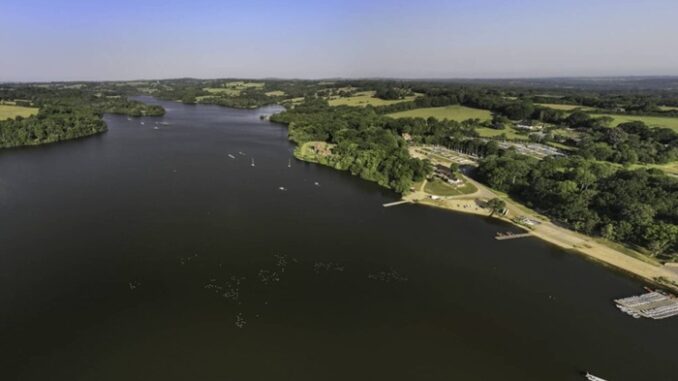
Low rainfall, house building, population growth and climate change have become the cocktail which is likely to put Kent under severe water stress in just a few decades.
Grim harbingers foretell drought, shortages and failing crops. But does Kent have a plan? Local democracy reporter Simon Finlay finds out…
Kent is in danger of running out of water and it all comes down to supply being unable to meet demand.
There is much agreement among local politicians that water, or rather the lack of it, in the county will be a serious issue in decades to come, although one water company seems confident plans are in place to service the need.
It has been a common refrain for communities facing large scale developments to cite water supply and sewage disposal as two main issues, of many, for not building further homes.
It has become political but not in a confrontational way. In fact, it is hard to ignore realities borne of facts.
A report submitted at the tail end of last year to the Kent County Council environment and transport cabinet committee and its findings were stark to say the least.
Areas in the county are already suffering water stress, where demand exceeds the rainfall it gets and the report singles out Folketone & Hythe, Dover, Thanet, Swale, Gravesham and Sevenoaks as those of note.
‘Long-term risks’
The report’s author Simon Jones, the level-headed corporate director for growth, environment and transport, states: “Water stress in Kent poses long-term risks to housing development, economic growth, tourism and everyday water access for residents. It also threatens the county’s rich natural habitats and biodiversity.”
By its geographical location, tucked away in the south-east corner of the United Kingdom, Kent is also one of the driest regions in the country, meaning the authorities are now having to address problems decades hence.
The authority’s 25-year Kent Water Resources Strategy aims to identify and address the challenges ahead.
Mr Jones’ report notes the county has suffered “numerous drought events” in the past 50 years.
“Significant investment will be needed to balance future supply and demand in Kent – depending on the climate path, level of population growth and the mitigation action taken, projections suggest an additional 1.5 – 2.6bn litres per day will be needed by 2080 in the south east,” writes Mr Jones.
And given a place like Dartford, according to KCC’s own figures, has the fastest growth at 38.7% in the past two decades, it makes it clear that future demand is real.
Overall, Kent’s population increased by 19.4% between 2003 and 2023, significantly higher than the 15.6% national average.
Typically, rainwater, rivers, springs and streams are captured in reservoirs as raw water, which needs to be treated before being pumped on to the customer, who pays for the service.
‘Growing demand’
South East Water (SEW) acknowledges that “there is a growing demand for water each year because of an increase in housing, climate change, more use of home appliances such as power showers and washing machines, and the growth of gardening as a leisure activity”.
By its reckoning, local consumers each use around 144 litres per day.
The water company says: “We work hard to balance the demand for water of a growing population while protecting the environment.
“South East Water needs to meet that demand without harming the environment.
“We plan 50 years ahead to ensure there are sufficient supplies to meet the daily needs of both existing and future customers.
“As well as ensuring reliable supplies for customers into the future we are planning to reduce the amount of water that we can take from our sources by 135 million litres per day to ensure a healthy water environment that is resilient to the effects from climate change.”
SEW published its final Water Resources Management Plan 2024 in the autumn of that year.
It contains a 50-year plan to provide “a reliable and resilient” supply of drinking water and this can include new storage facilities, desalination plants, better recycling methods and “strategic transfers” from other regions.
SEW is preparing a raw water reservoir at Broad Oak in Canterbury, aimed at holding 5,126m litres and supplying 22m litres a day. The water will be harvested from the Great Stour at Monkton, held in storage before being treated and sent on to the user.
The company acquired the land in the 1970s and ultimately aims to reduce the amount of water from ground extraction and “are chalk stream habitats” with plans to deliver supplies from it by 2035.
A consultation exercise is due to be carried out in early 2026.
Disruption to supplies to 24,000 SEW customers in December was not as a result of a lack of water but because of a “bad chemical batch” at its treatment works in Pembury.
It’s chief executive David Hinton, who oversaw the problems, was called to answer questions before MPs in Parliament yesterday ( January 6).
It comes after the Drinking Water Inspectorate, which launched an ongoing investigation on December 4 and was also present at the grilling, warned SEW in 2024 of a “significant risk of failure” at the Pembury treatment centre.

The leader of KCC, Linden Kemkaran, also wrote a strongly-worded letter to the secretary of state about the “catastrophic failure” of services to local people.
She wrote: “The reality, however, is that our residents, communities and businesses should not have to foot the bill for the systemic and repeated failures by South East Water or live with the continuing risk of further outages from an organisation that has failed on more than one occasion.”
The episode raised fresh concerns about the way water companies are permitted to operate and can effectively monopolise the market.
Whitstable KCC Green Party member Stuart Heaver says that water shortages were experienced in his division over the summer.
He warned the council’s Flood and Water Management committee that Kent is “sleepwalking into a water catastrophe” and cites an example where residents lost their drinking water for six days in July.
Cllr Heaver says: “On day six, there was slight drizzle and we had the unique privilege of hundreds of residents without drinking water due to a shortage – while raw sewage was being pumped into our local oyster fishery because the wastewater system was overwhelmed.”
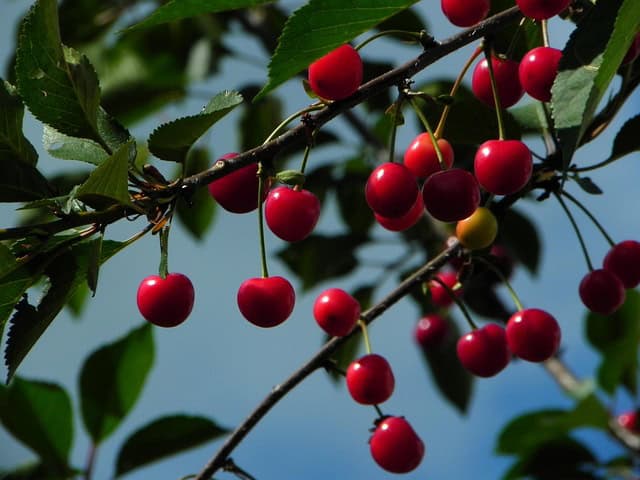
KCC warns fruit-growers producing soft varieties such as cherries and raspberries, who rely on irrigated poly-tunnels to stock the supermarket shelves, will be under increasing threat, too.
In readiness of this, KCC has already funded the pithily-named National Institute of Agricultural Botany East Malling Research (NIAB EMR) to explore water-efficient irrigation methods. The council is also a member of the Holistic Water for Horticulture project.
“Unless more is done to balance water supply and demand, droughts are likely to pose an increasing risk for soft and top fruit and salad production (Kent’s main irrigated crops) in summer months, particularly where they rely in high levels irrigation from river abstraction, reservoirs and groundwater sources,” says Mr Jones’s report.
It is possible to transport water, via pipes, to Kent from other parts of the country.
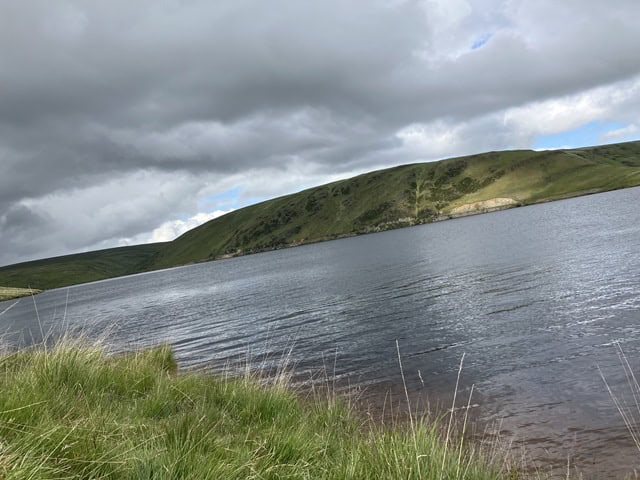
Much of the Birmingham area is served by the Elan Valley reservoirs in mid-Wales and has been doing so for more than 120 years.
This is done by a 73 mile long, gently sloping aqueduct, which uses gravity, not force, to get the water where it needs to go.
In recent years, during long summer droughts, the water levels in these reservoirs have dropped significantly. But, Wales being Wales and its generous allocation of the UK’s rainfall, the situation rarely persists for too long.
But should Kent’s need become critical, where would a pumped-in supply come from? And how long would the pipe have to be?
Even if Kent was to get another reservoir, like the one that has been in the pipeline for a long time near Canterbury, it still needs to be fed and topped up, say critics.
As of the end of October, of five reservoirs serving Kent, South London and East Sussex, only two had enough water in stock. Bewl, Bough Beech and Powdermill were all lower than they should be.
However, this was before the very wet weather experienced in the weeks leading up to Christmas and New Year.
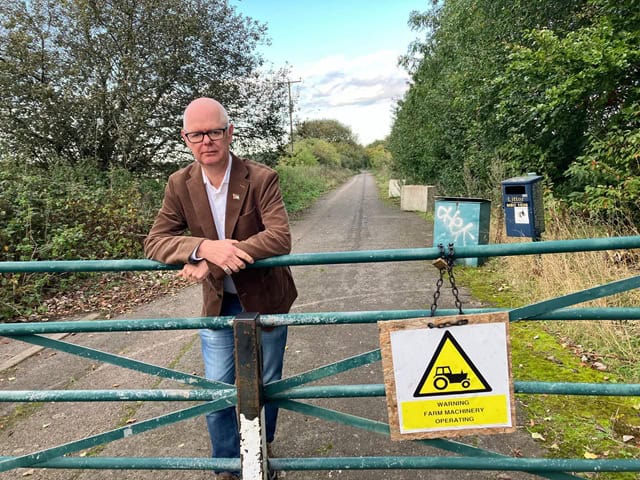
While the authorities are planning for the future, the Green Party leader of Maidstone Borough Council, Cllr Stuart Jeffery, believes the supply is already under too much pressure.
He says: “The current demand on groundwater, rivers and reservoirs is taking a huge toll…we have lower rainfall than parts of Israel and Kent has the only desert in the UK at Dungeness.
“The idea that we can build more houses without rethinking where the water is coming from and how we use it is ludicrous and dangerous.
“Simply building another reservoir won’t make it rain harder.
“We either need to bring water in from elsewhere in the country or we need to have a local desalination plant in order to build more homes.”

Yes the site was chosen in the 1970’s. I remember it well as I walked around the whole site whilst it was still being farmed. 56 years later it goes out to consultation in 2026 but will not be built till 2035. Thanet its self alone in the meantime will have a minimum of an additional 27,000 (allegedly) dwellings by 2031. TDC have already asked for additional land which could contain another 4,000 properties by the time this reservoir is allegedly built. What will be the compensation cost of this reservoir to farmers and what of the costs to Southern water customers in higher bills to pay for its construction.
In addition,at least in Thanet, the local planning authority is routinely permitting developers to remove all tree cover from sites before commencement of construction. GIVEN that Thanet with only 3% tree cover has FAR less tree cover than any other local authority in Kent,that’s appalling. The effect on biodiversity is catastrophic.
Agree with your comments concerning Tree Cover for Thanet as a whole. Part of the issue for developers is by planting new tree’s within developments insurers would have a claim against the developers should damage occur to footings etc. I have asked Kent Highways if I could plant Oak Saplings along the centre and sides of the duel carriageway from Birchington to St Nicholas Roundabout. The answer was no as the leaves once fallen in the autumn could cause an accident if landing on the road. Further it makes it difficult for the grass to be cut. This year alone I have had over 3,000 Acorns from one Oak tree. They have been offered on social media without anyone being interested.
Your right R. I was working on a new sewage treatment plant at Faversham in 1971, and there was much speculation as to where the next job would be. We were reassured a new reservoir would be built near Canterbury, we are still waiting!
I have been talking about this for some years, That Kent could run short of water w is nowhere more relevant than here in the Isle of Thanet, possibly the most arid area in the UK. 97% of our fresh water supply comes from one artesian well. The Isle is composed of chalk which holds 30% of its volume as water. Much of this must be historic: we know the uptake, but not the rate of replenishment, and with further building for an expanding population, much rainwater would run off. With increasing demand and decreasing replenishment, we could be in drought within 10 years.
We are surrounded on 3 sides by sea. Two tidal flows a day of up to 2 knots, and a vertical range of 5 metres, suggests the answer. Reverse osmosis desalination plants have a high energy demand, but the sea could supply both the water and the energy using a dedicated tidal generator.
The higher energy of global warming is causing sea levels to rise, so it completes the virtuous circle by using both to provide the solution.
.
Build less houses in Thanet, any now builds to have water butts fitted where possible, oh and fix the leaks. Simple.
Perhaps developers should be encouraged to build ponds with any water running off of properties diverted into the ponds. The land at George V Avenue & Canterbury Road at Westbrook has been altered to take excess water if needs be. It would be far easier for new developments such as those within the Haine developments to have such a facility rather than the water go down the drain and causing issues for Southern Water.
It seems that there is no one simple solution. But fewer houses with gardens that are covered in paving slabs would be one way householders could help. Rain that goes directly into the ground helps replenish underwater supplies and helps to keep rain from the run offs into the sewerage system and all the problems that causes. We just need people to be willing to do the mowing and weeding that comes with not having paving slabs all over the place.
The world is already resembling the propaganda news channels in V For Vendetta-fires, floods, droughts, wars, food shortages etc-all done to control you & stop any questioning as every action is being done urgently to save you.
The clown they sacked for being a racist on TalkTV is basically the newscaster from that film & others closely resemble him on GB News. Starmer to keep control is trying as hard as he can to convince the nation we are at war with Russia & people need to become soldiers & go off to Ukraine, telling you what you should eat, making it as hard as possible for you to view legal content with the internet sites ban, eroding of the right to protest peacefully, eroding human rights, joining in with Trump’s human rights & illegal behaviour, jailing people for stuff that could be dealt with in better ways-turfing out dangerous murderers & sex offenders early to make way for them etc.
“Mrs Ben Dover” sounds like a conspiracy theory believer- like “Democrat”.
Never trust anyone who believes in a conspiracy theory!
Sure-we hear this morning that the government want to ban Twitter now. You don’t think a government banning the right to peaceful protests, banning what websites you can look at, banning adverts, banning elections, telling you what to eat & drink, telling you what to say etc is dictator behaviour?
Since when does not liking something legal mean stopping others who might enjoy it/they have a personal grudge against the owner acceptable? Do you want a nanny state where everything the government considers potentially harmful-including to their election hopes, or not a good look for them is banned from being seen? Why is Starmer helping the orange creature with his illegal takeover of Venezuela?
If Rees had her way, she’d also ban all negative comments and press reports about Ramsgate (with its filthy back alleys).
Mrs Ben Dover- apart from banning peaceful protests , no, I don’t think it’s “dictator behaviour”.