


A cordon has been removed and residents allowed to return home following attendance by emergency services and a bomb disposal team at an address in Margate last night (October 8).
A teenage boy has been arrested in connection with the incident.
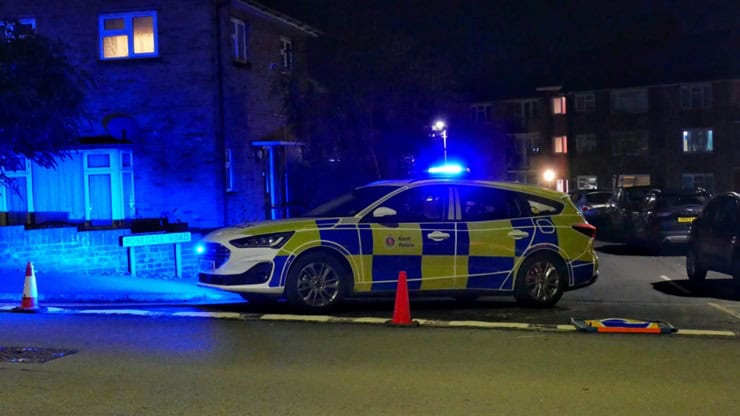
The precautionary measure was taken after Kent Police officers were called at around 4pm to an address in Rosedale Road due to concerns raised about items contained inside a flat.
A cordon was put in place and an Explosive Ordnance Disposal (EOD) team from the Ministry of Defence attended the scene, where they carried out a controlled explosion to make a suspicious item safe.
The EOD team completed enquiries at around midnight and determined it was safe for residents to return to their properties.
Residents were evacuated from homes in four Margate streets – Rosedale Road, Glencoe Road, Wharfedale Road and Malham Drive.
A welfare point was set up by Thanet council at Hartsdown Leisure Centre for evacuated residents who had nowhere to go. The council’s rest centre team helped about 25 people with food, drinks and other support until people were able to return home just after midnight.
A teenage boy was arrested in relation to offences under the Firearms Act and remains in custody pending further enquiries.

Chief Inspector Ian Swallow said: “We appreciate this was an unusual incident, which left some residents directly impacted as a result.
“Thank you to those people affected for their patience while we worked with EOD to make the scene safe.
“Emergency services will remain in the area to carry out further enquiries, but we are treating this as an isolated incident and have no wider concern for public safety.”

Probably get a slap on the wrist
Getting sick of teenage boys who want to damage and hurt
We will only see more of it, due to the likes of Tommy Robinson warping their minds.
You don’t know the race colour of religion of this person ,so don’t jump to conclusions
You don’t think vocal white supremacists & vocal racists in general, can also help warp the minds of non-whites/other religions?
why are you jumping to their defence the minute tommy robinson is mentioned? Do you support him?
Why not name the teenager,if charged, Older enough to do the crime ,older enough to be named and do the time .Most likely to thinksthis all a bit laugh in their mind
In English law, young people under 18 are given anonymity when accused of a crime — their names cannot be published.
This isn’t about letting them off, but about giving them a fair chance to rebuild their lives and avoid permanent harm from a single mistake.
The youth justice system focuses on rehabilitation and preventing re-offending, not just punishment. Teenagers can still receive serious penalties, including detention, but publicity bans stop them being branded for life before a trial or while they’re still developing.
If they are convicted of a serious offence, a judge can choose to lift the anonymity order, but this is done carefully and case by case.
So, while naming them might feel like justice, the law tries to balance accountability with the chance to change, which benefits society overall.
If you feel the law should be different, you can get involved by writing to your MP, supporting victims’ rights groups, or taking part in public consultations when youth justice policies are reviewed. That’s the legal and democratic way to push for reform.
A judge can order their name to be released .In many cases judges have done exactly that
Actually, under Section 49 of the Children and Young Persons Act 1933, anyone under 18 has automatic anonymity in youth court, and judges in adult courts use Section 45 of the Youth Justice and Criminal Evidence Act 1999 to protect identity.
A judge can lift those restrictions, but only in exceptional cases, for example, after conviction or when it’s clearly in the public interest.
That’s what happened in the Brianna Ghey and Southport cases, but those were rare exceptions, not the norm.
The rule is to protect fairness and stop lifelong harm before guilt is proven, not to let anyone off lightly.
It’s easy to feel angry about what’s happened, but the anonymity law is there to protect any child. If it were your own relative or neighbor’s teenager, you’d probably want the same protection until all the facts are known.
People like Ray tend not to be interested in fairness or protection-unless it suits them, or those they like.
In “many cases”, of which, there’s been five/six in the last ten years for extremely serious offences, like southport.